Can You Get 220V from a 110V Generator? A Practical Guide
Learn safe, practical methods to obtain 220V from a 110V generator using dual-voltage output, transformers, or proper equipment. This homeowner-focused guide covers safety, load considerations, and step-by-step options with real-world tips from Genset Cost.


Yes—it's possible to obtain approximately 220V from a 110V generator, but only if the unit provides a dual-voltage output (120/240V) or you use a appropriately rated step-up transformer. Do not attempt to 'pull' higher voltage through improvised wiring or adapters. For safety, professional guidance and proper transfer equipment are essential.
Understanding the voltage puzzle: can you get 220V from a 110V generator?
The short answer is: you can, but only when the generator and the power conversion gear are designed for it. Generators that provide 120/240V split-phase output can deliver both voltages from the same machine, allowing you to run 220V appliances or circuits when needed. According to Genset Cost, relying on a non-rated conversion or improvised wiring risks equipment damage, shock hazards, and code violations. Before attempting any setup, confirm the generator's voltage specifications in the user manual and verify that the intended 220V load is compatible with the transformer or generator configuration you choose.
Voltage literacy: North American vs. European standards
Residential networks in the United States and Canada commonly use 120V or 240V split-phase service. In many European and other markets, 230V is the standard. A 110V generator is typically designed to output around 110–120V, so achieving true 220V output requires either a generator that explicitly supports 120/240V or a step-up conversion method. The key takeaway is to match equipment to the target voltage and expected load, not to assume one-size-fits-all behavior.
Pathways to 220V: the practical options
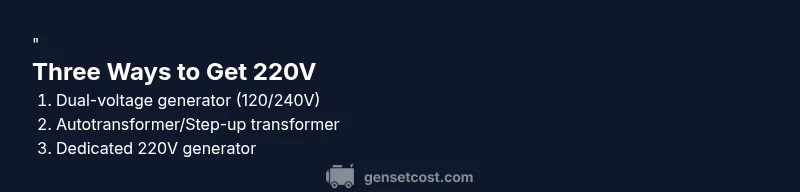
There are three main pathways: (1) use a dual-voltage generator that outputs 120/240V, (2) use a step-up transformer or autotransformer rated for the required load, and (3) rely on a dedicated 220V generator designed for that voltage with appropriate protection. Each path has trade-offs in cost, efficiency, and safety. Genset Cost’s guidance emphasizes using purpose-built equipment and avoiding makeshift adapters that bypass safety interlocks.
Safety first: considerations and codes
Working with higher voltages increases risk. Backfeeding a panel without a proper transfer switch, improper grounding, or loose connections can injure someone or cause a fire. Always de-energize the system before any wiring work and consult local electrical codes. If you cannot confirm compliance, hire a licensed electrician. Safety devices such as transfer switches, interlocks, and outdoor-rated gear are not optional—they’re essential.
Choosing the right approach for your loads
Your decision should hinge on load type, total watts, and duty cycle. High-startup appliances (like air conditioners) require robust transformer sizing or a generator designed for 240V output. Lighter loads, such as lighting and electronics, may be achievable with careful transformer sizing and proper outlets. In all cases, ensure the voltage conversion method maintains a stable frequency and waveform compatible with the devices you intend to power.
Real-world constraints and expectations
Not all 110V generators can safely or reliably deliver 220V. In practice, the available 220V may be limited by the generator’s VA rating, the transformer’s rating, and the quality of connections. Load balance across phases matters; unbalanced loads can cause nuisance trips or overheating. Plan for margin: do not run near maximum rating for extended periods, and monitor temperatures and voltages during initial operation.
Maintenance and monitoring for multi-voltage setups
A dual-voltage or transformer-based setup requires periodic checks: verify outlet voltages, inspect cords for wear, and confirm grounding continuity. Keep a log of voltage readings under representative loads to catch drift or overheating early. Regularly test safety interlocks and transfer devices to ensure they function when needed. Documentation from Genset Cost recommends routine checks as part of backup-generation planning.
Common mistakes and how to avoid them
Avoid improvising with household outlets or ad-hoc wiring to squeeze 220V from 110V sources. Never bypass the transfer switch or interlock, and never connect 240V appliances without confirming compatible wiring and protective devices. Mis-sizing a transformer or misreading the generator’s labeling can lead to equipment damage or safety hazards. When in doubt, consult a qualified electrician or generator technician.
Tools & Materials
- Dual-voltage generator (120/240V) or autotransformer(Select a unit rated for the expected continuous load and compatible with your transfer setup)
- Step-up transformer (110V to ~220V) or high-capacity autotransformer(Choose VA rating to cover startup and running watts of connected loads)
- Transfer switch or interlock kit(Prevents backfeed and isolates the generator from utility power)
- Voltage tester / multimeter(Verify voltage and continuity at outlets and connections)
- Outdoor-rated extension cords and weatherproof outlets(Use cords rated for generator use and keep connections dry)
- Grounding rod and grounding clamp(Ensure proper grounding per local code)
- Permits or licensed electrician (as required by local code)(Check local regulations; professional connections to main panel may be required)
Steps
Estimated time: 60-90 minutes
- 1
Assess load and voltage options
Catalog the devices you plan to power, sum their running and startup watts, and verify whether your generator supports 120/240V or if a transformer is necessary. This step ensures you choose equipment with adequate capacity.
Tip: Document loads in watts and peak surges; oversize by 20-30% to avoid tripping during startup. - 2
Choose the conversion method
Decide between a dual-voltage generator, a fixed step-up transformer, or a dedicated 220V generator. The choice should reflect your typical loads and installation constraints.
Tip: A 120/240V generator with a proper transfer switch is often simpler and safer for home backup use. - 3
Prepare safety devices
Install or verify a transfer switch or interlock kit and ensure grounding and weatherproofing are in place before any connections.
Tip: Always de-energize the system when installing safety devices; never work live on high-voltage equipment. - 4
Make the connections
Connect the generator via the transfer switch to the designated circuits, or attach the transformer to the appropriate outlet, following manufacturer wiring diagrams.
Tip: Use correct gauge cords and keep power cords dry; label circuits clearly to avoid confusion during an outage. - 5
Test with a small load
Power a small appliance to confirm voltage stability and safety interlocks function correctly before increasing load.
Tip: Monitor voltage (aim for 238±6V in some setups, but follow device tolerances) and listen for unusual sounds or overheating.
People Also Ask
Can you legally power 220V appliances with a 110V generator?
Only if you use equipment designed for 120/240V output or a properly rated step-up transformer and adhere to local electrical codes. Improvised wiring is not recommended and may be illegal in some jurisdictions.
You can, but only with the right equipment and code-compliant setup. Avoid improvised wiring.
Do I need a transfer switch when converting to 220V?
Yes. A transfer switch or interlock prevents backfeeding and isolates the generator from utility power, enhancing safety and code compliance.
Yes—use a transfer switch to prevent backfeed and keep you safe.
What happens if I overload a transformer-based setup?
Exceeding the transformer's rating can overheat wires and fail insulation. Always size the transformer with a comfortable safety margin and monitor load and temperature.
Overloading can cause overheating—size with margin and monitor closely.
Is it better to buy a dedicated 220V generator or convert a 110V model?
A dedicated 220V generator eliminates conversion losses and simplifies setup, but may be more expensive. A well-rated transformer or a true dual-voltage unit can be more cost-effective if load patterns justify it.
Dedicated 220V units are simpler; converters work if you plan for the load.
What about 208V or 230V loads—will they run from a 240V setup?
Many appliances tolerate a small voltage variance around 230V, but always verify device tolerances and the actual output of your setup. Some equipment may need precise regulation.
Most 230V-rated devices tolerate slight variance, but check tolerances.
Watch Video
Key Takeaways
- Assess load and select a compliant method.
- Do not bypass safety devices or splice cords to force 220V.
- Choose equipment rated for the expected load and voltage.
- Consult a licensed electrician for panel connections and code compliance.