Can You Get 240V From a 120V Generator? A Practical Guide
Explore whether a 120V generator can deliver 240V, when you’d need it, and how to safely upgrade with built-in 240V, transformers, or a transfer switch. Includes costs, steps, and safety tips.


Can you get 240V from a 120V generator? In most setups, no—standard portable generators output only 120V. Some models are designed with a 120/240V split‑phase option or can run through an external autotransformer or transfer switch to deliver 240V, but this requires a generator built for 240V, compatible wiring, and professional installation to be safe and code-compliant.
Can you get 240V from a 120V generator? The basics
Understanding why 240V is not a given from every 120V generator starts with a quick look at how electrical systems are wired. In the United States, many homes rely on a split‑phase 120/240V system, which uses two 120V legs that are out of phase to create 240V across the two hot lines. A generator that only outputs 120V does not automatically provide that second leg. If you truly need 240V power, you must have a generator designed to supply 240V, or you must introduce additional equipment (transformers or a transfer switch) that is correctly rated and installed. This is not a DIY-friendly upgrade and can pose serious safety risks if done improperly.
In practice, the right path depends on your loads, electrical panel, and local codes. Before pursuing any upgrade, confirm with the manufacturer that your generator can support 240V and that any added components comply with electrical codes. The goal is to avoid unsafe backfeeding or overloading circuits, which can create fire hazards.
Understanding split-phase power and why 240V isn’t guaranteed
Split-phase electrical systems provide two hot legs that are 180 degrees apart, delivering 240V when a device is connected across both legs. Not all generators produce two evenly balanced 120V lines suitable for a 240V load. Some portable units offer a built‑in 120/240V option, while others are strictly 120V. The engineering difference matters: a true 240V output may come from a dedicated 240V winding or from two 120V windings wired to create the split-phase. If your generator is not designed for 240V, using an external transformer or incorrect wiring can lead to overheating, voltage imbalance, or damaged equipment.
When planning loads that might require 240V, map out which circuits and appliances would move over to a 240V path. Common 240V loads at home include air conditioning compressors, water heaters, and certain large heat pumps. If you have any doubt about whether your generator can support these, consult a licensed electrician and the generator’s manual before proceeding.
boldWhat to know before attempting
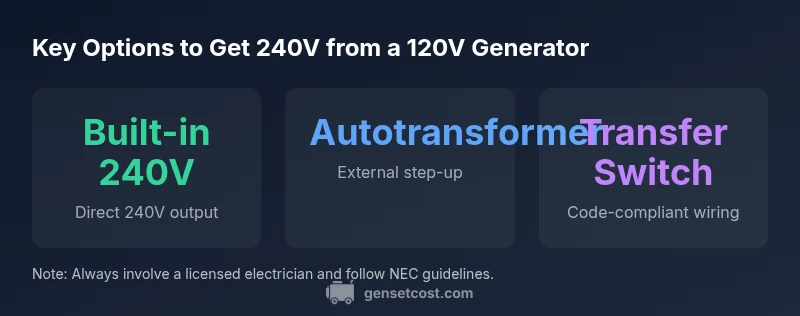
Comparison of methods to obtain 240V from a 120V generator
| Option | Description | Pros | Cons | Estimated Cost (USD) |
|---|---|---|---|---|
| 120/240V-capable generator | Natively provides both voltages | Safer, simpler wiring | Higher upfront cost | $1,000–$3,500 |
| External autotransformer | Converts 120V to 240V externally | Flexible, incremental upgrade | Requires matching power and wiring | $100–$400 + installation |
| Two 120V outputs with transfer switch | Can supply two legs if generator supports split-phase | Potentially cheaper if already configured | Requires correct model and proper wiring | $0–$200 if pre-wired, plus labor |
People Also Ask
Can I run a 240V air conditioner from a 120V generator?
Only if the generator provides a true 240V output or you have a properly rated transformer and transfer switch. Without this, operating a 240V load can overload the generator and pose safety risks.
Not safely without a generator that can output 240V or a correctly rated transformer with a transfer switch.
Do I need a transfer switch to get 240V from a 120V generator?
Yes. A transfer switch or interlock is essential to prevent backfeeding and to meet electrical codes when connecting a generator to your home panels.
Yes, use a transfer switch to safely switch loads from generator power to house power.
Are there 120V generators that can be rewired to 240V?
Some models support 120/240V outputs, but rewiring a non‑240V generator to 240V is generally unsafe and may void warranties. Always follow manufacturer guidance.
Only if the model is designed for 240V; otherwise, don’t attempt rewiring.
What are typical costs to upgrade to 240V?
Costs vary widely by method—upgrading the generator, adding a transformer, and labor. Expect multiple hundreds to a few thousand dollars depending on your setup.
Costs depend on the chosen method; plan for several hundred to several thousand dollars.
Is it safe to work on 240V without a professional?
No. Working with 240V power requires proper training, equipment, and permits. Hire a licensed electrician and follow code requirements.
No—get a licensed professional to handle 240V wiring and panel work.
Can a 120V generator power a home’s 240V loads if I upgrade the panel?
Only if the generator provides 240V output and is integrated with the panel via approved equipment. Without this, you’ll risk damage or safety hazards.
Only with a 240V capable setup and proper wiring.
“Getting true 240V from a 120V generator isn’t something you should improvise. A proper 240V capability or a correctly rated transformer and transfer switch is essential for safety and compliance.”
Key Takeaways
- Confirm your generator supports 240V before upgrading
- Use a transfer switch for safety and code compliance
- Budget for equipment and licensed installation
- Consider a 240V-capable generator as a simpler option
- Consult a licensed electrician for any 240V setup