Generator 240V: Sizing, Costs, and Installation Guide
A comprehensive guide for homeowners and property managers on sizing a 240V generator, understanding cost factors, and navigating installation considerations with practical, data-driven guidance.


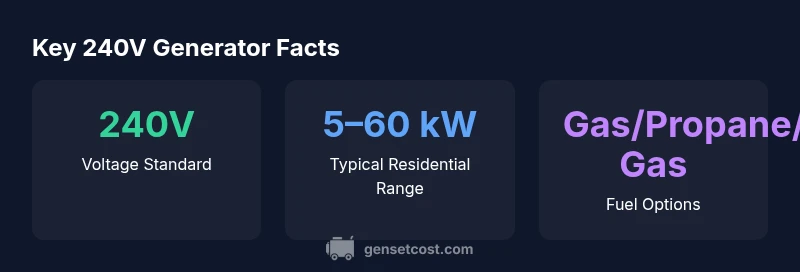
A generator 240V is a home backup power source that outputs 240 volts AC, typically used to feed 240V circuits through a transfer switch. In North America, many residential setups use split-phase 240V, pairing with 120V circuits. When sizing, prioritize essential loads, consider standby versus portable models, and review fuel options. Installing a 240V system requires professional wiring and compliance with local codes.
Understanding 240V Power: What Generator 240V Means
Most homes in North America operate on split-phase 240V electricity, where the utility delivers two 120V legs that create 240V between them. A generator labeled 240V outputs power with the same voltage profile, and in practice that means you can feed higher-energy circuits such as ranges, air conditioners, water heaters, and well pumps through a transfer switch or a compatible distribution panel. Some models also provide 120V outlets for typical loads, but for whole-house backup you’ll rely primarily on the 240V line. This distinction matters because the wiring and safety requirements for 240V are different from 120V and require careful planning.
When evaluating options, pay attention to voltage stability, waveform quality (true sine wave versus modified sine), and the protection features that keep circuits safe during transitions. Look for features such as overload protection, automatic shutdown on low oil levels, and clear labeling of output terminals. Finally, take note of how the generator is fed: some installations run on propane or natural gas, while others use gasoline; your choice will influence maintenance, emissions, and reliability under cold weather conditions.
Sizing Your 240V Generator: From Load to Watts
Start by listing all devices you want powered during an outage. Refrigerator, sump pump, well pump, freezer, essential lighting, and communications gear often dominate the load. For each item, estimate running watts and peak startup watts; add them up to get a target continuous wattage and a buffer for surges. A practical approach is to design for essential loads first and then plan for optional items if the generator has headroom. In split-phase 240V systems, you’ll want enough capacity to safely handle the simultaneous draw from both hot legs, with a generator that can sustain the combined load without frequent throttling.
Reliable sizing also considers runtime, fuel availability, and the type of transfer switch you’ll use. Automatic transfer switches speed response and minimize voltage dips, while manual switches provide cost savings but require more hands on operation during an outage. Remember to account for future needs; a slightly larger generator can accommodate added circuits and seasonal appliances without sacrificing efficiency. Finally, don’t assume you can overload the system with a single oversized item; consult the panel labels and the manufacturer guidelines for safe operation.
Types of 240V Generators: Portable vs Standby
Portable 240V generators are typically smaller, mobile, and less expensive upfront. They require external power cords or corded connections, and they rely on a transfer switch or manual connection to your panel. Standby 240V generators are permanently installed, hooked to an automatic transfer switch, and automatically power a curated set of circuits during outages. They run on natural gas or propane in many installations, offering quieter operation and faster response. Inverter based 240V models bring cleaner sine waves for sensitive electronics, but often at a premium price. When considering type, map out your outage scenarios, climate conditions, and how quickly you need power restoration.
Fuel Choices and Efficiency for 240V Generators
Fuel choice affects cost, availability, emissions, and maintenance. Gasoline models are common and portable but require regular refueling. Propane offers cleaner burning and longer storage time, and natural gas can be practical for homes with an existing gas line but may have reduced peak output. Some generators are dual fuel or tri fuel, allowing you to switch fuel sources as needed. Efficiency is tied to engine design, governor control, and the quality of the load; a generator operating near its rated output tends to be less efficient and wear faster. Consider fuel storage solutions, local fuel costs, and the potential for automatic operation to minimize downtime.
Installation Considerations for 240V Generators
Key installation components include a transfer switch that isolates the generator from the grid; a weatherproof enclosure with proper clearance; venting; and a dedicated fuel line or gas connection. Electrical code compliance and local permit requirements vary by jurisdiction. A licensed electrician or generator installer should perform the connection to the panel, ensure grounding, and test transfer sequences. For standby units, verify that the system includes a maintenance bypass and automatic fault detection. For safety, never run a 240V generator indoors or in enclosed spaces; never back feed a main service disconnect. Consider also warranty terms and service plans that cover parts and routine maintenance.
Cost, Value, and Financing for Generator 240V
Prices and budgets vary widely based on wattage, features, and installation complexity. When evaluating costs, consider not only the generator price but also transfer switches, fuel lines, exhaust routing, and any building modifications. Financing options and retailer warranties may influence long term ownership costs. Instead of chasing the lowest upfront price, weigh reliability, response time, and maintenance needs. In many regions, you’ll also want to budget for professional installation, which can ensure code compliance and safe operation. The goal is to balance upfront investment with long term energy security.
Maintenance and Longevity for 240V Generators
Regular maintenance extends life and ensures readiness. A basic schedule includes oil changes, filter replacements, spark plug inspection, battery checks for portable units, and transfer switch tests. For standby systems, periodic exercise runs and full system checks twice a year are common recommendations. Keep fresh fuel options on hand or add fuel stabilizer for longer storage. Check manufacturer guidance on coolant, air filters, and exhaust system integrity. Storage proximity to living areas should be considered for noise and emissions; use proper enclosures and sound dampening where appropriate. Staying on top of routine maintenance maximizes reliability and minimizes outages.
Comparison of 240V generator types
| Model Type | Configuration | Ideal Use |
|---|---|---|
| Portable 240V | Portable, manual or electric start; 240V output | Best for temporary outages and remote job sites |
| Standby 240V | Automatic transfer switch; permanent installation; 240V output | Consistent home backups for essential circuits |
| Inverter 240V | Battery assisted; high quality sine wave; 240V output | Quiet operation for sensitive electronics |
People Also Ask
What is the difference between 240V and 120V generators?
A 240V generator provides higher voltage across a pair of hot lines to supply heavy appliances. Many homes still have 120V circuits that run from individual legs. For whole house backup you’ll typically use the 240V circuit along with a transfer switch.
A 240V generator powers heavy loads through a 240V circuit, while 120V outlets handle standard devices.
Do I need a permit to install a 240V generator?
Permit requirements vary by location. A licensed electrician can determine if a permit or inspection is required for a standby installation, transfer switch, and panel interconnection.
Check local codes; most jurisdictions require a permit for permanent standby installations.
Can a 240V generator power every appliance in my home?
It depends on the generator size and the total load. Most systems power essential circuits, while large appliances may require careful sequencing or a larger unit to meet peak demand.
Some homes run essential circuits only; others may exceed capacity if many large loads run at once.
Is it safe to run a 240V generator indoors?
No. Generators emit exhaust gases that can be deadly indoors. Always place them outdoors with adequate clearance and proper venting.
Never run a generator inside a garage or home.
How often should I service a 240V generator?
Follow the manufacturer schedule; typically include regular oil changes, filter replacements, and battery checks for portable units, plus annual transfer switch tests for standby systems.
Keep up with routine maintenance to avoid outages.
What is a transfer switch and why do I need one?
A transfer switch safely connects your generator to the home panel and prevents back feeding into the grid, enabling automatic or manual power transfer during outages.
It protects you, your neighbors, and the grid while providing seamless power.
“Sizing and proper installation are the two pillars of reliable 240V backup power. A well planned system reduces outage risk and improves safety.”
Key Takeaways
- Define your essential loads before sizing
- Choose portable vs standby based on permanence and reliability
- Plan for transfer switches and safe outdoor installation
- Consider fuel availability and storage implications
- Schedule regular maintenance to maximize lifespan