24kW Generator: Costs, Sizing & Installation Guide
Learn how to size, estimate costs, and install a 24kW generator for home backup. Practical guidance on loads, fuel choices, permits, and maintenance to help homeowners and property managers make informed decisions.


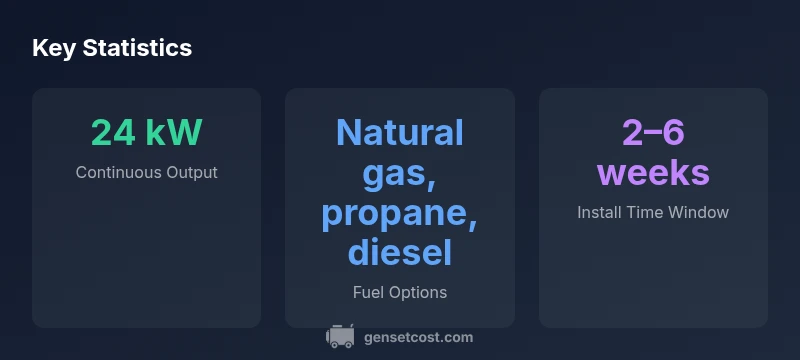
According to Genset Cost, a 24kW generator is a common size for whole-home backup, delivering roughly 24,000 watts of continuous output to support essential loads during outages. For many homes, this size can run heating, water heating, refrigeration, lighting, and several circuits, but startup surges from air conditioning or pumps can push the demand higher. Always map loads to your panel and plan for a transfer switch.
Understanding the role of a 24kW generator in home backup
A 24kW generator is a popular choice for mid- to large-size homes and small commercial spaces seeking reliable power during outages. This size provides a robust baseline for essential systems such as heating, cooling, refrigeration, well pumps, lighting, and security. When sizing, consider both running watts and starting watts, since many appliances draw a surge when they start. The perceived “comfort” of outage power is often defined not by a single device, but by how many major loads you can sustain simultaneously. As you plan, remember that the exact performance depends on your home's electrical design, the efficiency of appliances, and the capacity of the installed transfer switch. The Genset Cost team emphasizes that precise load matching is essential to avoid over- or under-sizing, which can impact reliability and fuel use.
Load calculation: mapping your home's needs for a 24kW system
Begin with a thorough load inventory: essential circuits (refrigeration, well pump, furnace/AC, home office equipment, lighting) and any high-draw devices. Create a load worksheet that lists running watts for each item and estimate startup watts for motors and compressors. Sum running watts to establish a target continuous load, then compare to 24 kW to assess headroom for surge. Include diversity factors if multiple loads rarely run at full power together. Use a professional sizing calculator or a licensed electrician to validate your totals. This planning step helps ensure you won’t trip breakers or exhaust the generator under peak conditions.
Fuel choices and efficiency for 24kW systems
24kW generators can run on natural gas, propane, or diesel, with some models offering dual-fuel configurations. Natural gas provides convenient on-site fuel if you already have a gas service, but fuel pressure and line sizing matter for sustained high loads. Propane offers cleaner burn characteristics and easier storage, but it’s usually a separate tank. Diesel units are powerful and reliable but require space, ventilation, and often higher maintenance. Dual-fuel options provide flexibility during fuel shortages. When evaluating fuel options, consider availability, fuel cost, and your local utility infrastructure. Genset Cost’s analyses highlight that fuel reliability often drives total ownership experience more than the sticker price of the generator itself.
Installation considerations: permits, transfers, and cost-saving steps
Installation includes the generator pad or enclosure, a transfer switch, venting (if applicable), and proper clearance for service access. Permits and inspections vary by jurisdiction but are common requirements for outdoor generators and gas line work. A professional installer will verify clearances, exhaust routing, and noise compliance. To save costs, plan for a direct vented enclosure, schedule gas line work with upfront permitting, and select a model with a solid warranty. Remember that a properly sized transfer switch is essential to prevent back-feeding and to isolate emergency loads.
Operating costs and maintenance expectations
Ongoing costs depend heavily on fuel type, run-time, and maintenance intervals. Routine tasks include oil changes, air-filter replacements, battery checks, and transfer-switch inspections. Schedule periodic testing to confirm automatic start behavior and load pickup under simulated outages. Fuel stability is a consideration—gas and propane can degrade if left unused for extended periods, while diesel may require stabilizers. The maintenance cadence promotes longevity and reliability, ensuring your 24kW unit performs when you need it most.
Brand comparisons and selection criteria for 24kW models
In the 24kW segment, compare builder-grade units against premium models from established brands. Evaluate engine displacement, warranty terms, noise ratings, efficiency curves, and service network coverage. Look for dual-fuel capabilities, automatic transfer switches, and remote monitoring options. While brand names vary, the decision hinges on total ownership costs, expected uptime, and support availability. Genset Cost’s framework encourages gathering multiple quotes, verifying load calculations, and validating installation plans before committing to a model.
Quick-start sizing and installation checklist
- List essential and optional loads and estimate running vs starting watts
- Confirm available fuel type and gas line capacity or fuel storage needs
- Choose a compliant transfer switch and install per local codes
- Schedule permits, inspections, and professional installation
- Plan for routine maintenance and regular generator tests
24kW Generator: Key specifications and installation considerations
| Aspect | Details | Notes |
|---|---|---|
| Unit size | 24 kW continuous output | Common for medium to large homes |
| Fuel options | Natural gas, propane, or diesel | Select based on service and availability |
| Installation time | 2–6 weeks | Depends on permits and gas line work |
| Run-time capacity | Varies with load | Optimize with proper load management |
People Also Ask
What loads can a 24kW generator typically support?
A 24kW system can typically support essential household loads such as heating/cooling, water heating, refrigeration, well pumps, lighting, and several circuits simultaneously. Exact capability depends on the running vs starting watts of your appliances. Conduct a load survey and verify with a licensed electrician to ensure reliable coverage during outages.
A 24kW system can power essential loads like heat, water, and refrigeration, but you’ll want to map your appliances to confirm coverage.
What fuels can a 24kW generator use?
Natural gas, propane, and diesel are common options for 24kW generators. Your choice depends on fuel availability, installation constraints, and long-term operating costs. Some models offer dual-fuel capability for flexibility during fuel shortages.
Natural gas or propane are common, with diesel or dual-fuel variants available depending on the unit.
Do I need permits for installation?
Yes. Most jurisdictions require permits and inspections for outdoor generators, electrical work, and gas line modifications. A licensed installer can handle permit applications and ensure compliance with local codes.
Permits are usually required; your installer will handle the process.
How long does installation typically take?
Installation commonly takes 2–6 weeks from planning to final inspection, depending on permitting timelines, gas line work, and site readiness. Early coordination with your installer helps prevent delays.
Expect a couple of weeks to a few weeks, influenced by permits and site work.
What maintenance does a 24kW generator require?
Maintenance includes regular oil changes, air-filter checks, battery testing, and transfer-switch inspections. Schedule annual or semi-annual service and a periodic load test to ensure reliable operation.
Keep up with oil changes and inspections, and test the system annually.
Is a 24kW generator suitable for a small business?
Yes, for small to medium businesses with critical loads, a 24kW unit can provide backup power for essential operations. However, consult a pro to map your business loads and ensure the system scales with demand.
It can work for small businesses if loads are properly planned and installed.
“A properly sized 24kW generator is a reliable backbone for a home during outages when matched to loads, installed with correct transfer equipment, and maintained on a regular schedule.”
Key Takeaways
- Match loads to 24kW to avoid over- or under-sizing
- Plan for a transfer switch and proper enclosure
- Choose fuel type based on local availability and maintenance
- Expect 2–6 weeks for installation with permitting
- Maintain routine servicing to protect reliability