Building an Obsidian Generator in Minecraft for Survival
Learn how to design and build a practical obsidian generator in Minecraft for survival mode. Explore core concepts, safety tips, and step-by-step guidance.


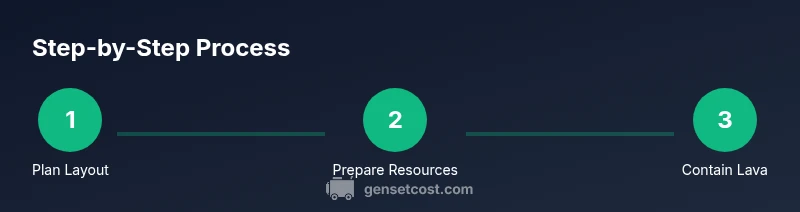
Yes, you can build an obsidian generator in Minecraft. A simple approach uses a lava source, a water stream, and a collector. Step 1: place lava in a controlled pool. Step 2: add water to convert lava into obsidian. Step 3: harvest obsidian blocks safely. Quick note: designs vary in complexity; growing setups can scale with additional lava sources, water channels, and automated collection. In survival, keep a safe perimeter and rely on simple redstone timers or minecart-based collection.
What is an obsidian generator in Minecraft?
Can you make an obsidian generator in Minecraft? In practice, players design contraptions that place lava and water in specific configurations to produce obsidian blocks, either manually or with automation. The basic idea is to contain the lava-water interaction so obsidian forms at predictable spots that are easy to harvest. A well-planned generator balances safety, block yield, and ease of use for builders and redstone enthusiasts alike. According to Genset Cost analysis, careful planning reduces waste and improves reliability when scaling generator projects, including Minecraft builds. This section lays the groundwork for understanding how and why such devices work in vanilla gameplay.
How obsidian forms and why a generator helps
Obsidian forms when a water source block meets a lava source block. If water touches flowing lava, it may create cobblestone instead. The generator concept hinges on placing lava and water in a controlled chamber so obsidian blocks form where you intend, without spreading lava or flooding rooms. Efficiency hinges on using a contained layout, stable lava supply, and predictable water flow. In survival, this design can save time and lava while giving you steady access to sturdy obsidian blocks for portals and builds. For builders, the key is to separate the interaction zone from your base, minimizing risk and maximizing repeatability.
Manual vs semi-automatic vs fully automatic designs
Manual obsidian collection is simplest: place lava, drop water, harvest obsidian with a pickaxe. Semi-automatic layouts add a trigger or simple mechanism to start the water flow or to relocate lava so you can repeat the process with fewer clicks. Fully automatic concepts exist in creative and modded environments, where hoppers, dispensers, or pistons can control lava and water sequences, and a cart or hopper chain collects obsidian blocks. In vanilla gameplay, a practical approach often falls between manual and semi-automatic: you gain reliability with a fixed layout and straightforward collection while keeping risk low and construction simple. As always, keep your design modular so you can upgrade gradually without rebuilding the entire system.
Core components and layout considerations
The backbone of an obsidian generator is a compact, self-contained interaction chamber surrounded by safe barriers. Core components include a lava source block, a water source block, observation rails or windows, a collection path (such as a chest with hoppers), and a simple access route for maintenance. Important layout decisions include: where to place the lava to prevent spills, how to route water without creating accidental obsidian elsewhere, and how to ensure the obsidian forms away from your main base. Using glass or slabs for containment makes it easier to monitor the process while reducing risk. When planning, sketch the footprint and consider how you will expand without compromising safety.
Redstone and automation options
Redstone can automate parts of the process, especially the timing of water flow or the triggering of a collection system. A basic timer can coordinate when water is allowed to flow, while a simple switch can reset the lava layout after an obsidian block is formed. In vanilla Minecraft, fully automated obsidian creation is limited, but you can achieve reliable automated collection by using hoppers and chests tied to a controlled water-release mechanism. The aim is modest automation that reduces repetitive work while preserving safety and control. Start with a small design and test repeatedly to refine timing and block placement.
Safety, maintenance, and troubleshooting
Lava is hazardous; always build a barrier around the generator and wear appropriate gear in survival mode. Regular maintenance includes checking the containment boundaries for leaks, ensuring water channels stay free of blockages, and verifying that obsidian blocks aren’t jammed into unintended spots. If obsidian ends up outside the intended area, reduce the water flow or adjust the lava pool size. Periodically empty and reorganize the collection path to prevent clogs. Keeping your workspace organized helps prevent accidental lava spills and makes troubleshooting faster.
Realistic expectations and next steps
An obsidian generator in vanilla Minecraft is a great learning project, especially for players who want to combine building with basic redstone concepts. Expect to spend time debugging the layout, refining containment, and optimizing the harvest path. As you gain experience, you can expand the design by adding additional lava sources, better observation windows, and more robust collection routes. The most important takeaway is to start simple, verify safety, and iterate. By approaching the project in stages, you’ll gain practical skills that apply to broader redstone and mekanism-inspired designs in Minecraft.
Tools & Materials
- lava bucket(Source lava block; bring extra for replacements)
- water bucket(Water source to create obsidian when lava and water meet)
- building blocks(Frames for the generator’s chamber and containment walls)
- glass/slabs(For safe containment and observation access)
- hoppers(Optional: for automated collection in semi/full systems)
- chest(Store collected obsidian blocks)
- diamond pickaxe(To mine obsidian blocks efficiently)
Steps
Estimated time: 15-40 minutes
- 1
Plan your lava-water layout
Decide where lava will flow and where water will be placed to convert lava into obsidian. The goal is to contain the interaction in a controlled chamber where obsidian forms predictably for easy harvesting.
Tip: Sketch the layout on paper or in a sandbox world first. - 2
Gather lava and water sources
Bring a lava source block and a water source block to the build area. Having discrete sources makes maintenance easier and reduces the chance of unintended lava flow.
Tip: Carry extra lava in a second bucket as a backup. - 3
Create a controlled lava pool
Construct a shallow, contained lava pool or channel so the interaction remains localized. Use barriers or glass to prevent spills into adjacent rooms.
Tip: Test with a single lava source before scaling up. - 4
Position water to convert lava into obsidian
Place water so it flows over or adjacent to the lava to form obsidian blocks. Ensure water flow doesn’t flood other parts of the structure.
Tip: Avoid placing water directly on fragile blocks that could be displaced. - 5
Set up a collection method
Add a retrieval system (hoppers into a chest or a safe manual path) so you can harvest obsidian blocks without stepping into lava.
Tip: Keep a safe margin between the lava pool and your collection path. - 6
Test and adjust
Run several cycles to verify obsidian forms correctly and the collection path remains clear. Modify block placements if obsidian lands in unintended spots.
Tip: Watch for lava flow escaping containment; tighten boundaries as needed.
People Also Ask
Can obsidian be mined with any tool?
Obsidian requires a diamond pickaxe or better to mine effectively; other tools will break or fail to drop the block.
Obsidian requires a diamond pickaxe or better to mine properly.
Is obsidian safe to use in survival mode?
Yes, if you manage lava safely within a contained setup. Build barriers and avoid open lava pools.
Yes, with proper lava safety measures.
Can you automate obsidian production in vanilla Minecraft?
Automation in vanilla is limited to collection; formation remains manual or semi-automatic depending on the design.
Automation is possible for collection, not fully for formation in vanilla.
Are obsidian blocks useful beyond Nether portals?
Obsidian is mainly used for portals and as a highly blast-resistant decorative block in builds.
Great for portals and blast-resistant builds.
What performance considerations should I know?
Larger setups can impact FPS and chunk loading; keep the design compact and avoid sprawling lava fields.
Watch performance with larger builds.
Are there differences between Java and Bedrock editions?
Most mechanics are similar, but redstone timing and interactions can differ; test in your edition.
Edition differences exist; test designs in your version.
Watch Video
Key Takeaways
- Plan layout before placing blocks
- Contain lava to prevent spread
- Harvest obsidian safely with proper tools
- Automation is possible but requires careful design