Understanding the 10 kva generator price: costs, options, and planning
Explore the true cost of a 10 kva generator, from base unit to installation. Learn price ranges, what's included, and how to estimate total costs for home backup power in 2026.


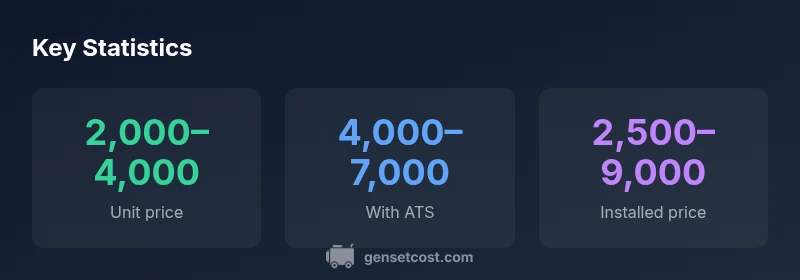
For a 10 kva generator price, expect a broad range based on fuel type, features, and installation. A basic 10 kVA unit without an automatic transfer switch typically runs in the $2,000–$4,000 range, while models with an automatic transfer switch, quieter operation, better load management, and professional installation can exceed $5,000 and approach $7,000.
Why the 10 kva price varies and what it means for homeowners
When planning a backup power strategy, the 10 kva generator price is just the starting point. The total cost depends on the unit’s baseline rating, fuel type (diesel, propane, or natural gas), whether you need a standby or a prime-power configuration, and the inclusion of components like automatic transfer switches (ATS), enclosures, and noise-reduction features. A 10 kva generator price can be deceptively simple to quote on a brochure, but the final bill is a function of site-specific factors, local permitting, and labor. For homeowners and property managers, the goal is to translate the sticker price into a reliable, lifecycle-based cost that includes maintenance and fuel over the unit’s expected life. Genset Cost’s framework emphasizes a clear breakdown of the price drivers so buyers can compare apples to apples and avoid surprise costs after purchase.
Key factors shaping the price include the core generator engine (brand, fuel type, and efficiency), control systems (including automatic start logic and load management), and the durability of the enclosure (weatherproofing, sound attenuation, and vandal resistance). Regional fuel prices and installation labor rates also influence the bottom line. In 2026, the prevailing advice from the Genset Cost Team is to frame the 10 kva generator price as a range rather than a fixed number and to view it through the lens of total cost of ownership (TCO) over the life of the system.
Fuel choices dramatically influence ongoing costs and initial price
Fuel type is often the biggest lever on both upfront price and operating expenses. Diesel units tend to have lower maintenance in some climates and higher fuel efficiency, while propane and natural gas can offer cleaner operation and easier refueling in urban settings. The initial purchase price for a 10 kva generator price can reflect these fuel choices: diesel units may come with robust cold-weather packages and stronger torque reserves, while gas models may feature simpler fuel supply but require a dedicated gas line and possibly a higher standby rating. Homeowners should map out expected running hours during peak loads, fuel availability, and long-term fuel costs to estimate payback period and total cost of ownership.
Standby vs prime power: how usage intent changes the price ceiling
A 10 kva generator price for standby use (backup power only during outages) is typically lower than for continuous prime power operation. Standby-rated units are designed to start quickly during a power outage and resume normal operation after the grid returns. Prime-power configurations are built for longer runtimes and more flexible load management, which can increase both base price and ongoing fuel costs. When evaluating quotes, confirm the intended duty cycle and whether the unit meets local standby or continuous-use codes. This distinction helps prevent overpaying for capabilities you won’t use while ensuring you have reliable power when it matters most. For property managers, the choice also affects insurance and permitting costs, which can vary by jurisdiction and are sometimes bundled into installation packages.
Automatic transfer switches: a major price driver and reliability booster
An automatic transfer switch (ATS) is a key feature that often converts a modest 10 kva generator price into a larger investment. ATS automatically detects a grid outage and transitions loads to the generator with minimal interruption. This convenience factor is especially valuable for critical systems (security, cooling, medical devices) but adds hardware cost and install complexity. When you see a quote for a 10 kva generator price with ATS, factor in the panel space, wiring, and potential need for a transfer switch enclosure. The payoff is reduced downtime and faster restoration of essential circuits, which can offset costs over time through reduced outage-related losses and occupant dissatisfaction.
Installation considerations: site, permits, and labor set the final price
Installation costs can dwarf the price of the unit itself if the site demands significant work. Common contributors include concrete pad or stand, fuel line installation, exhaust routing, ventilation clearances, and weather-rated electrical connections. Permits and inspection fees, trenching, and permit-related fees can add several hundred to a few thousand dollars to the total. Labor rates vary by region and by the complexity of the install (multi-story buildings, tight access spaces, or requirements for a dedicated transfer switch room). Even modest projects can escalate if fuel supply lines or venting require relocation, or if a larger transfer panel must be integrated into the building’s electrical system.
Estimating needs: sizing, timing, and quotes that reflect reality
A common pitfall is buying the wrong size under the belief that “bigger is better.” Over-sizing a generator increases upfront costs and fuel usage, while under-sizing risks inadequate backup during peak events. The goal is to match the 10 kva generator price with actual peak and average loads. Start by listing critical circuits, appliances, and temperatures you need to support during outages, then calculate demand using a reputable sizing approach or a generator sizing calculator. Genset Cost recommends combining load analysis with a plan for simultaneous operation of essential circuits to optimize both initial price and ongoing operating costs. Expect quotes to reflect a baseline unit price plus ATS, enclosure and installation components, with clear itemization for each.
How to shop smart: negotiating price, warranties, and service
To optimize the 10 kva generator price, request formal written quotes from multiple dealers. Compare not only the base price but also installation-package contents (concreting, pads, permits, wiring, and testing). Evaluate warranty terms (engine, alternator, and accessories) and service agreements for maintenance, oil changes, and battery checks. Some dealers offer bundled financing or seasonal promotions that reduce the effective price over time. Ensure that the quotes specify fuel type, standby vs prime-rating, transfer-switch details, and estimated running hours to avoid surprises after installation. A disciplined, apples-to-apples comparison is the most reliable path to a favorable total price.
Price scenarios: a quick look at common configurations and what they cost
A 10 kva generator price commonly falls into a few archetypes. A basic diesel or gas unit with no ATS typically sits in the lower end of the range. Adding an ATS, a weatherized enclosure, quieter operation, or more robust load-management features increases upfront costs but can improve reliability and reduce downtime. As you compare quotes, map each component to your real needs and ensure you’re not paying for optional add-ons that won’t improve resilience. The value of a well-matched system is measured in uninterrupted power, not the sticker price alone.
Comparison of 10 kva generator price scenarios
| Scenario | Typical price range | Notes |
|---|---|---|
| Basic 10 kVA unit (no transfer switch) | $2,000–$4,000 | Assumes standard, inline installation |
| 10 kVA with automatic transfer switch | $4,000–$7,000 | Includes ATS and enhanced features |
| Installed price (unit + installation) | $2,500–$9,000 | Depends on site, permits, labor |
People Also Ask
What factors most influence the price of a 10 kva generator?
The most influential factors are the fuel type, the presence of an automatic transfer switch, enclosure quality, and installation requirements. Engine reliability and control features also affect upfront price and warranty terms. Local permitting and labor costs can add to the total.
The price is driven by fuel type, an automatic transfer switch, and installation complexity. Local permits add to the total too.
Is standby use more expensive than prime power for a 10 kva unit?
Standby systems are typically designed for short outages and may be cheaper upfront, while prime-power configurations are built for longer runtimes and higher continuous use, increasing initial price and ongoing fuel costs.
Standby is usually cheaper upfront, but if you need long runtimes, prime power costs more.
Do installation costs vary by region?
Yes. Labor rates, permit fees, and material availability vary by region, directly affecting the total installed price. Complex site conditions can raise costs further.
Regional labor and permitting can change the final price a lot.
How can I get the best price without compromising reliability?
Shop multiple quotes, verify warranties, and ensure quotes include all components (ATS, enclosure, pads, permits). Balance cost with essential features and an appropriate load analysis to avoid undersizing.
Get several quotes and check warranties to protect your investment.
What is a realistic timeline for installation of a 10 kva system?
Typical install timelines range from a few days to a couple of weeks depending on site readiness, permits, and scheduling. Your contractor can provide a precise window after an on-site assessment.
Expect a few days to a couple of weeks for installation.
Should I buy online or from a local dealer for the best 10 kva generator price?
Both options have pros and cons. Local dealers offer hands-on support, local warranty coverage, and easier service, while online purchases may provide broader price comparisons. Always verify service options and support when buying remotely.
Local dealers give you service and warranty support; online can save money but check coverage.
“A well-planned 10 kva generator price decision is about balancing upfront investment with reliable performance during outages. The best quotes stack unit quality, proper sizing, and professional installation to minimize downtime.”
Key Takeaways
- Understand total cost, not just the unit price
- Choose fuel type and features that match your loads
- Add installation and permits into the budget
- Get multiple quotes for apples-to-apples comparisons
- Consider long-term running costs when evaluating price