Can You Buy Generators? A Practical Homeowner’s Guide
Learn how homeowners can buy generators, size appropriately, estimate costs (using ranges), and plan installation with transfer switches and maintenance in mind.


Yes, you can buy generators from big-box retailers, online marketplaces, and local dealers. Your decision should reflect your home’s power needs, fuel type, and installation constraints. Expect upfront costs plus delivery and possible transfer-switch or professional installation fees. Consider whether you prefer portable units for outages or a standby system with automatic restoration, and check fuel compatibility and warranty terms.
Understanding Generator Options for Home Use
Can you buy generators? The question begins with matching a unit to your outage profile and daily needs. Generators are available at major retailers, specialty electrical suppliers, and online marketplaces. According to Genset Cost, most homeowners start by choosing between portable models that power several circuits manually and standby systems that restore power automatically. Your placement, noise tolerance, and local codes guide what you buy and how you install it, helping keep upfront costs reasonable and long-term reliability high.
Sizing Your Needs: Portable vs Standby
Sizing is the key to satisfaction with a generator. A portable model is typically less expensive upfront but requires manual startup and transfer, whereas a standby system is sized to your essential loads and starts automatically when the grid goes down. Start by listing critical circuits (refrigerator, lighting, heating, medical devices) and estimating their running watts. Add 20–30% for surge watts and future expansion. A precise load estimate helps you avoid overpaying for a large unit or risking outages from undersizing. Keep in mind that standby systems may require professional installation and a dedicated enclosure.
Fuel Types and Efficiency: Gas, Propane, Diesel, and More
Fuel choice affects operating costs, storage space, and performance. Gasoline generators are common for portable units but require refueling and proper ventilation; propane and natural gas offer cleaner storage and easier refueling for standby systems. Diesel engines are robust for heavy use but can be louder and heavier. Many units support dual-fuel options; check local availability and storage safety. When evaluating fuel, consider long-term costs, delivery restrictions, and environmental considerations.
Costs, Warranties, and Hidden Fees
When you shop, focus on total cost of ownership, not just the sticker price. Upfront costs include the generator, delivery, and, for standby systems, transfer switches and permits. Ongoing costs include fuel, maintenance, and potential battery replacements for automatic transfer switches. Warranties vary by brand and model; read the terms to understand coverage, duration, and what voids coverage. Remember installation expenses and service contracts can add significantly to total cost, so compare multiple quotes.
Installation Essentials: Transfer Switches, Codes, and Permits
A transfer switch is the safest way to connect a generator to your home’s electrical system and prevents backfeeding. Without one, you risk damaging appliances or injuring utility workers. Expect to work with a licensed electrician who can size the switch, route cables, and obtain permits from your local authority. Some jurisdictions require inspections after installation. Build a realistic timeline that includes permitting, scheduling, and a safe testing window.
How to Compare Models: Specs to Check
Key specs matter for long-term reliability. Look for continuous wattage, surge wattage, fuel type, runtime on a full tank, noise level (dB), and automatic start features. Check enclosure design for weather resistance and protective features like oil-level sensors. Review maintenance intervals and the brand’s service network to minimize downtime. Finally, verify compatibility with your transfer switch and electrical panel.
Planning for Maintenance and Service
Regular maintenance keeps generators reliable when you need them most. Schedule seasonal oil changes, filter replacements, and battery checks for automatic startups. Track fuel stability and storage safety for your chosen fuel type. Maintain a simple log of servicing, and consider enrolling in a service plan if offered by the manufacturer or dealer. A proactive maintenance routine reduces surprise failures during outages.
Tools & Materials
- Measuring tape(to measure space and load wiring distances)
- Voltage tester(to verify electrical connections safely)
- Outdoor-rated extension cords (heavy gauge)(for temporary connections when testing)
- Wrench set and pliers(to tighten connections and hardware)
- Wire strippers(for basic wiring adjustments)
- Safety gear (gloves, eye protection)(personal protection during setup)
- Contractor contact for transfer switch installation(licensed electrician or installer)
Steps
Estimated time: 5-10 days
- 1
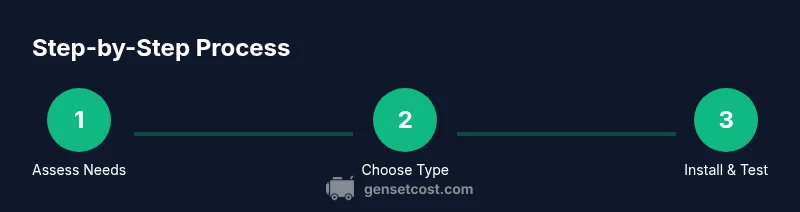
Assess Your Power Needs
Identify essential loads and estimate their running watts. Create a simple load list (refrigerator, lights, heating elements, medical devices) and total the watts. Add a 20–30% buffer for future expansion to avoid under-sizing. This step sets the foundation for choosing portable vs standby.
Tip: Start with the most critical devices and gradually add optional loads. - 2
Decide Between Portable and Standby
Compare upfront costs, convenience, and automation. Portable units are cheaper but require manual startup and transfer; standby systems auto-start and power automatically. Your outage frequency and desired comfort level should guide the choice.
Tip: If outages are frequent or long, a standby may offer better value despite higher upfront costs. - 3
Check Space, Ventilation, and Noise
Choose a location with good ventilation, safe clearance from doors and windows, and noise considerations. Outdoor placement with a weather-safe enclosure reduces noise impact and safety risks.
Tip: Keep at least 5–10 feet from structures and openings to minimize fumes and noise. - 4
Choose Fuel Type and Storage Plan
Decide among gasoline, propane, natural gas, or diesel based on availability and storage space. Propane or natural gas simplifies refueling for standby systems, while gasoline products are common for portable units.
Tip: Ensure safe storage practices and follow local regulations for fuel containers and ventilation. - 5
Size the Generator Using a Calculator
Use a reputable calculator or manufacturer guidelines to select your unit’s wattage. Cross-check results with your load list and allow for future growth. Ensure surge wattage covers motor starts and other peak demands.
Tip: Double-check peak loads like air conditioners and pumps to prevent brownouts. - 6
Plan Electrical Connections and Transfer Switch
Outline the wiring path and secure a licensed electrician for transfer switch sizing and installation. A transfer switch prevents backfeeding and simplifies panel integration.
Tip: Never wire a generator directly into your home panel without a transfer switch. - 7
Arrange Delivery, Permits, and Installation
Coordinate delivery with the installer, obtain required permits, and schedule inspections if required. Allow lead time for permits and for the installer to plan the electrical work.
Tip: Request written quotes and confirm warranty terms before work begins. - 8
Test Run and Documentation
Perform a controlled test run, verify that all critical loads operate, and monitor for abnormal noises or leaks. Keep service logs, fuel records, and warranty information for future reference.
Tip: Document test results and create a simple maintenance checklist for ongoing care.
People Also Ask
What is the difference between portable and standby generators?
Portable generators are mobile and require manual start-up; standby units are permanently installed and start automatically during an outage. The right choice depends on your outage frequency, load needs, and willingness to handle installation.
Portable units are moved and started manually, while standby units stay in place and auto-start when needed.
Do I need permits to install a standby generator?
Permits vary by location. Your installer will know which permits are required and may coordinate inspections after installation to ensure code compliance.
Permits depend on local rules; your installer handles the process.
Can I install a generator myself?
For safety and code compliance, generator installation—especially with a transfer switch—should be performed by a licensed professional.
It's not recommended to DIY the electrical connections for a generator.
What costs should I expect beyond the unit price?
Delivery, transfer switch, permits, electrical work, fuel, maintenance, and potential battery replacements affect total cost.
There are several ongoing costs besides the purchase price to consider.
How long will a generator last with proper maintenance?
With regular maintenance, a generator can provide many years of service, depending on usage and climate.
With good maintenance, expect many years of reliable operation.
Watch Video
Key Takeaways
- Define essential loads clearly.
- Choose portable vs standby based on outage patterns.
- Plan for transfer switch and permits before purchase.
- Budget total ownership: purchase price, installation, fuel, and maintenance.