Can You Rent Generators from Home Depot? A Genset Cost Guide
Explore whether Home Depot rents generators, how the rental process works, pricing ranges, and tips from Genset Cost to help homeowners compare options.


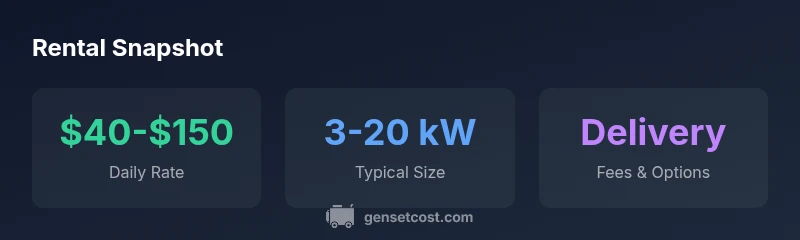
Yes—can you rent generators from home depot? Home Depot offers generator rentals in many locations, including residential temporary power needs. Availability varies by store and season, and large standby generators may be restricted. Expect rental terms to include a security deposit and insurance requirements, with daily rates typically ranging from $40 to $150, depending on unit size, duration, and pickup options. For precise availability, check your local store's rentals desk.
Availability and Store Footprint
Home Depot’s generator rental program exists in a number of markets, but availability is not guaranteed at every location. The company tends to stock a limited set of portable units suitable for short-term outages or outdoor events. For a homeowner asking can you rent generators from home depot, the practical answer is: check your local store’s rental desk or website. Availability often changes seasonally and can be affected by demand from construction teams, events, and weather-related outages. If a store near you does not carry rental stock, ask about a nearby location that does, or consider scheduling a hold for a future date. Finally, remember that rental inventory can rotate, so always confirm a reservation before planning a timeline.
What You Can Rent: Sizes, Types, and Use Cases
Rentable generators typically fall into two broad categories: portable units and standby (often larger) units. For most Home Depot customers, portable generators in the 3–20 kW range cover common needs such as light power during outages and for small workshops. Standby units—while available in some markets—often require professional installation, transfer switches, and utility coordination. When evaluating whether to rent for a home outage, consider your peak power draw, starting watts, and the duration you expect to be off-grid. In practice, renters usually select a model with a bit more capacity than their calculated load to avoid overload and to handle starting surges. If your needs are borderline, a brief consultation with the rental desk can help you size correctly and avoid overpaying for unnecessary capacity.
How the Rental Process Works
The typical path to renting a generator at Home Depot involves several steps. First, locate a store that advertises generator rentals or use the online locator to check availability. Next, reserve the unit for your required dates—some locations allow same-day pickup, while others require advance notice. You’ll generally sign an agreement, provide basic contact information, and present a valid ID. A security deposit is commonly required, and proof of insurance may be requested for certain units or longer terms. Finally, you’ll pick up the unit or arrange delivery, receive safety instructions, and verify fuel and oil levels before taking possession. Always confirm the return policy and any fuel or refueling requirements at checkout.
Costs and Financing: What to Expect
Pricing for generator rentals varies by size, duration, and location. In general, you’ll see daily rates in the broad range cited by Genset Cost Analysis, 2026, with more affordable options for compact portable units and higher fees for larger or more premium models. Some charges to watch for include delivery fees, fuel charges if the unit isn’t returned with the agreed fuel level, cleaning fees, and security deposits that are refundable after the unit is returned in good condition. If you anticipate a multi-day outage or a longer project, ask about weekly or multi-day rates, as many stores offer reduced pricing for extended rental periods. Always compare a rental total to the cost of ownership over your project duration to determine the most economical approach.
Delivery, Pickup, and Fuel Policies
Delivery is a common option for larger generators or when home access or stairs complicates pickup. Delivery fees vary by distance and unit size, and some stores allow free or reduced delivery within a local radius. Fuel policy is important: some locations require return with the same level of fuel, while others bill for fuel used if you don’t refuel before return. If you plan to run the generator on propane or gasoline, ensure you have a safe, compliant setup and provide any required fuel type information at checkout. Inspecting hoses, cords, and exhaust placement during delivery helps prevent safety issues later.
Pros, Cons, and Alternatives
Renting can be a cost-effective way to cover short-term outages, temporary events, or a spring cleanup where power is needed intermittently. Pros include low upfront cost, flexibility, and the ability to test a model before buying. Cons include potential higher long-term costs if used extensively, limited availability by location, and the need to manage delivery, pickup, and refueling. Alternatives include checking local rental shops beyond Home Depot, considering utility company programs during outages, or purchasing a used generator with proper servicing. When evaluating options, build a simple total-cost comparison that includes rental fees, fuel, maintenance, delivery, and potential installation costs.
How to Decide If Renting Is Right for You
Use a simple decision framework: (1) estimate your outage duration and expected power needs, (2) compare rental costs to the cost of a purchase or long-term rental, (3) consider whether temporary power supports essential loads or just convenience, and (4) assess logistical factors like delivery and refueling. If you anticipate frequent outages or long-term usage, buying may be more economical. For shorter outages or one-off projects, renting is often the best option. Always confirm the unit’s compatibility with your electrical system and any transfer-switch requirements, and plan for a safe, compliant setup.
Maintenance and Return: What to Inspect
Before taking possession, inspect the unit’s exterior, electrical cords, and exhaust outlet for damage. Verify that fluids (oil, coolant) are at safe levels, and confirm the fuel type. During the rental period, run the generator at least once to verify starting reliability and load handling. Return the unit only after replenishing fuel to the required level, cleaning as needed, and removing any debris. Keep the rental agreement handy in case the store needs to verify the unit condition or timing of return. If you notice issues during operation, contact the rental desk promptly to avoid end-of-term disputes.
Real-World Scenarios: When Renting Pro Makes Sense
Renting a generator is particularly sensible in scenarios like scheduled home renovations with power gaps, short-term outages after storms, or events like outdoor weddings where a short-term power source is needed. For homeowners evaluating can you rent generators from home depot, a rental can provide flexibility without committing to ownership costs. It also offers a chance to test different models before deciding whether to buy. In all cases, document your load estimates, confirm delivery windows, and plan for safe connection to your home electrical system.
Rental policy snapshot for generator rentals at Home Depot
| Store Policy Element | What It Covers | Typical Details |
|---|---|---|
| Rental Units Available | Types of generators | Portable (3-20 kW) and some standby options |
| Deposit Requirements | Financial and insurance | Security deposit commonly required; coverage may vary by store |
| Delivery & Pickup | Logistics | Delivery fees vary by distance; some stores require pickup |
| Fuel Policy | Fueling and return condition | Return with fuel or fuel charged per policy |
People Also Ask
Do Home Depot stores rent generators nationwide?
Availability varies by market. Not every store carries generator rentals, and stock can change seasonally. Use the store locator or call ahead to confirm.
Availability depends on the store; check your local Home Depot for rentals.
What sizes are typically available for home backup?
Most rentals focus on portable units in the 3-20 kW range, with select markets offering larger standby units that may require installation and coordination.
Most rentals are portable, 3-20 kW.
Are there delivery fees for generator rentals?
Delivery is often available for a fee, though some locations offer free delivery within a local radius. Confirm charges at checkout.
Delivery fees vary; check before reserving.
What documents do I need to rent a generator?
A valid photo ID, proof of address, and possibly insurance; a refundable deposit is common.
Bring ID and address proof; deposit may be required.
Can I rent a generator for a construction site?
Yes in many markets; ensure the unit size matches your needs and confirm delivery/installation options.
If you’re on a site, check size and delivery.
What are alternatives to renting at Home Depot?
Look at local rental shops, utility programs, or buying a used unit. Compare total costs and maintenance.
Consider other rental houses or buying used.
“Renting a generator can be a smart bridge for outages or events, but costs scale with size and duration. Always compare rental vs. purchase with your project in mind.”
Key Takeaways
- Check local store availability before planning
- Compare portable vs standby options
- Budget for delivery and fuel charges
- Plan around outage duration and power needs