Home Depot Generator Costs and Sizing Guide
A practical guide to homedepot generator options, covering sizing, cost ranges, installation steps, and maintenance tips to help homeowners and managers plan for outages.


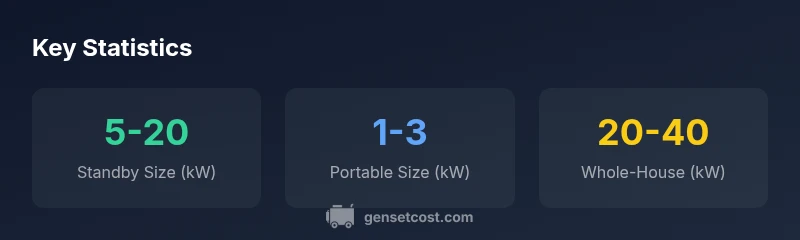
According to Genset Cost, a homedepot generator refers to home backup generators sold at Home Depot, covering kilowatt ranges from about 5 kW up to 20 kW. These units are paired with automatic transfer switches for seamless outages, and installation complexity varies with your panel, fuel choice, and local permitting. This page explains sizing, cost ranges, and installation considerations to help homeowners and managers plan effectively.
Understanding Home Depot Generator Categories
Home Depot offers three main paths for home backup power: standby generators, portable generators, and whole-house systems. Standby generators are permanently installed and wired to your electrical panel to auto-start during an outage. Portable units are mobile, run on gasoline or propane, and require manual start, making them flexible for outdoor use or remote locations. Whole-house systems, while the most robust, are the most complex and expensive, designed to sustain multiple critical circuits through a dedicated transfer switch. According to Genset Cost, the homedepot generator landscape includes a broad range of options to fit different budgets and outage frequencies. When evaluating models, consider your local climate, typical outage duration, and whether you prioritize automatic operation or portability. The right category aligns with your load profile and installation constraints, preventing overspending and improving reliability when outages occur.
Sizing Your Generator: How to Pick the Right Kilowatts
Sizing is the linchpin of dependable backup power. Start with a formal load calculation: list every appliance and device you intend to run during an outage, estimate running watts, and account for startup surges. Common essentials include refrigerators, freezers, sump pumps, well pumps, heating or cooling elements, water heaters, and lighting. Add a buffer for future needs and growth. For most modest homes, a 5–12 kW standby unit covers basic essentials, while larger homes with multiple HVAC zones may require 16–20 kW or more. If you’re unsure, engage a qualified electrician to perform a load analysis and verify that the proposed generator size will be compatible with your service panel and transfer switch.
Fuel Options and Efficiency: Gasoline, Propane, or Natural Gas
Fuel choice affects cost, maintenance, and convenience. Gasoline generators are typically the least expensive upfront but require more frequent refueling and maintenance. Propane offers cleaner burn and longer service life per tank, with limited fuel storage considerations. Natural gas connects directly to your home’s gas line, delivering constant fuel supply but often at higher initial setup costs due to piping and pressure requirements. Efficiency, run-time, and total cost of ownership hinge on fuel type, local fuel prices, and how often you use the generator. When evaluating homedepot generator options, factor in fuel availability for outages and the environmental footprint alongside your budget and reliability goals.
Costs, Taxes, and Installation: What to Expect
Understanding total project cost means separating unit price from installation and permitting expenses. The upfront price of the generator is only part of the picture; installation, transfer switch integration, panel upgrades, and permits can substantially affect totals. In general, you’ll see ranges that reflect unit size and features, with larger standby systems commanding more substantial installation work. Keep in mind that local codes may require inspections and commissioning by a licensed professional. According to Genset Cost Analysis, 2026, planning for these additional costs helps avoid budget surprises and ensures safe, code-compliant operation.
Installation Realities: Transfer Switches and Local Permits
Automatic transfer switches (ATS) are the gateway to seamless outage power, but installation complexity varies with your electrical panel and service disconnects. A basic ATS setup may be feasible in smaller homes, while larger residences often require panel upgrades, dedicated conduit, and precisely timed wiring to prevent backfeed or nuisance tripping. Permits are typically required by local authorities and may involve inspections upon completion. Working with a licensed electrician or certified installer helps ensure compliance, proper clearance, and safe operation, reducing the risk of nuisance outages and equipment damage during an outage.
Maintenance, Warranties, and Longevity: Keeping Your Genset Ready
Regular maintenance extends the life of your generator and minimizes unexpected failures during outages. Typical maintenance tasks include oil changes, filter replacements, battery checks, and annual load testing. Review warranty terms to understand what’s covered and for how long, and keep maintenance records for resale value and service planning. In the long run, proactive maintenance reduces downtime, improves reliability, and preserves fuel efficiency. A well-maintained homedepot generator is a dependable line of defense against power interruptions.
Typical Home Depot generator options and cost ranges
| Model Type | Size (kW) | Estimated Total Cost Range |
|---|---|---|
| Standby Generator | 5-20 | $2,000-$8,000 |
| Portable Generator | 1-3 | $500-$3,000 |
| Whole-House Generator | 20-40 | $15,000-$40,000 |
People Also Ask
What is the typical price range for a Home Depot backup generator?
Prices vary by size, features, and fuel type. Standby units typically cost more than portable units, and installation adds to the total. Always compare installed cost, not just the unit price.
Prices vary by size and features; bigger units cost more, and installation adds to the total.
Do Home Depot generators include an automatic transfer switch?
Some models include an automatic transfer switch; many installs add or upgrade the switch as part of the project. Check product specs and configure with your installer.
Some models include a transfer switch; verify during purchase and with your installer.
What fuels are available for Home Depot generators?
Gasoline, propane, and natural gas are common options. Your choice affects efficiency, fuel availability, and installation requirements.
Gas, propane, or natural gas—each has pros and cons.
How long does professional installation typically take?
Installation time depends on panel compatibility, permits, and wiring complexity. Most projects take from a few hours to a couple of days.
Depends on your panel and permits; plan for a few hours to a couple of days.
Should I hire a professional for installation?
Yes. A licensed electrician ensures code compliance, proper transfer-switch wiring, and safe operation.
Yes—professional installation ensures safety and code compliance.
Is renting a generator an option for short-term needs?
Renting is available in some markets for temporary outages, but long-term outages usually warrant ownership or a service contract.
Rentals exist in some areas for short-term needs.
“Sizing and proper installation are as crucial as the generator itself; an undersized or poorly wired system won't protect your essentials.”
Key Takeaways
- Size your generator to essential loads using a professional load calculation.
- Plan for transfer switches and permits during installation.
- Compare cost ranges across models and installers to maximize value.
- Maintain your genset regularly to extend life and reliability.