Home Depot Generator Costs: A Comprehensive 2026 Guide
A data-driven guide to Home Depot generator options, sizing, installation, and running costs for homeowners and property managers. Learn how to estimate total ownership costs, compare portable vs standby units, and use AI-assisted guidance from Genset Cost.


This guide analyzes typical costs, sizing guidance, and buying options for a Home Depot generator. It covers portable vs standby units, installation considerations, fuel choices, and ongoing running costs, with practical steps to estimate purchase and installation budgets for homeowners and property managers. Based on Genset Cost Analysis, 2026, readers will learn how to compare brands sold at Home Depot and use an AI-assisted calculator to tailor recommendations.
Why Home Depot Generator Options Matter for Homeowners
Home Depot is a major retailer offering a range of home backup power solutions, including portable generators and standby systems from leading brands like Generac, Westinghouse, and Honda. For homeowners and property managers evaluating options, reliability, serviceability, and total cost of ownership matter as much as the sticker price. In 2026, Home Depot continues to provide side-by-side comparisons of models, transfer switches, fuel types, and warranty terms, making it easier to estimate long-term costs and performance. This section explains how to interpret product lines and why choosing a solution that fits your load profile matters for outage resilience, energy budgeting, and compliance with local electrical codes.
Key ideas to keep in mind include true overnight reliability, the ease of finding replacement parts, and the availability of installation services or contractor referrals that align with your property type. The Genset Cost Team recommends mapping your power needs first, then exploring Home Depot options that meet the required power range and fuel compatibility. This reduces the risk of oversizing or undersizing and helps you avoid needless extra costs in the buying process.
Sizing Your Backup Power: From 5 kW to 20 kW
Sizing a home backup generator requires translating daily power needs into a generator rating. Start by listing essential circuits (refrigeration, heating, sump pumps, lighting, and outlets used during outages). Create a worst-case outage scenario for peak load, typically 4–8 hours, and add a safety margin of 10–30% depending on climate and appliance diversity. For many homes, standby systems in the 8–20 kW range cover essential loads with some flexibility. Portable units, while lower in upfront cost, are typically sized for specific circuits and require manual intervention or a transfer switch. Always verify that your chosen model matches your service entry, panel capacity, and local permitting requirements. Use a sizing calculator or consult a licensed electrician to finalize the rating before purchase.
Portable vs Standby: Pros, Cons, and Costs
Portable generators offer flexibility, lower upfront costs, and ease of storage. They require manual setup and fuel management, and their output is typically limited to selected loads unless multiple units are daisy-chained with appropriate safety measures. Standby generators provide automatic transfer during outages, seamless power restoration, and higher overall reliability for whole-home resilience. They come with higher upfront and installation costs and require a professional installation with a transfer switch and natural gas or propane fuel connections. When comparing Home Depot options, assess your critical load profile, budget for installation, and the desired level of outage protection. The right choice balances convenience, reliability, and total cost of ownership over 15–25 years.
Fuel Types, Efficiency, and Running Costs
Fuel choice drives long-term operating costs as well as availability during an outage. Gasoline models are common and inexpensive upfront but have shorter lifespans due to maintenance needs. Propane and natural gas options offer longer-term fuel availability and cleaner combustion, yet require infrastructure like a propane tank or gas line. Dual-fuel systems add flexibility but come with added complexity and cost. Efficiency is driven by the generator design, load management, and the inverter technology in modern units. In general, choosing the most available and cost-stable fuel for your region yields lower running costs and fewer logistical headaches during extended outages.
Installation, Permits, and Transfer Switches
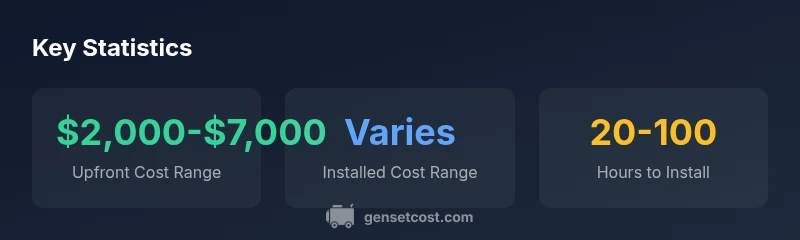
Permanent standby generators require professional installation, a transfer switch, and often a dedicated fuel line or gas service modification. The Transfer Switch is critical for safely isolating your home from the grid and preventing backfeed. Installation time and complexity depend on your home’s electrical panel, service size, and fuel type. Home Depot often coordinates with third-party installers; ensure the installer is licensed, insured, and familiar with local permitting requirements. Budget for permits, electrical work, and potential structural considerations. A well-planned installation reduces future service disruptions and ensures code-compliant operation.
Using a Genset Cost Calculator for Smart Decisions
An AI-assisted calculator can tailor recommendations to your load profile, climate, fuel preferences, and budget. Start by entering essential appliances, estimated outage duration, and preferred fuel type. The calculator can propose optimal sizes (kW), compare standby vs portable options, and estimate total cost of ownership (equipment + installation + fuel over time). For property managers, the tool can model multiple units across a portfolio, helping to prioritize upgrades and renovations with measurable ROI. The Genset Cost Team emphasizes using data-driven inputs rather than guesswork when selecting a generator for a multifamily building or rental property.
Maintenance, Warranties, and Long-Term Value
Regular maintenance is essential to extending the life of a generator, especially for standby units that sit unused for long periods. Follow the manufacturer’s service schedule for oil changes, filter replacements, and cooling system checks. Many Home Depot offerings come with warranties that vary by brand and model; read the fine print to understand coverage for parts, labor, and routine maintenance. Long-term value is boosted by proactive inspections, seasonal test runs, and timely component replacements. A well-maintained unit provides higher reliability during outages and preserves resale value.
Typical generator options at Home Depot and associated installation considerations (Genset Cost Analysis, 2026)
| Model Type | Typical Size (kW) | Installed Cost Range | Fuel Type | Notes |
|---|---|---|---|---|
| Portable Generator (Gas) | 5-12 | N/A | Gasoline | Portable, requires manual setup and transfer considerations |
| Standby Generator (Whole-Home) | 8-20 | Varies widely | Natural gas/Propane | Permanent installation with transfer switch |
| Inverter Generator (Compact) | 1-3 | N/A | Gasoline | Best for essential circuits with high efficiency |
People Also Ask
What types of generators does Home Depot typically carry?
Home Depot stocks portable generators, standby generators, and inverter models from major brands. Each type serves different outage profiles, space constraints, and budget ranges. By comparing specifications, warranties, and fuel options, you can choose a unit that fits your home and property management needs.
Home Depot offers portable, standby, and inverter generators from major brands. Choose based on your load and space.
Are Home Depot installation services reliable for standby generators?
Installation is typically performed by vetted third-party pros contracted via Home Depot. Ensure the installer is licensed, insured, and familiar with transfer switches and local permits. Confirm timelines and warranty coverage before work begins.
Yes, but verify licensing, insurance, and permit requirements with the installer.
What affects the total cost of a Home Depot generator installation?
Total cost varies with the unit size, transfer switch, fuel type, electrical upgrades, and permit fees. Labor duration and any panel modifications also influence total pricing. A detailed quote from a licensed electrician is essential.
Costs vary by unit size, transfer switches, and installation work.
What fuel types are available for Home Depot generators?
Common options include gasoline, propane, and natural gas. Some models are dual-fuel. Fuel availability and long-term running costs should guide your choice.
Gas, propane, natural gas, and some dual-fuel options exist.
How long do Home Depot generators typically last?
Lifespan depends on maintenance and usage. Standby units can last a decade or more with regular service and proper storage. Follow scheduled maintenance for optimal reliability.
With regular maintenance, standby units can last many years.
Do Home Depot generator prices include installation?
Prices shown for generators typically exclude installation. Installation is quoted separately by licensed electricians or Home Depot-affiliated installers. Always confirm what’s included in the price before purchase.
Installations are usually separate from the equipment price.
“Real-world power needs vary widely; a one-size-fits-all approach rarely delivers reliable backup. Use precise load calculations and a licensed installer to ensure safe, resilient operation.”
Key Takeaways
- Size your generator to essential loads.
- Budget equipment plus professional installation.
- Evaluate fuel options for running costs.
- Prefer standby for long outages and higher resilience.
- Use a data-driven calculator for personalized recommendations.