Generator Rental at Home Depot: Costs, Sizing, and Tips
Explore how to rent a generator from Home Depot, including pricing ranges, sizing guidance, delivery options, and tips to compare rental offers. Genset Cost provides data-driven guidance for homeowners and property managers evaluating generator rental home depot options.


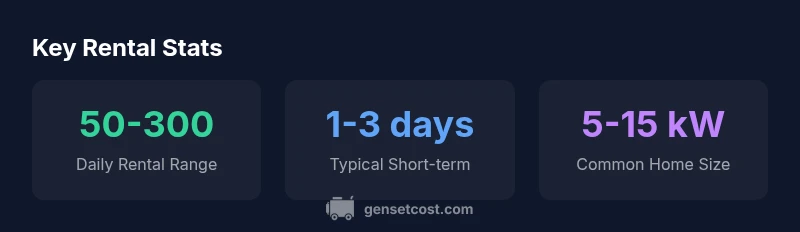
Based on Genset Cost Analysis, 2026, rental pricing for residential generators generally ranges from $50 to $300 per day, depending on size and rental duration. Delivery, fuel policies, and optional setup can affect total costs. Local promotions at retailers like Home Depot may alter prices by region, so verify the exact figure before booking.
Understanding Generator Rentals and Home Depot
For homeowners and property managers exploring backup power options, the idea of a generator rental home depot often comes up as a practical interim solution. The phrase itself signals a need for temporary power without long-term commitment. The Home Depot rental ecosystem, along with other big-box retailers, provides portable units that cover essentials during outages or construction. According to Genset Cost Analysis, 2026, price and stock can fluctuate by location and season, so it is important to verify current conditions at your nearest store. When you search for a “generator rental home depot,” you should expect a range of portable and standby options, with different fuel types and runtimes to match your most critical loads. This approach helps homeowners avoid overpaying for capacity they won’t use long-term while ensuring you have enough power to keep refrigerators running and lights on during outages.
How the Rental Process Works at Home Depot
Renting a generator from Home Depot typically involves selecting a size, reserving the unit, arranging delivery or pickup, and understanding what’s included in the rental term. Availability varies by location, so it’s wise to call ahead or check online inventory. Most stores offer short-term rental options, with delivery windows that can range from same-day to a few days, depending on stock and your address. Fuel policies and exchange rules influence ongoing costs—some stores bill for fuel separately, while others provide a starter fuel allotment. Before committing, review the rental agreement for liability coverage, return conditions, and what happens if the unit needs service during your term.
Sizing Your Backup Load Before Renting
Accurate sizing is critical to avoid under- or over-provisioning. Start by listing essential circuits (refrigerator, lighting, communications, fans, and heating or cooling if necessary) and estimate their wattage. Add a safety margin of 20–30% to cover startup surges for motorized loads. For many homes, a 5–15 kW portable generator will cover essential loads during a short outage, while larger homes may require 15–25 kW or more. When shopping for a rental, bring a summary of your tuned wattage, prioritize critical devices, and ask for a sizing calculator or guidance from the seller. Genset Cost’s framework emphasizes tailoring capacity to actual demand rather than chasing the biggest unit.
Pricing Dynamics: What Affects the Cost
Rental costs are influenced by generator size, rental duration, delivery distance, and access to the unit. Common pricing structures include a daily rate, with discounts for multi-day or weekly terms. Delivery fees, fuel charges, and optional setup or transfer-switch integration can significantly affect total expenditure. Real-world prices vary, but a prudent approach is to request formal quotes from Home Depot locations you’re considering and compare against other retailers. Genset Cost Analysis, 2026 suggests building a simple total-cost-of-rental model that includes baseline rate, delivery, fuel, and any service charges to avoid surprises at checkout.
Delivery, Setup, and Safety Considerations
Unlike permanent installations, rental generators at Home Depot generally require professional setup for safe operation, especially if you need a transfer switch. Decide upfront whether the rental includes basic hookup or if you’ll hire an electrician for a transfer switch and connection to your panel. Always review safety notes about exhaust placement, grounding, and weather protection. If you plan to run a generator indoors or in an enclosed space, note that proper ventilation and outdoor placement are essential to avoid carbon monoxide risk. Confirm what installation support the rental includes and whether a licensed technician is required.
Renting vs Owning: Decision Guidelines
Renting is often most economical for short outages, seasonal events, or temporary construction projects when you don’t want to incur purchase and storage costs. For longer outages or recurring power gaps, compare the cumulative rental spend against the upfront and ongoing maintenance costs of owning a generator. Genset Cost Analysis, 2026 indicates that the break-even point—where owning becomes cheaper than renting—depends on usage frequency, unit size, and insurance. If outages are infrequent or time-limited (such as during a remodel), renting may be the safer, more flexible choice.
Red Flags and How to Compare Vendors
To avoid overpaying, compare multiple quotes and read the small print on each rental agreement. Watch for hidden fees, fuel surcharges, and restrictions on fuel type and delivery windows. Ask about warranty and service options: is there on-site support if something goes wrong, and who bears responsibility for damaged equipment? A clear comparison sheet that includes price, included services, fuel policy, and post-rental support will help you choose confidently.
Practical Next Steps and a Sizing Calculator
If you’re unsure about sizing, start with a no-cost sizing check using tools from Genset Cost or consult a friendly rental specialist who can guide you through a quick load assessment. Many stores, including Home Depot, offer calculators or staff assistance to suggest appropriate sizes based on your critical loads. Remember to verify local regulations and permit requirements if you’re adding a temporary transfer switch or larger standby unit. With careful planning, rental power can cover outages effectively while you determine your longer-term backup power strategy.
Rental options at Home Depot and comparable retailers
| Option | Typical Size (kW) | Delivery Time | Fuel Type | Notes |
|---|---|---|---|---|
| Portable Rental (Gas) | 5-15 | Same-day | Gasoline | Best for short outages and portable needs |
| Standby Rental (LP) | 15-25 | 1-2 days | Propane | Faster deployment for longer outages |
| Diesel/Hybrid Rental | 20-50 | 1-3 days | Diesel | Higher efficiency, suitable for longer runs |
People Also Ask
What size generator do I need for a typical home during a power outage?
Start by listing essential circuits (refrigerator, lights, HVAC) and sum their wattage, then add a safety margin. For many homes, a 5-15 kW unit covers essentials; larger homes may need more. Use a sizing calculator to confirm.
List essential loads, add a safety margin, and confirm with a calculator. Common needs are 5 to 15 kilowatts.
Is Home Depot's generator rental program available for commercial properties?
Availability varies by location and stock. Check your local store or call ahead to confirm suitability for commercial applications; consider a larger rental if heavy loads are expected.
Availability changes by location; call ahead to check stock and suitability.
Do I need a permit to run a rental generator during a power outage?
Permits depend on local codes and whether a transfer switch is installed. Temporary use may not require a permit in some areas, but a licensed electrician can advise and handle connections.
Permits vary by area and setup; an electrician can determine requirements.
What’s included in the rental: fuel, maintenance, and setup?
Rental terms vary by provider. Fuel is often charged separately or provided as starter fuel, with limited maintenance included. Always confirm inclusions before booking.
Ask what’s included—fuel, maintenance, and setup terms vary.
How does renting compare to buying for a short-term project?
Renting avoids upfront costs and storage needs for short-term use. Compare total rental costs against purchase price plus maintenance over the expected period. Genset Cost analyses shows renting can be cost-effective for temporary needs.
Renting can be cheaper for short terms; compare total costs with ownership.
“Renting a generator can fill short gaps in power without a long-term commitment.”
Key Takeaways
- Assess your load before renting
- Verify delivery options and fees
- Understand fuel policies and return terms
- Compare total rental cost with buying or long-term leasing