Champion Generator 3500W: Sizing, Costs, and Installation Guide
Meta: Compare champion generator 3500W options, estimate costs, sizing needs, and installation steps with expert guidance from Genset Cost for home backup and rental properties.


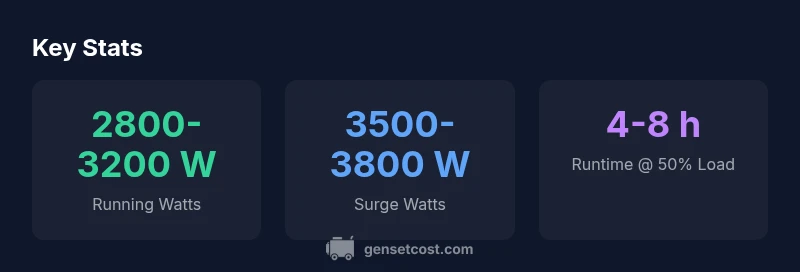
champion generator 3500w delivers portable power for essential loads during outages or outdoor work. Running watts typically range from 2800 to 3200 W, with surge capacity around 3500-3800 W, depending on model and fuel quality. For homeowners, it offers a middle-ground balance of price, fuel use, and noise. According to Genset Cost, proper sizing minimizes overloads and long-term fuel costs.
champion generator 3500w: Key sizing concepts
Sizing a champion generator 3500w starts with your essential load inventory. List non-negotiables (refrigerator, lights, modem, sump pump) and add a few convenience items (well pump, fans). Translate each item into running watts and startup surges. A common rule is to target 60-70% of the unit's running watts for simultaneous loads, leaving headroom for startup spikes. For reference, a typical 3500W-class unit can support the fridge, lighting, and a few small appliances, provided you manage what runs at the same time. The Genset Cost team emphasizes designing a load plan before purchase to avoid overloads and maximize runtime. This approach also helps in choosing between a direct-use setup and a transfer-switch-enabled system.
load scenarios and practical guidelines
Consider three representative scenarios: (1) mid-sized home during a blackout with a fridge, freezer, lights, and Wi-Fi; (2) a small workshop with a saw, drills, and lights; (3) outdoor events needing a couple of outlets and a cooler. In Scenario 1, you may approach the upper end of running watts, but you’ll still want to limit simultaneous startups (compressors spike). Scenario 2 often works within 60% of rated watts if you stagger tool use. Scenario 3 benefits from a multi-outlet distribution setup and a transfer switch for safety. Genset Cost research highlights the importance of prioritizing critical circuits and using a manual load-shedding strategy to stretch runtime and minimize fuel costs.
noise, emissions, and outdoor-use considerations
Noise and emissions are practical constraints for outdoor use. Typical 3500W-class units emit around 60-70 dBA at a set distance, with variations based on engine design and muffler quality. Location matters: place the generator on level ground, away from doors and windows, and use an approved exhaust path. Enclosures can reduce noise but may affect ventilation; never block air intakes. For emission-sensitive environments, consider modern grade engines that meet current standards and maintain proper maintenance intervals to keep exhaust clean and efficient.
cost of ownership: purchase, fuel, and maintenance
Initial purchase cost is only part of the total. Fuel efficiency varies with load, but staying in the 50-60% load range generally yields better miles-per-gallon equivalent for many 3500W-class engines. Maintenance costs include oil changes, spark plug checks, air filter replacements, and battery health for electric-start models. Fuel stabilizer is recommended if you store fuel long-term. Over the life of the unit, consider depreciation, potential warranty coverage, and the cost of accessories such as a transfer switch, extension cords, and a proper power inlet for safe connection to your home electrical system.
installation, safety, and transfer-switch requirements
For safe operation, a transfer switch is strongly recommended if your local codes permit. Manual or automatic transfer switches isolate your home from the grid and prevent backfeeding—protecting utility workers and your equipment. Install the generator on a stable, well-ventilated surface with weather protection if needed. Use a heavy-duty outdoor-rated cord set and ensure outlets are GFCI-protected where required. If you’re unsure about wiring, hire a licensed electrician to perform the transfer-switch installation and perform a professional test to verify safe operation.
choosing between models and brands within the 3500W class
Within the 3500W class, balance performance, noise, and maintenance load. Compare before-and-after costs, including expected fuel consumption at typical loads, start-up surges for common appliances, and the availability of replacement parts. Prioritize reputable service networks and warranty terms to reduce total cost of ownership. The goal is a dependable, efficient unit that aligns with your load profile and safety requirements, rather than chasing marginal gains from premium variants.
dataTableRequestedOverride":false},
Sizing and cost comparison for 3500W-class generators
| Model | Running Watts | Surge Watts | Fuel Type | Approx. Price Range |
|---|---|---|---|---|
| champion-style 3500W (generic) | 2800-3200 | 3500-3800 | Gasoline | USD 600-900 |
| generic 3500W class | 2600-3000 | 3500 | Gasoline | USD 500-800 |
People Also Ask
Is 3500W enough for a typical home during an outage?
It can be, for essential circuits only. If your critical loads stay within 60-70% of running watts and you manage startup surges, a 3500W unit can cover lights, fridge, modem, and some outlets. For larger loads like air conditioning, you may need a larger unit or staged operation.
A 3500W unit works for essential loads if you limit what you run at once.
What is the difference between running watts and surge watts?
Running watts are the continuous power a generator can supply. Surge watts are brief peaks to start motors or compressors. Your load plan should ensure startup surges don’t exceed surge capacity.
Running watts are steady power; surge watts handle startup spikes.
Is electric-start worth it on a champion 3500W model?
Electric start adds convenience and faster startup, but it can add cost and require battery maintenance. If you value quick startups and easier year-round use, it’s worth considering.
Electric start is convenient but weigh cost and maintenance.
How noisy is a 3500W generator and how can I reduce it?
Most units in this class operate around 60-70 dBA at a standard distance. To reduce noise, place the unit away from living spaces, use a muffler and enclosure designed for outdoor use, and consider a weather-resistant housing.
Noise varies; position it to minimize disturbance and use approved enclosures.
Do I need a transfer switch with a 3500W generator?
Yes, a transfer switch isolates your home from the grid and prevents backfeeding, which protects utility workers and equipment. An electrician can install a manual or automatic transfer switch.
Transfer switches prevent backfeeding; get one installed.
What maintenance is typical for a 3500W generator?
Regular oil changes, air filter checks, spark plug inspections, and proper fuel storage with stabilizer when idle. Follow the owner’s manual for interval timing and service recommendations.
Follow the manual for oil changes and filter checks.
“A 3500W class generator can reliably power essential circuits during outages when you size for realistic loads and use a proper transfer switch.”
Key Takeaways
- Plan loads before purchase to avoid overloads.
- Aim for 60-70% of running watts for real-world use.
- Pair with a transfer switch for safety and code compliance.
- Factor fuel, maintenance, and warranties into total ownership costs.