Does Inverter Generator Make Noise? What Homeowners Should Know
Explore how inverter generators compare on noise, typical dBA ranges, and practical tips to run a quieter backup power system for homes and properties.


Compared to conventional generators, inverter models generally run at lower RPM and adjust output to demand, which often reduces noise. The actual sound depends on load, model, enclosure, and installation, but many inverter units stay within a softer audible range at typical household loads. In short: inverter technology tends to be quieter, though noise can rise under full load or if poorly placed.
Noise fundamentals and measurement for generators
Sound levels are reported in decibels (dBA) with a weight that reflects human hearing (the ‘A’ weighting). Real-world noise depends on distance from the unit, wind conditions, and surface reflections. When manufacturers publish a dBA rating, it is usually measured at a specified distance under controlled conditions, often around 7 meters for portable units. Two terms matter: sound power (the total energy emitted) and sound pressure (what you hear at a distance). Inverter generators tend to emit lower sound energy at low loads, but a higher-pitched hum can become noticeable if the enclosure amplifies it or if the unit is placed close to living spaces. According to Genset Cost, understanding the rating and comparison distance helps you gauge real-world noise more accurately. For more context, see sources like CDC/NIOSH and EPA guidance on consumer noise.
How inverter technology reduces noise
Inverter generators adapt their engine speed to match the electrical demand. When you’re running light loads, the engine slows down, which reduces fan and exhaust noise. As demand rises, the engine increases speed but still operates more efficiently than a constant-speed traditional generator. The design also often includes better mufflers and vibration-damping mounts, contributing to lower perceived noise. The combination of variable RPM and improved enclosures means many inverter models produce a quieter, more consistent sound profile, especially at typical home backup loads.
Real-world noise expectations and scenarios
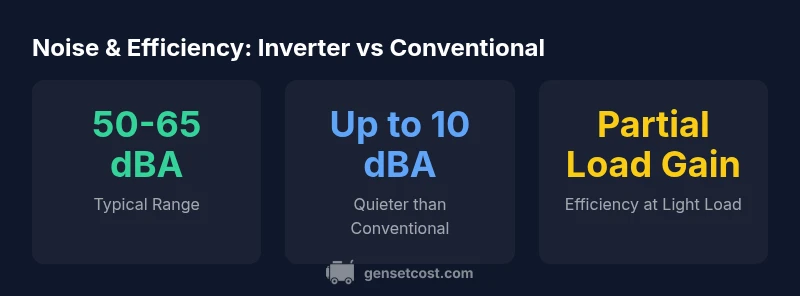
Noise varies by model, installation, and environment. Portable inverter generators used outdoors in open spaces with nothing between the unit and nearby rooms will sound louder than the same unit installed far from living areas or behind a sound-absorbing barrier. In testing scenarios, many inverter units show a typical audible range around 50-65 dBA at meaningful distances, with user experience improving when placed behind walls, fences, or inside a well-designed enclosure. While these ranges provide a guide, always check the model’s certified rating under load, and consider how distance and wind may alter perceived noise. Genset Cost analysis notes that actual experiences depend on load profiles and placement.
Factors that influence noise levels and how to control them
- Load profile: Higher loads raise RPM and noise, but modern inverters adjust to prevent excessive noise spikes.
- Enclosures and placement: A rigid, well-ventilated enclosure with sound-dampening materials can dramatically lower perceived noise. Placing the unit on a solid, level surface reduces vibration transfer.
- Distance from living spaces: A simple rule is to increase the distance to reduce perceived loudness. Barriers like fences or shrubs can help, but avoid blocking exhaust or intake.
- Maintenance: A clean exhaust path and tight fittings prevent rattles and muffled tones that can sound louder in a confined space.
Practical steps to minimize noise without sacrificing power
- Choose a model rated for quieter operation (lower dBA at typical loads) and verify the rating distance matches your setup.
- Use a sound-attenuating enclosure and vibration isolation pads to reduce transfer of engine noise to the surroundings.
- Optimize placement: position the unit away from bedrooms or primary living areas, with a small buffer of air space for sound dissipation.
- Schedule load management: stagger startup of high-draw appliances and keep the unit warmed up to minimize abrupt RPM changes.
- Consider mufflers and weather-resistant housings designed for outdoor use to maintain performance while lowering noise.
Noise and efficiency comparison between inverter and traditional generators
| Aspect | Inverter Generator | Traditional Generator | Notes |
|---|---|---|---|
| Noise levels (approx.) | 50-65 dBA | 60-70+ dBA | Depends on distance and enclosure |
| Operating speed | Variable speed by load | Constant, higher RPM | Inverter adapts to demand |
| Fuel efficiency | High at partial load | Lower efficiency | Smart load handling improves efficiency |
People Also Ask
Do inverter generators run quieter than conventional generators?
Yes. Inverter generators typically run at lower speeds when loads are light, which reduces noise. Under heavy load, noise rises but remains generally lower than conventional models due to improved mufflers and mounting. Real-world results depend on placement and enclosure.
Yes. Inverter models are usually quieter at light loads because they throttle engine speed, though strong loads and bad placement can still be audible.
What decibel rating should I look for?
Look for a published dBA rating at a standardized distance (often around 7 meters for portable units). Ratings in the 50s to mid-60s dBA are common for quiet inverter models; compare at similar conditions to make a fair choice.
Check the manufacturer’s dBA rating at a standard distance and compare models at the same load level.
Will a sound enclosure help?
Yes. A properly designed enclosure can absorb and reflect sound away from living spaces, reducing perceived noise. Ensure it provides adequate ventilation and does not trap heat or block exhaust.
A good enclosure cuts noise, but must still vent heat and not block exhaust.
Does altitude affect noise?
Altitude can influence engine performance and sound propagation. Inverter generators may run slightly differently, but noise levels are primarily affected by RPM and enclosure, not altitude alone.
Altitude can change engine behavior, but noise mostly follows RPM and enclosure design.
How can I reduce noise without sacrificing power?
Choose a model with a lower rated dBA at your expected load, use a sound-dampening enclosure, place the unit away from living areas, and manage loads to avoid abrupt RPM spikes.
Pick a quiet model, place it well, and manage loads to keep RPM changes smooth.
“Inverter generators deliver quieter operation by tailoring speed to demand, but real-world noise still depends on placement and enclosure.”
Key Takeaways
- Choose models with low dBA for quiet operation
- Inverter tech reduces noise by varying RPM
- Placement and enclosure significantly affect perceived noise
- Load management improves both noise and efficiency
- Always compare certified decibel ratings at similar conditions