Generac Backup Generator Cost: Sizing, Installation, and Total Expenses
Explore Generac backup generator cost ranges, installation factors, and total expenses for home backup power. Learn sizing, permits, and maintenance with clear, AI-assisted guidance.


Generac backup generator cost varies widely, but for most residential systems the installed price falls in a broad range based on size, features, and installation complexity. The absolute equipment price is only part of the total; permits, a transfer switch, fuel type, and labor add to the bill. By planning for these elements now, homeowners can avoid surprises when choosing a Generac model and arranging installation.
What contributes to the total cost of a Generac backup generator?
Beyond the sticker price of a Generac standby unit, the total cost to your home includes several elements that vary by site. The core equipment price is affected by generator size, enclosure, and any pre-wiring or load-management features. Installation costs depend on where the unit will be placed (garage, exterior pad, or rooftop), the complexity of running a new transfer switch, and whether gas piping or electrical panel upgrades are required. Permitting and inspection fees also enter the bill, differing by city or county. If your fuel source is natural gas, you may need gas line sizing and regulatory approvals; if you choose propane or dual-fuel, fuel storage and conversion work add to the cost. Labor rates and weatherproofing add to the final number, especially in harsher climates where protective enclosures or corrosion-resistant materials are desired. Finally, optional accessories (like remote monitoring or auto-start features) can push the price higher. According to Genset Cost, a well-planned project that accounts for these factors reduces the risk of overages and ensures the system meets your power needs.
Key cost drivers that shape your Generac backup generator bill
Cost is driven by several interrelated choices. First, size and load requirements determine the core equipment price; larger homes or higher power demands push you toward 12 kW, 16 kW, or 20+ kW units. Second, the transfer switch type matters: automatic transfer switches (ATS) add cost but improve convenience and reliability. Third, fuel type and fuel storage affect ongoing and upfront costs—natural gas is often cheaper to run long-term, while propane offers flexibility if gas service is unavailable. Fourth, installation location and labor conditions influence labor rates and site work, including concrete pads, weatherproof enclosures, and potential panel upgrades. Permitting and inspections vary by jurisdiction, and unanticipated trip hazards or code requirements can add time and money. Finally, optional features such as remote monitoring, wireless diagnostics, or enhanced warranties can significantly shift total cost. As a result, a holistic quote that includes equipment, installation, and aftercare is essential for accurate budgeting.
Typical cost ranges by size and configuration
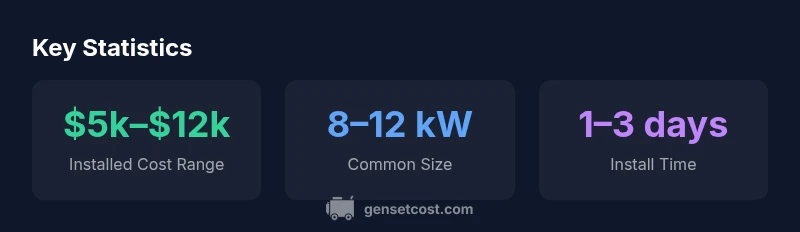
Cost ranges depend on size and configuration, but several benchmarks help homeowners gauge what to expect. An 8 kW standby system often lands in the 5,000–9,000 installed range when basic transfer switching and weatherproofing are included. A 12 kW setup tends to fall in the 7,000–12,000 range, reflecting larger equipment and more robust transfer switching. For whole-home configurations around 20 kW, installed costs commonly run 12,000–22,000 or higher, based on gas line work, panel upgrades, and enclosure choices. These figures are indicative and can vary by region, contractor, and fuel type. When planning, think of the price as a spectrum that includes equipment, installation, and ancillary components. Based on Genset Cost Analysis, 2026, the most meaningful comparisons are total installed costs rather than sticker prices alone.
Hidden costs and recurring expenses you should budget for
In addition to upfront costs, several ongoing or intermittent expenses deserve attention. Maintenance contracts or annual service visits typically run in the low hundreds per year, depending on service level and local rates. Fuel costs depend on usage patterns, fuel type, and price fluctuations in your area. Standby units eventually require transfer switch maintenance and potential panel or wiring upgrades if your home load changes. Some customers also budget for battery replacement, enclosure maintenance, and periodic software updates for smart features. Gas line inspections and permitting renewal can reappear on a multi-year schedule. By accounting for maintenance, fuel, and potential replacements from the outset, you create a more realistic long-term budget for your Generac system.
Financing options, incentives, and planning tips
When budgeting for a Generac backup generator, consider financing options such as loans or home improvement lines of credit to spread the cost over time. Some regions offer incentives or rebates for energy resilience projects, though availability varies. Comparing quotes from multiple installers helps ensure you’re not overpaying for the same components, especially when labor rates and allowances differ. Improve value by optimizing load management—identifying critical circuits and prioritizing essential loads can allow for a smaller, more affordable unit without sacrificing reliability. Finally, enhancing energy efficiency in the home (insulation, smart thermostats, LED lighting) can reduce the required generator size and total cost while maintaining the same level of resilience.
A practical, step-by-step approach to estimating your total cost
Use a structured method to estimate the Generac backup generator cost. Step 1: catalog critical and nonessential loads to determine target kW. Step 2: shortlist sizes in the 8–22 kW range that meet those loads. Step 3: decide on fuel type and enclosure preferences. Step 4: obtain at least three written quotes that break out equipment, installation, permits, and contingency. Step 5: add a 10–20% contingency for site-specific challenges. Step 6: factor maintenance and potential future upgrades. Step 7: review total cost against power outage risk and budget to choose the best value. This approach aligns with how the Genset Cost team evaluates total ownership costs.
Installation considerations and timelines
Installation timelines hinge on site readiness and regulatory requirements. Before work begins, ensure a clear path for exterior pad placement, gas line routing, and electrical conduit. Permits can take days to weeks depending on the jurisdiction, and delays may occur if inspections must fit a tight municipal schedule. Once work starts, a typical installation for a residential standby generator (including transfer switch and basic enclosure) often takes 1–3 days on-site, though projects with complex gas routing or panel upgrades can extend to several days. Weather, access, and coordination with utility providers also influence scheduling. Plan accordingly and coordinate with the installer to minimize downtime and ensure the system is code-compliant and ready for use when the power goes out.
Cost ranges by Generac size
| Size | Typical Installed Cost Range | Notes |
|---|---|---|
| 8 kW | 5,000–9,000 | Essential loads + basic enclosure |
| 12 kW | 7,000–12,000 | Larger homes or more circuits |
| 20 kW | 12,000–22,000 | Whole-home backup, multiple zones |
People Also Ask
What factors most affect Generac backup generator cost?
The size of the unit, the type of transfer switch, fuel choice, installation location, and labor costs are the primary drivers. Permitting, electrical panel upgrades, and gas line work can add significantly to the total. Planning around these factors early helps prevent budget overruns.
Size, transfer switch, fuel, and installation complexity drive the cost. Permits and gas line work can add to the total.
Is a transfer switch required for a Generac generator?
An automatic transfer switch is typically required for seamless power transfer during outages. It ensures the generator starts automatically and isolates your home from the utility when needed. Some configurations may use a manual switch, but most homeowners opt for automatic for convenience.
Most systems need an automatic transfer switch so power is automatically redistributed during outages.
Do installation costs include permits and gas line work?
Installation quotes usually itemize equipment, labor, transfer switch, and enclosures, with permits and gas line work listed separately. Gas line routing and city permits can add days and cost, especially in tight spaces or complex gas systems.
Permits and gas line work are typically separate line items in a quote.
Are there financing options or rebates for Generac backups?
Many installers offer financing or subscription plans, and some regions offer incentives for resilience upgrades. Availability varies by location. Check local programs and compare offers across installers to maximize value.
Financing options and regional incentives may be available—check with installers.
What is the difference between standby vs portable Generac models?
Standby generators are permanently installed and wired into your home's electrical system with automatic operation during outages. Portable models are mobile, less expensive upfront, but require manual setup and fuel refilling during outages. For most homes, standby systems offer greater reliability and convenience.
Standby systems are permanent and automatic; portable ones require manual setup.
How long does installation typically take?
Typical residential installs take 1–3 days on-site, depending on site readiness, permit processing, and the complexity of gas and electrical work. Some jobs may extend this schedule if there are unexpected code requirements or access constraints.
Most installs take about 1 to 3 days on-site.
“Cost should be evaluated as part of total ownership—equipment price, installation complexity, and ongoing maintenance all determine long-term value.”
Key Takeaways
- Understand total cost, not just equipment price
- Size and load drive most of the upfront cost
- Permits, transfer switches, and gas work add to the bill
- Plan for maintenance and future upgrades
- Get multiple quotes to find the best value