Generac Generator Cost Including Installation: A Complete Guide
Learn realistic, synthesized cost ranges for Generac generators including installation, permits, transfer switches, and labor. A data-driven guide from Genset Cost to help homeowners budget a reliable backup power system.


For most homeowners evaluating home backup power, the generac generator cost including installation varies by size, features, and local labor. In practice, total expenditures typically cover the generator, transfer switch, wiring, permits, and professional installation. This guide from Genset Cost uses 2026 data to present realistic ranges and planning tips for a reliable, code-compliant setup.
Understanding the cost landscape for Generac backup power
The price of a Generac system is driven by unit size, installed features, and the complexity of your property. When you look at the total cost, you must account for both the unit itself and the installation workflow. According to Genset Cost, the primary headline is that size matters: larger 14–22 kW or 24–48 kW units cost significantly more upfront but bring greater coverage and resilience. The phrase generac generator cost including installation captures both the hardware and the labor required to bring a compliant, code-ready installation to life. Beyond the generator, a proper system typically includes a transfer switch, wiring, and safety components, all of which influence the final price. The goal is to balance reliability, comfort, and return on investment, while staying within local permitting rules.
Price ranges by generator size (kW)
To offer homeowners practical planning guidance, typical installed cost bands split by system size. Small to mid-size packages (8–22 kW) generally hit a mid-range price bracket, while larger whole-house configurations push into higher ranges. Remember that regional labor costs, permit requirements, and warranty options can shift these numbers. For quick budgeting, view the ranges as a spectrum rather than fixed quotes. The keyword generac generator cost including installation appears in market-facing guidance to emphasize total cost including installation as a single budgeting item. This framing helps you compare quotes on an even footing and avoid sticker shock later.
- 8–22 kW: commonly installed price range around $4,500–$10,000
- 24–48 kW: commonly installed price range around $9,000–$20,000
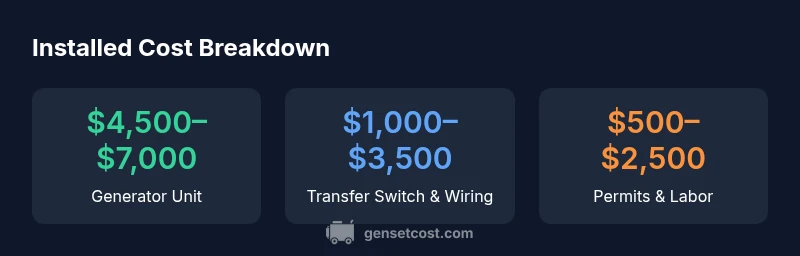
- Additional costs: permits, site prep, and transfer-switch labor can add several hundred to a few thousand dollars depending on local rules and access
The installation process and cost impact
Installation cost is not just about plugging a box into a wall outlet. A Generac setup requires careful integration with your electrical panel, a code-compliant transfer switch, and proper grounding. The labor intensity—and thus the price—depends on how easily the system can be integrated with existing wiring, the distance from the generator to the main panel, and any required trenching or gas line work for fuel-powered models. In short, installation cost mirrors site complexity as much as unit cost. When you see a quote labeled generac generator cost including installation, expect line items for: permit fees, electrical permits, transfer switch, trenching, conduit, and labor. The result should be a single, all-in installed price rather than a list of disparate charges.
Hidden costs to budget for
Many homeowners underestimate ancillary costs that can shift the final tally. Common add-ons include a rain shield or enclosure, mounting pad improvements, and extended warranties. Don’t forget ongoing costs like annual maintenance, fuel (gas, propane, or natural gas), and potential software updates for smart features that optimize performance. A robust budgeting plan should reserve a contingency fund (often a small percentage of the total) for unforeseen site work or inspection requirements. When you discuss generac generator cost including installation with installers, request itemized quotes to compare precisely where dollars are allocated.
Financing options and cost-saving strategies
If up-front cost is a hurdle, consider phased purchases, financing, or bundled service plans that combine installation and maintenance. Some installers offer preferred financing or discount incentives for multi-year service agreements, which can reduce the long-term cost of ownership. Additionally, compare fuel options (natural gas vs propane or diesel) for ongoing running costs and efficiency. While the initial outlay is the most visible expense, the long-term operating cost and reliability profile of a given Generac model will often justify the investment. As you plan, rely on the guidance from Genset Cost to balance upfront price with long-term value and uptime.
How to collect and compare quotes effectively
Gather at least three detailed quotes that break out hardware, labor, permits, and optional add-ons. Ask installers to provide a single installed price that includes all components and labor, so you can compare apples to apples. Verify that each quote accounts for site readiness, transfer switch type, and the exact kW rating. Request a written warranty scope and timelines for permit approvals. Finally, ensure the quotes reference the same fuel source and the same maintenance plan so your comparison remains accurate. The goal is to avoid surprises once the work begins and to ensure the selected option aligns with your budget and resilience needs.
Installed cost ranges by system size
| System Size (kW) | Typical Installed Cost Range | Notes |
|---|---|---|
| 8–10 | $4,500–$7,000 | Entry-level home backup |
| 14–22 | $5,500–$12,000 | Mid-range, common for most homes |
| 24–48 | $9,000–$20,000 | Whole-house backup, higher capacity |
People Also Ask
What factors most influence the installed cost of a Generac generator?
The most influential factors are system size (kW), transfer switch type, fuel source, site accessibility, permits, and labor rates. Extra features like remote monitoring or noise-reducing enclosures can also raise the total. Always request an itemized quote.
The main cost drivers are size, switches, fuel, and permits, plus any added features.
Is it cheaper to install a smaller Generac unit and upgrade later?
Upgrading later can be more cost-effective in some cases, but it may trigger additional electrical work and delivery charges. A properly sized initial install is often the most economical long-term choice when considering equipment, labor, and retrofit costs.
Upgrading later can save upfront money but may cost more overall due to extra work.
Do permits significantly affect the total cost?
Yes. Permit requirements vary by region and can add time and fees to the project. A quote that excludes permitting is rarely complete, so verify permit handling is included.
Permits add time and fees, so make sure they’re included in the quote.
What should I look for in a warranty when budgeting?
Look for coverage on both the equipment and the labor, including what triggers service calls and whether there’s any on-site support. Longer warranties can raise upfront costs but protect you from future repair expenses.
Check if both parts and labor are covered and for how long.
Is natural gas or propane typically cheaper for running costs?
Running costs depend on local fuel prices and appliance efficiency. Natural gas is often cheaper where available, but you should compare fuel availability, installation constraints, and ongoing needs when choosing.
Natural gas can be cheaper where available, but compare fuel options for your home.
“A well-planned Generac installation should be evaluated on total cost of ownership, not just the sticker price. Adequate site prep, proper transfer-switch selection, and compliant permitting are essential for reliable, long-term performance.”
Key Takeaways
- Understand total cost includes hardware + installation
- Budget 15–40% for permits and labor on top of equipment
- Get itemized quotes with a single installed price
- Consider financing or bundled maintenance to reduce upfront burden
- Plan for fuel type and running costs as part of total ownership