Generac Generator 22kW: Cost, Sizing & Installation Guide
Comprehensive guide to the Generac generator 22kW, covering costs, sizing, fuel options, installation steps, and maintenance for homeowners evaluating reliable backup power options.


Definition: The generac generator 22kw is a whole-house standby system designed to automatically power critical circuits during outages. It includes an integrated controller, weatherproof enclosure, and compatibility with an automatic transfer switch to restore power within seconds after utility failure. It supports typical mid-size homes with essential loads and comfort.
Understanding the 22kW Generac platform
The 22kW class from Generac represents a popular tier in standby power for single-family homes and small multi-unit buildings. These systems are designed to sit outside, endure weather, and seamlessly take over within seconds of a utility outage. For homeowners, the 22kW size often strikes a balance between sufficient load support and reasonable installation footprint. When evaluating a generac generator 22kw, consider planned electrical loads, peak usage, and the typical duration of outages in your area. The system’s core purpose is reliability: keep essential circuits up and running so critical appliances, cooling, and lighting remain uninterrupted during outages.
How to size a 22kW generator for your home
Sizing starts with listing all essential loads (heating, cooling, refrigeration, water heating, and lights). Next, calculate or estimate the total wattage you’d want powered during an outage, then apply a safety margin to account for startup surges from motors. A single 22kW unit is commonly paired with an automatic transfer switch (ATS) and a compatible electrical panel. Remember that actual load diversity—how many devices draw power at the same time—will influence the final rating you require. Use load calculators or consult a licensed electrician to confirm that a 22kW configuration will meet your home’s demand over typical outage durations.
Fuel options and efficiency considerations
Most 22kW standby generators are offered with natural gas or propane fuel options. Fuel type directly affects runtime, cost-per-hour, and availability. Natural gas tends to provide near-continuous refueling, assuming a stable gas supply, while propane requires storage in a tank and may incur higher fuel costs per hour under heavy use. Efficiency is also influenced by load factor; running at higher load levels tends to improve efficiency, while light loads can lead to more frequent cycling. For homeowners, evaluating the fuel supply, gas line capacity, and maintenance implications is essential when choosing between NG and LP for a 22kW unit.
Transfer switches, panels, and electrical integration
An automatic transfer switch (ATS) is the critical interface that re-routes power from the grid to the standby generator when outages occur. The 22kW class typically requires an appropriately sized ATS matched to your service panel rating and conductor sizes. Panel compatibility and load-center configuration determine whether a single 22kW unit can back up all desired circuits or if you’ll prioritize essential circuits for automatic restoration. Working with a licensed electrician ensures proper wiring, safe grounding, and compliance with local electrical codes.
Installation considerations: location, permits, and code
A professional installation considers outdoor mounting, clearances, ventilation, and adequate access for service personnel. You’ll need to plan for weather protection, noise ordinances, and proper discharge clearance from structures and vegetation. Permitting often involves building and electrical permits, as well as potential inspections to verify wiring, venting, and fuel connections. Elevation, drainage, and proximity to fuel lines should be evaluated to prevent impact from weather events. By aligning with code requirements and utility interconnection guidelines, you can minimize delays and ensure a durable, safe installation.
Cost framework: what affects total installed price
Total installed price for a 22kW system reflects more than the generator sticker price. Factors include ATS selection and wiring upgrades, permit fees, trenching or trenchless routing, panel upgrades, and the complexity of locating the unit. Site conditions such as accessibility, soil, and available space can add to labor costs. Labor and permitting are often significant portions of the overall expense, so a detailed quote from a qualified installer is essential for budgeting. According to Genset Cost analysis, 2026, variability in these drivers explains broad cost ranges across markets.
Maintenance, warranties, and lifecycle expectations
Routine maintenance extends equipment life and preserves efficiency. Expect periodic inspections, oil and filter changes, air-filter maintenance, battery checks, and emissions-system servicing per the manufacturer’s schedule. Warranty terms are a major consideration; most manufacturers offer multi-year coverage for major components, with some regional installers including maintenance packages. Keeping a service log and scheduling annual or semi-annual service helps catch developing issues before they become costly repairs.
Real-world configurations: typical home setups
In a common two-story home with central air, a 22kW generator can back up essential circuits like lighting, refrigeration, well pumps, and HVAC for a climate-controlled environment during outages. A smaller home may require prioritizing heating or cooling alongside refrigeration and lighting. Two-case examples illustrate how load prioritization, ATS choice, and fuel options influence equipment selection and installation approach. Each scenario highlights the need for a professional load assessment to ensure your 22kW system delivers as expected under peak outage conditions.
Next steps: planning and procurement
Begin with a professional load analysis to confirm that 22kW is the right choice for your home and budget. Obtain multiple quotes, compare ATS configurations, and verify permit requirements. Plan for fuel supply considerations, potential panel upgrades, and access for maintenance. Schedule a pre-installation assessment to ensure site readiness and clarify timelines. A structured plan helps you maximize reliability and minimize disruption during emergencies.
22kW Generac sizing and installation considerations
| Category | Considerations | Notes |
|---|---|---|
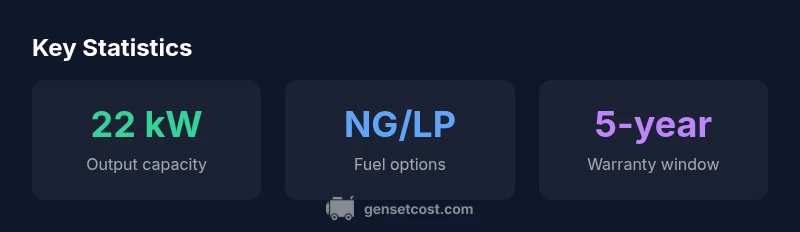
| Output capacity | 22 kW | Standard for mid-size homes |
| Fuel options | Natural gas or propane | Depends on gas supply and meter size |
| ATS compatibility | Automatic transfer switch required | For automatic operation during outages |
People Also Ask
What loads can a 22kW Generac handle during an outage?
A 22kW system typically backs up essential circuits such as lighting, refrigeration, well pumps, and heating/cooling. Exact loads depend on your home’s layout and the connected circuits. A professional load analysis confirms whether a 22kW unit covers your priorities.
A 22kW system can back up essential circuits like lights, fridge, and HVAC, but a load assessment helps confirm exact coverage.
Is natural gas or propane better for a 22kW unit?
Both fuels are common for 22kW standby generators. Natural gas provides steady supply if your gas service is adequate; propane offers a fixed fuel source but requires tank storage and refilling. Your decision should consider fuel availability, costs, and delivery logistics.
Natural gas offers continuous supply if your line is good, propane needs a storage tank.
What affects the total installed price of a 22kW Generac?
Total cost is driven by the generator base price, automatic transfer switch, electrical panel upgrades, permits, site prep, and labor. Complex installations or difficult access can raise costs. Get multiple quotes to compare methods and included services.
Installation costs vary a lot depending on your setup and permits.
What maintenance does a 22kW generator require?
Regular maintenance includes oil and filter changes, battery checks, and periodic testing. Follow manufacturer intervals and schedule annual professional service to preserve reliability and warranty coverage.
Keep up with oil changes and battery checks; annual service helps prevent issues.
How long can a 22kW generator run on a full tank?
Runtime depends on fuel type, tank size (for LP), and load. Heavier loads reduce runtime; lighter loads extend it. A professional evaluation can estimate continuous run time based on your chosen fuel and usage profile.
Run time depends on fuel type and how much you’re using your essentials.
Can I install a 22kW generator myself?
Electrical and fuel connections require licensing and adherence to local codes. DIY installation is not recommended. Hire a licensed installer to ensure safety, code compliance, and warranty validity.
We don’t recommend doing this yourself; use a licensed installer.
“A properly sized 22kW Generac system protects essential loads and avoids overloading the electrical panel; professional installation is essential for a dependable backup.”
Key Takeaways
- Define essential loads before sizing
- Ensure ATS compatibility with your panel
- Evaluate fuel options and their runtimes
- Budget for installation, permits, and site prep
- Plan maintenance and verify warranty terms