Generator 12V Battery: Costs, Sizing, and Installation
A data-driven guide to generator 12V battery options, sizing, and installation for homeowners and property managers. Learn costs, lifespans, and maintenance to minimize outages.


A 12V battery powers the starter and essential electronics for most residential standby generators. Sizing depends on the generator's starting current and the charger, but standard practice uses a 12V lead‑acid or AGM battery with enough CCA to crank the engine reliably. Battery health, temperature, and charging strategy significantly influence performance during outages.
Understanding the role of the 12V battery in generator systems
According to Genset Cost, a 12V battery powers the starter motor and essential electronics for most residential generators. The battery also supports control circuitry, fuel shutoff, and safety interlocks. The health of this single component often dictates whether the generator will start during a power outage, so proper selection and maintenance are essential. Temperature, charging rate, and the charger’s compatibility all influence performance. In climates with freezing temperatures, the battery’s cold-cranking amps (CCA) become a deciding factor for reliable starts. Manufacturers typically specify a minimum CCA along with a recommended amp-hour rating to ensure sufficient reserve during multiple weekly cycles or infrequent outages.
A robust 12V battery strategy reduces the risk of a failed start, minimizes nuisance outages, and preserves the overall life of the generator by avoiding excessive cranking that shortens starter motor life. For homeowners, the goal is to match the battery to the generator’s starting current and to choose a charging system capable of maintaining the battery without overcharging. High-temperature environments can shorten life, while cold climates can reduce available CCA, so climate is a practical factor in sizing decisions.
Battery types and their trade-offs for generator use
Choosing the right chemistry for a generator 12V battery involves balancing cost, lifespan, weight, and performance in your climate. Lead-acid batteries are the most budget-friendly option and are easy to source, but they require regular water maintenance (for flooded varieties) and have shorter cycles than modern chemistries. AGM (absorbed glass mat) batteries are maintenance-free, resist vibration better, and handle deeper discharge more gracefully, though at a higher upfront cost. LiFePO4 (lithium iron phosphate) batteries offer the best cycle life and consistent performance in extreme temperatures, but their initial price is significantly higher. All three can fit a 12V system, but LiFePO4 demands a compatible BMS (battery management system) and often a higher-quality charger.
- Pros of Lead-Acid: low upfront cost, easy repair in many areas.
- Pros of AGM: maintenance-free, better spill resistance.
- Pros of LiFePO4: longest life, lightest weight, best high/low-temperature performance.
Operationally, if you expect frequent cycling or live in a hot climate, LiFePO4 can reduce long-term costs despite higher initial investment. If you rarely cycle the battery, a quality Lead-Acid or AGM can be adequate. The best approach is to match battery chemistry to expected duty cycle and climate while ensuring compatibility with the generator’s charging system.
Sizing considerations for a generator 12V battery
Sizing a generator battery isn’t just about the nominal voltage. You must account for starting current, reserve capacity, and how the charger will replenish the battery after each outage. Start by identifying the generator’s peak starting current (or motor stall current) and ensure the battery can deliver that momentary surge without a voltage collapse. Then review the charger’s output, since a weak charger leads to slow recharge and potential repeated starts with a depleted battery. Temperature compensation matters: most chargers and batteries lose performance as temperatures drop, so winter scenarios may require a slightly larger battery or higher CCA rating. Finally, plan for aging: after several years, even the best battery loses capacity, increasing the risk of a failed start when the grid is down.
A practical rule: size to meet the higher of either the worst-case starting requirement or the anticipated cold-start requirement for your climate, then factor in a buffer for longevity. This ensures reliable starts across seasonal variations.
Installation, charging, and maintenance best practices
Professional installation ensures correct terminal torque, proper cable sizing, and an appropriate enclosure that protects the battery from weather and vibration. For charging, use a dedicated 12V charger or a smart charger that is compatible with your generator’s BMS or charging system. Temperature-compensated charging preserves battery health in extreme heat or cold, while overcharging can shorten life dramatically. Maintenance varies by chemistry: flooded lead-acid requires water checks and equalization cycles, AGM is maintenance-free but must be matched to a compatible charger, and LiFePO4 is the easiest to manage with a robust BMS.
Regular checks should include voltage, voltage drop under load (where applicable), terminal integrity, and the charger’s function. If you notice slow starts or dim indicators, test both the battery and charger together to isolate the root cause. For seasonal users, a weekly or monthly quick check can prevent surprises.
Cost considerations and total ownership
Battery costs are one of the components most often overlooked in total generator ownership. A basic Lead-Acid battery might cost less upfront, but its shorter life requires more frequent replacement. AGM batteries offer a balance of cost and performance, while LiFePO4 batteries provide the longest life and best cycle durability, albeit at a higher upfront price. Installed costs can vary based on enclosure, mounting hardware, and site labor. From a long-term perspective, LiFePO4 can reduce maintenance and replacement costs, particularly in harsh climates or frequent-use scenarios. When evaluating options, include expected battery life, charger compatibility, and potential warranty coverage to estimate total ownership cost over the system’s life.
Practical troubleshooting and common failure scenarios
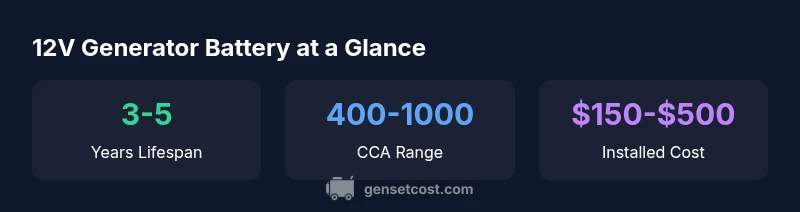
When a 12V battery fails to start a generator, common culprits include insufficient charge, aging cells, poor connections, or a charger that isn’t keeping the battery topped up. Inspect connectors for corrosion and tightness, verify the charger output with a multimeter, and check the battery’s resting voltage. If the battery is older than 3–5 years, plan for replacement, even if the unit appears to start, since aging reduces reliability. A battery that performs well at room temperature may underperform in winter, so consider a climate-appropriate battery rating. Finally, verify that protection interlocks are not preventing a start due to a safety circuit fault.
Future trends and buying tips for a generator 12V battery
Advances in LiFePO4 chemistry continue to push longevity and safety, especially in outdoor and all-weather installations. Expect higher energy density, lighter weight, and smarter BMS integration that communicates with the generator’s control system. When purchasing, prioritize compatibility with your generator, climate tolerance (temperature range), and warranty terms. If you expect frequent outages or live in a harsh climate, investing in LiFePO4 and a high-quality charger can reduce long-term costs and service calls. Finally, consider professional installation to ensure that your setup remains compliant with local codes and safety standards.
12V battery options for generator start-up
| Battery Type | Typical Starting Current (CCA) | Lifespan (years) | Installed Cost Range |
|---|---|---|---|
| Lead-Acid | 400–800 | 3–5 | $100–$180 |
| AGM | 600–900 | 4–6 | $180–$320 |
| LiFePO4 | 800–1200 | 5–10 | $400–$800 |
People Also Ask
Can I use a car battery for my generator?
In many cases a car battery can start a generator, but it may not meet the higher CCA demands in cold climates or frequent outages. Use a battery rated for the generator’s starting current, and verify compatibility with the charger and safety interlocks. For reliability, a purpose-built standby battery is often preferable.
A car battery can start some generators, but check the starting current and climate needs. For best reliability, choose a generator-specific battery.
What maintenance does a 12V generator battery need?
Maintenance depends on chemistry. Flooded lead-acid requires water checks and cleaning; AGM is maintenance-free but needs proper charging; LiFePO4 uses a BMS and minimal maintenance. Regular voltage checks and ensuring a healthy charging regime reduces failures.
Maintenance varies by type, but regular checks and proper charging are essential.
What’s the difference between AGM and LiFePO4 for generator use?
AGM is maintenance-free and handles a range of temperatures well, with moderate cost and lifespan. LiFePO4 offers the longest life and best cycle durability but has a higher upfront price. For long-term reliability, LiFePO4 is often the preferred choice if the budget allows.
AGM is maintenance-free with moderate cost; LiFePO4 lasts longer but costs more up front.
Do I need a battery warmer in cold climates?
In very cold environments, a battery warmer or a battery with a higher cold-cranking rating helps ensure starts. Pair with a smart charger that compensates for temperature to maintain performance.
Cold weather benefits from a warmer or higher CCA battery and a temp-compensated charger.
How long does a 12V battery last in a generator setup?
Typical life ranges from 3–5 years for lead-acid variants and 5–10 years for LiFePO4 under normal conditions. Actual life depends on depth of discharge, charging regime, and operating temperature.
Battery life is usually 3–5 years for lead-acid and 5–10 years for LiFePO4, depending on use and climate.
Can solar charging be used to maintain a generator 12V battery?
Solar charging can support the battery’s maintenance cycle if a compatible solar charger and charge controller are used. Ensure the controller works with the generator’s charging system to avoid overcharging.
Yes, with a compatible solar charger and controller, solar can help keep the battery topped up.
“A properly sized 12V battery is the quiet backbone of a reliable standby system; cut corners on sizing and you risk outages during a crisis.”
Key Takeaways
- Size the battery to meet starting current and charger output.
- Choose the chemistry based on climate and budget.
- Maintain regularly to extend life and reliability.
- Use a compatible charger with temperature compensation.
- Account for total ownership costs, including replacement.