Generator 1500 Watt Guide: Costs, Sizing & Setup
A data-driven guide to generator 1500 watt costs, sizing, fuel options, and installation considerations for homeowners and property managers.


According to Genset Cost, a 1500-watt generator typically powers essential loads like a fridge, lights, and a few tools, but it won't run most air conditioners or heavy appliances simultaneously. For sizing, consider starting versus running watts, fuel type, runtime, and noise. For homeowners, a generator 1500 watt often serves as a portable backup solution.
What a 1500-watt generator can realistically power
A generator 1500 watt is a compact, portable solution designed to cover essential circuits during outages or in remote work sites. In practice, this size is most comfortable powering a small refrigerator, a couple of LED lights, a ceiling fan, a microwave or a coffee maker, and a few low-wattage tools, provided you stagger the loads. For a typical home during an outage, a 1500-watt unit can support a few critical devices simultaneously, but you should replay the start-up surge for appliances with motors (refrigerator compressors, sump pumps, circular saws). According to the Genset Cost team, this class of generator is popular among homeowners and property managers who want reliable backup power without the bulk of larger units. When planning, create a simple load list and estimate running watts for each item; then sum them to ensure you stay under the generator’s running watt ceiling. If you must power more than 1-2 large appliances at once, consider a higher-wattage model or using transfer-switch separation for essential circuits.
How starting watts differ from running watts
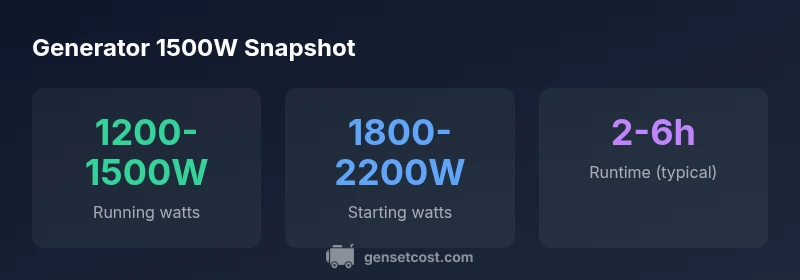
Understanding starting watts versus running watts is essential for a generator 1500 watt. Running watts refer to the continuous power the unit can supply, while starting watts reflect the initial surge when a motor starts. Motors draw a brief spike 2-3 times higher than running watts, so if you try to run a refrigerator or a sump pump directly off the generator, you must ensure the starting watts are sufficient. Most 1500-watt portable generators have starting watts in the 1800-2200W range, which usually covers typical inrush. However, not all appliances tolerate the same surge, and some electronics are sensitive to wave shape and voltage stability. In practice, listing the appliances with their running watts and peak surges helps you avoid nuisance tripping or overload. The key takeaway is to match the total running watts to the continuous capability, and reserve extra starting watt capacity for critical loads. For homeowners, this habit reduces the risk of stalling or overheating during a power restoration or outage.
Fuel options and runtimes for generator 1500 watt
Fuel choice shapes runtime, noise, and availability. Most generator 1500 watt units run on common gasoline, with propane or dual-fuel variants offering flexibility when gasoline is scarce or expensive. Gasoline engines tend to deliver higher peak power, while propane systems are cleaner and easier to store. If you opt for a dual-fuel model, remember that fuel storage guidelines apply and propane cylinders should be secured. Runtime is highly variable: a full tank can last a few hours at half load but can be shorter if you run at or near maximum output. The trade-offs between fuel type and efficiency mean you should plan around your typical outage duration. For long outages, consider stocking extra fuel safely and choosing an option with auto-idle or smart electronic controls to optimize consumption. Regulatory guidance and safety considerations about fuel storage and generator operation are important; see DOE and EPA guidance on portable generators for more details.
Sizing considerations: loads, circuits, and safety
The proper sizing process begins with a detailed load calculation. Start by listing every device you want to run during an outage and note its running watts. Then identify any motor-driven loads (like a refrigerator or sump pump) with high surge requirements. Build a tolerance cushion into your total running watts so that you do not operate at the generator’s absolute maximum. Consider essential circuits first—refrigeration, medical devices, lighting, and communication equipment—then determine whether you can run non-essential loads in sequence. Safety should guide every step: use an outdoor-rated, weatherproof outlet, never run the unit indoors, and keep ventilation clear of exhaust. If you’re unsure about wiring, consult a licensed electrician for a proper transfer switch installation or a professional generator hookup. These steps help you achieve reliable backup power while avoiding overloads and unsafe configurations.
Practical installation and operation tips
Installing and operating a generator 1500 watt requires careful planning. Place the unit on a dry, level surface away from doors and windows, with adequate ventilation to avoid carbon monoxide buildup. Use heavy-duty extension cords rated for outdoor use only if a transfer switch isn’t feasible. For longer outages, install a transfer switch that ties your home’s essential circuits to the generator, enabling safe, automatic power delivery. Regular maintenance—checking air filters, spark plugs, and oil levels—extends the unit’s life and keeps performance consistent. Store fuel in approved containers, away from living areas, and follow local regulations on storage and disposal. Finally, register your generator for warranty coverage and keep a simple log of maintenance and refueling to track performance over time.
Costs, warranties, and long-term value
Cost is often the most visible consideration, but total value hinges on reliability, maintenance, and fuel efficiency. A generator 1500 watt typically sits in the portable segment, with models varying by features like USB charging, electric start, and smart idle. Rather than chasing the lowest upfront price, evaluate overall ownership: expected lifespan, maintenance requirements, warranty terms, and availability of replacement parts. Look for models with robust waveforms and clean power suitable for sensitive electronics. Longer warranties and reputable brands contribute to reduced long-term costs by minimizing downtime and replacement needs. For more precise budgeting, consult the Genset Cost analysis and compare brands using a standardized load list to estimate lifecycle costs.
Maintenance checklist to maximize reliability
Create a quarterly maintenance routine that includes air-filter cleaning, spark-plug replacement, and oil checks. Run the generator under load at least once every few weeks to exercise the alternator and prevent varnish buildup in the fuel system. When storing fuel, rotate stock and follow manufacturer guidance on stabilization and shelf life. Keep a spare spark plug and a basic repair kit on hand, and periodically inspect hoses and clamps for signs of wear. If you use propane, verify gas lines for leaks and ensure proper regulator function. A well-maintained 1500-watt generator remains a dependable backup piece of equipment for years to come.
Generator 1500W: quick reference table
| Aspect | Guidance | Practical takeaway | |
|---|---|---|---|
| Power capacity | Running watts ~1200-1500; starting watts ~1800-2200 | Plan surge capacity for starting motors | |
| Load types | Essential loads like fridge, lighting, small tools | Prioritize critical circuits and stagger nonessentials | |
| Fuel options | Gasoline; propane; dual-fuel (varies by model) | Choose based on availability and storage | |
| Runtime | Varies with tank and load | Be prepared with spare fuel for outages |
People Also Ask
Can a generator 1500 watt run a fridge during an outage?
Yes, a typical 1500-watt generator can run a fridge, especially if you account for the fridge’s starting surge and running watts. You should verify the fridge’s wattage on its label and ensure your running watts stay within the generator’s continuous capacity. For best results, run only essential loads and stagger start times.
Yes—just verify the fridge’s draw and keep within running watts.
What appliances can I reliably power with a 1500-watt generator?
A 1500-watt generator can typically support a few lights, a small refrigerator, a fan or two, and some small kitchen appliances when used carefully. Heavy loads like air conditioners or space heaters usually exceed its capacity. Create a load list to plan which devices will run simultaneously.
Light loads like fridge and lights, plus a few small tools, are usually doable.
What is the difference between starting watts and running watts?
Running watts indicate continuous power output, while starting watts reflect the surge when motors start. The surge is temporary but must be accommodated for devices with motors. Ensure your starting watt allowance covers these surges while your running watts stay within the continuous rating.
Starting watts are the burst; running watts are the steady load.
Is a 1500-watt generator enough for a whole-house backup?
For most homes, a 1500-watt unit will not cover a full-house backup. It’s best for essential circuits or a small subset of appliances. For broader coverage, you’d typically need a higher-wattage generator and a properly installed transfer switch.
Usually not enough for a whole house; consider essential loads or a bigger unit.
What fuels are commonly available for these generators?
Gasoline is standard, with propane and dual-fuel options also common. Propane stores longer and burns cleaner, while gasoline offers higher peak power. Check local fuel availability and storage safety before choosing a model.
Gasoline is common; propane and dual-fuel give more options.
Should I install a transfer switch with a 1500-watt generator?
A transfer switch is highly recommended for safety and reliability. It prevents backfeeding, makes switching between utility power and generator seamless, and protects your appliances. If you’re not comfortable with electrical work, hire a licensed electrician.
Yes, transfer switches are recommended for safety and reliability.
“A 1500-watt unit is a practical backup tool when loads are carefully matched and operated with a clear view of startup surges. Proper sizing and safe installation are the keys to dependable performance.”
Key Takeaways
- Match running watts to your essential needs
- Plan for startup surges and motorized loads
- Choose fuel type based on availability and storage
- Use a transfer switch for safer, automatic power delivery
- Consider total cost of ownership and maintenance for reliability