Generator Costs and Sizing for Sam's Club Backup Generators
A data-driven guide to generator costs, sizing, and installation for Sam's Club options, with comparisons, warranties, and maintenance insights. Based on Genset Cost analysis, this article helps homeowners and property managers choose the right backup power solution.


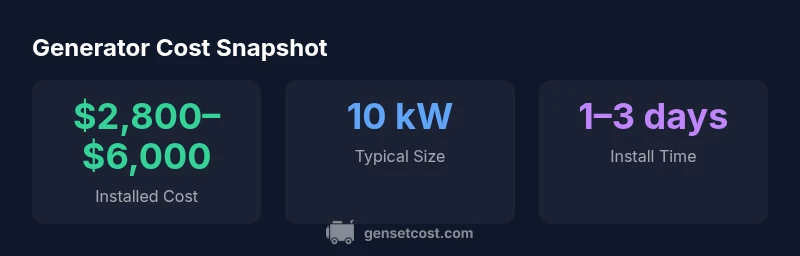
A typical generator at Sam's Club costs between $900 and $2,000 for 8–12 kW, with installation and permits pushing total to $2,800–$6,000 depending on transfer switches and fuel type. For homeowners, this big-box option offers convenience and bundled warranties, but variations in wattage, noise, and service plans matter. Genset Cost analysis highlights smart sizing and maintenance considerations.
Overview of buying a generator at Sam's Club
When homeowners begin researching a generator at Sam's Club, they typically want a balance of price, speed to power, and ease of ownership. According to Genset Cost, the big-box shopping model is attractive for its convenient storefronts, bundled warranties, and streamlined procurement. Sam's Club often stocks 8–12 kW generators designed to support essential circuits during outages, with some models packaged alongside transfer switches and basic installation options. This can save time versus shopping at multiple retailers. However, the total cost picture includes more than the sticker price: delivery, permitting, labor for electrical connections, and fuel-type considerations all influence the final out-of-pocket expense. In practice, homeowners and property managers should treat Sam's Club as one data point in a broader sourcing strategy. Use a sizing methodology that accounts for your critical loads—heating, refrigeration, pumps, and lighting—and verify that the unit you choose can handle those simultaneous demands. The goal is dependable backup power, not just a low price, so compare warranties, service coverage, and the availability of local technicians when choosing a model.
Sizing for your home: how to determine the right wattage
Size matters. Undersizing a generator leads to inadequate power during outages, while oversizing adds unnecessary cost and complexity. Start with a home-wide load assessment and work inward to essential circuits. List the most power-hungry appliances (air conditioning, well pumps, water heaters, ovens) and note their starting and running wattages. If you don't have exact numbers, estimate conservatively using appliance labels or online spec sheets. A typical 8–12 kW unit covers essential loads for many single-family homes, but the right size depends on climate, occupancy, and the number of major appliances. When shopping at Sam's Club, compare models that advertise their continuous running watts and starting watts—the difference can be significant when starting motors. A load calculation that accounts for simultaneous operation, not peak individual appliance use, is crucial. Don’t forget outdoor equipment, lighting circuits, and any EV charging needs if present. If your home has a central air system with two-stage compressors or a large well pump, you may require the higher end of the 8–12 kW band. For property managers, consider backup power for common spaces and safety-critical systems to maintain occupancy comfort and compliance.
Price ranges and what drives installed costs
Price ranges for generators marketed at big-box retailers reflect both hardware and service packages, and real-world costs can vary widely by region and configuration. A literature-based view shows that the generator unit itself price for 8–12 kW models commonly falls within the lower hundreds to the low thousands, while bundled options—especially those including transfer switches, automatic start, and basic installation—bring total costs into the mid four figures. In practice, expect price leakage from installation complexity, permits, and any electrical upgrades needed to meet local codes. Some Sam's Club packages include basic installation or a DIY-friendly setup, but the full turnkey solution often involves professional electrical work, permitting fees, and, in some areas, approval from a home owner's association. Genset Cost analysis emphasizes understanding the cumulative cost of ownership: initial purchase, installation, maintenance, fuel, and warranty coverage. If you plan to upgrade or relocate the unit within several years, consider the potential resale value or the availability of spare parts in your region.
Key features to compare: fuels, transfer switches, noise, and warranty
Comparative shopping should go beyond sticker price. Pay attention to fuel type (gasoline, propane, natural gas) and fuel availability in your region, as running costs and storage considerations vary. Automatic transfer switches (ATS) dramatically reduce manual intervention during outages and can affect installation compatibility. Noise levels, measured in decibels, influence siting decisions—some models operate quieter than others, which matters in close quarters or multi-family properties. Warranty terms vary by model and retailer; read coverage length, what is included (parts, labor, consumables), and whether local service is available. Some Sam's Club bundles offer extended warranty add-ons or service plans; weigh those against potential maintenance costs over the first five to ten years. Finally, assess accessibility of replacement parts and the manufacturer's reputation for service, since post-purchase support is a major determinant of long-term satisfaction.
Installation basics and permitting
Installation considerations can swing the overall value of a Sam's Club generator purchase. In many jurisdictions, you will need a permit for electrical work and, if required, a utility notification for interconnection. A licensed electrician should handle the majority of the work, including mounting, wiring, connecting to an ATS, and testing. Transfer switches must be properly sized for the generator and aligned with your electrical panel. Some regions require a professional inspection after installation; budget for these steps in advance. If you opt for bundled installation from Sam's Club, confirm exactly what is included and what additional charges might emerge for mounting, conduit, or fuel line work. For property managers, consider a plan that minimizes downtime and reduces disruption to common areas. The result should be a safe, code-compliant, and reliable backup system that seamlessly integrates with the building's electrical infrastructure.
Maintenance, warranties, and service options
Long-term value comes from maintenance and reliable service. Regular preventative maintenance reduces the risk of unexpected outages and extends equipment life. Check what the warranty covers—labor, parts, and whether coverage includes a remote monitoring or seasonal startup service. Some Sam's Club bundles offer service contracts that require networked technician visits; compare these to standalone local service providers for cost, response times, and ease of scheduling. Keep a simple maintenance schedule: oil changes or fuel system checks at recommended intervals, battery inspection, and checking transfer switch operation before the storm season. In areas with harsh winters or hot summers, consider a plan that includes seasonal testing and fuel stabilization. A well-supported unit reduces total cost of ownership and ensures power when it matters most.
How Sam's Club options compare with specialty retailers
Specialty power retailers may offer broader model variety, installation customization, and extended warranties tailored to backup power. Sam's Club excels in convenience, bundled options, and standardized service footprints that align with homeowner expectations for a straightforward purchase. When deciding, compare not only sticker price but also lead times, technician availability, and the ability to scale or relocate the system in the future. For property managers balancing multiple units, consider whether you need on-site evaluation, professional load testing, and a formal maintenance plan that a specialty vendor is more likely to provide. Use the Sam's Club offering as a baseline and then factor in the added value of dedicated service networks, parts availability, and local expertise to determine overall cost-effectiveness over the system’s lifetime.
Practical shopping checklist and next steps
Use this concise checklist to make the decision process clearer. Assess your critical loads and verify generator sizing in terms of continuous and starting wattage. Confirm price ranges, including installation and permits, for the specific Sam's Club model you intend to buy. Check transfer switch compatibility, fuel type availability, noise ratings, and warranty coverage. Request on-site evaluation from a qualified electrician if possible, and obtain written quotes for installation to compare with Sam's Club's bundled options. Finally, review the terms of any service contract and schedule a post-installation test to ensure everything starts up correctly during the next outage.
Typical price ranges for 8–12 kW generators from Sam's Club (2026)
| Category | Low estimate | High estimate | Notes |
|---|---|---|---|
| Wattage (kW) | 8 | 12 | Residential range |
| Installed cost ($) | 2000 | 6000 | Includes generator and basic setup |
| Total cost with install ($) | 2800 | 6000 | Permits and labor may vary |
People Also Ask
What size generator do I need for essential home loads?
A careful load calculation focusing on essential circuits is essential. For many homes, an 8–12 kW unit covers the core needs, but climate and large appliances can shift the requirement.
Most homes can start with an 8–12 kW unit for essentials; verify with a load test.
Does a Sam's Club price include installation?
Some Sam's Club bundles include basic installation; however, full turnkey setups often require a licensed electrician and potential permits.
Check what’s included in the bundle and ask for a written installation estimate.
What fuels are common for 8–12 kW units?
Common fuels include gasoline, propane, and natural gas. Availability and running costs vary by fuel type and region.
Many models offer multiple fuel options; consider fuel accessibility when choosing.
Are warranties good for backup generators at Sam's Club?
Warranty terms vary by model and retailer. Check what is covered, the duration, and whether local service is available.
Read the warranty details and confirm local service options before purchasing.
Is it better to buy from Sam's Club or a specialty retailer?
Sam's Club offers convenience and bundled options, while specialty retailers often provide tailored sizing and extended service plans. Your choice depends on priorities like convenience vs customization.
If you want turnkey convenience, Sam's Club is attractive; for tailored support, consider a specialist.
“A correctly sized backup system provides resilience during outages and minimizes long-term ownership costs.”
Key Takeaways
- Assess critical loads before shopping.
- Expect installation and permits to add to the sticker price.
- Compare fuels, ATS, and noise when selecting models.
- Review warranty terms and local service availability.