Generator with Solar Panels: A Practical Hybrid Backup Guide
Explore how a generator with solar panels combines solar power with backup generation to cut fuel use, boost reliability, and optimize total ownership costs for homes and property managers.


A generator with solar panels blends solar PV with a backup generator to power your home during outages. When the sun shines, the system can run on solar power and charge batteries, reducing fuel use and generator runtime. Overall costs vary widely by size and integration, but most setups include a hybrid inverter, transfer switch, and batteries for smoother operation and faster response.
Why an integrated solar+generator system makes sense
For homeowners and property managers, a generator with solar panels delivers more than a simple backup. It combines the reliability of a traditional generator with the clean, free energy of solar power, reducing the amount of fuel you burn during outages and lowering operating costs over time. When the sun is shining, the solar array can directly power loads or charge batteries, shifting the system from a pure generator to a hybrid that prioritizes renewable energy. The approach also reduces wear on the generator, extending its life by limiting runtime. In many markets, combining solar with a generator can improve resilience during extended outages caused by storms or heatwaves. As you evaluate options, ask vendors about how the system manages energy flow between solar, battery, and generator, and ensure the control software optimizes for safety, efficiency, and comfort. According to Genset Cost analysis, a well-designed hybrid can meet essential loads for hours or days.
The fundamental takeaway is clarity on what you want out of the system: continuous power during outages, reduced fuel consumption, or a higher degree of energy independence. Your goals will influence the balance between solar capacity, battery storage, and generator size. Consider peak load times (kW), critical circuits (refrigeration, medical devices, sump pumps), and whether you want the system to island from the grid during outages. A properly chosen generator with solar panels can scale with your evolving needs, especially in markets with growing solar incentives and affordable battery storage. Genset Cost’s guidance emphasizes realistic expectations about reliability, maintenance, and the total cost of ownership over 10 to 20 years.
How the hybrid system works: core components and data flow
A generator with solar panels relies on three legs: solar photovoltaics, energy storage, and emergency generation. The solar array feeds a high-efficiency inverter that can route power to essential loads or charge connected batteries. When solar input is insufficient—such as during cloudy days—the standby generator can automatically start to supply power. A smart controller orchestrates energy flow between the panels, batteries, and generator, prioritizing solar first, then battery, then generator to minimize fuel usage. A transfer switch or automatic transfer switch (ATS) isolates your home from the grid during outages and safely feeds your critical circuits. For most homes, a hybrid system also includes monitoring software to track sun exposure, battery state of charge, and generator run time. The goal is seamless operation with fail-safes that prevent back-feeding and ensure safe shutdowns during maintenance or grid-reconnect events. The outcome is higher resilience and lower operating costs during outages, even in mixed weather conditions.
Sizing your system: balancing solar input, battery storage, and generator capacity
Sizing is the most critical step in a generator with solar panels. Start by listing essential loads and calculating their combined peak wattage (in kW). Then estimate how many hours you need those loads powered during an outage and multiply by a safety factor to cover surge draws. Solar input should be sized to provide a sizable share of daytime energy, but you must avoid overinsulating capacity that sits idle. Battery storage adds resilience by covering nighttime or prolonged cloudy periods; its capacity should align with the most common outage duration you expect. Finally, choose a generator size that complements the solar and battery, ensuring the generator can handle startup surges without excessive strain. In practice, many households target a hybrid footprint in the 3-8 kW range for generator sizing with 2-6 kW solar input, plus enough battery capacity to bridge to the next sunny window. This balance minimizes fuel use while preserving essential comfort and safety features.
Cost considerations and total cost of ownership
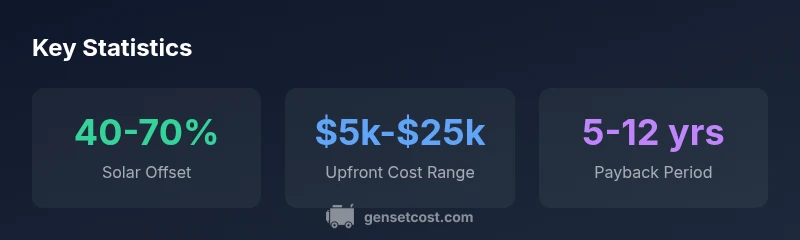
Costs for a generator with solar panels vary widely based on the number of solar panels, battery capacity, and generator size. Upfront investment often falls into a broad range, influenced by the quality of inverters, charge controllers, and safety features. Beyond the initial purchase, you should account for installation expenses, wiring, permits, and potential upgrades to your electrical panel. Operating costs shift from fuel expenses to maintenance and periodic inverter/component replacements, but solar energy often reduces running hours and fuel consumption. Over time, payback depends on sunlight availability, energy usage patterns, and local incentives. Some homeowners see compelling total cost of ownership advantages when solar incentives or utility programs apply, especially in regions with favorable net-metering rules and battery storage subsidies. The Genset Cost team notes that careful planning and professional installation are essential to maximize the return on investment, especially for larger homes or multi-tenant properties.
Installation and integration: transfer switches, inverters, and codes
Integration is not a one-size-fits-all task. A qualified electrician should design the system to meet local electrical codes and safety standards. The transfer switch isolates the house from the grid during outages and ensures that when the generator starts, power is directed to specified circuits rather than backfeeding into the grid. Inverters and battery management systems must be compatible with the generator’s control logic and solar array so that the flow of energy—solar first, battery second, generator last—occurs smoothly. Signal wiring, grounding, and surge protection are critical for safety and longevity. In some regions, homeowners can qualify for rebates or tax credits that apply to hybrid energy systems, helping to offset upfront costs. Planning with a reputable installer and checking for licensing and warranty terms can save time and avoid costly rework. The Genset Cost team suggests verifying warranty coverage for both the solar components and the generator, as well as contingency plans for maintenance and upgrades.
Maintenance, reliability, and operating modes
Hybrid systems add an additional layer of complexity compared with standalone generators. Routine maintenance should cover solar arrays (cleaning panels of dust and debris, inspecting mounting hardware), inverters (checking for fault codes, ensuring cooling) and generator components (oil, filters, coolant). A well-maintained hybrid will switch between solar and generator seamlessly, but you should test the automatic transfer switch and battery state-of-charge thresholds regularly. Operational modes typically include solar-first, solar with battery backup, and generator-only for high-demand scenarios or prolonged outages. During winter or heavy cloud cover, you may notice more frequent generator use, which is expected. The reliability of the system improves when you perform preventive maintenance and schedule periodic performance tests with your installer. Real-world feedback from homeowners indicates that proper maintenance reduces unexpected failures and extends component life.
Real-world scenarios: grid-tied vs off-grid hybrids
In grid-tied configurations, the hybrid system can island during outages while still allowing excess solar energy to feed back to the utility grid where permitted. This setup enhances daytime energy efficiency and can help with net metering. Off-grid hybrids are more demanding because the system must provide all power from solar and stored energy without grid support, requiring larger battery banks and potentially bigger generators. For both configurations, monthly energy audits and battery health checks are recommended to prevent abrupt failures. When evaluating options, consider your local climate, typical outage duration, and whether you want to support only essential loads or a larger portion of your home. A well-designed configuration will reduce generator runtime, lower emissions, and provide a reliable power supply for critical circuits even in challenging conditions.
Step-by-step implementation checklist
- Define essential loads and outage duration targets.
- Assess sun exposure and battery storage needs based on climate.
- Choose a hybrid inverter and ensure compatibility with the generator and transfer switch.
- Plan for safe installation with a licensed professional and obtain necessary permits.
- Install the solar array, storage, and generator, then test energy flows across different modes.
- Schedule regular maintenance checks and monitor performance data.
- Review warranties and keep a contingency plan for upgrades or replacements.
Comparison of common hybrid configurations for generator with solar panels
| Configuration | Solar Input (kW) | Gen Size (kW) | Best Use Case |
|---|---|---|---|
| Grid-tied Hybrid | 3-6 | 2-6 | Moderate outages, grid-connected |
| Off-grid Hybrid | 6-12 | 4-8 | Remote locations, no grid |
| Portable micro-hybrid | 1-3 | 1-3 | Low-load essentials |
People Also Ask
What is a generator with solar panels?
A generator with solar panels combines a solar array with a standby generator to provide power during outages. It prioritizes solar energy when available, uses batteries to bridge gaps, and brings automatic safety mechanisms for reliable operation.
A solar-assisted generator blends sun power with a backup engine so you stay powered while saving fuel. It switches between solar and generator automatically.
How do I determine the right size for my needs?
Start by listing essential loads and their peak watts. Estimate outage duration and add a safety margin. Match solar capacity to daytime needs, battery size to nighttime or longer outages, and choose a generator that can cover startup surges without overworking the engine.
First map your must-have loads, then plan for how long you might be without power and size the solar, batteries, and generator accordingly.
Do incentives apply to hybrid systems?
Yes, many regions offer incentives for solar-plus-storage and backup systems. Eligibility varies by location, system size, and installation type. Check with local utilities and state programs and consult your installer for documentation requirements.
There are often solar and storage incentives; talk to your installer about what you qualify for in your area.
What maintenance tasks apply to the hybrid?
Regular maintenance should cover solar panels, inverters, battery health, and generator service. Schedule annual checks, clean panels, inspect wiring, and test the automatic transfer switch to ensure reliable switching during an outage.
Keep up with panel cleaning, inverter checks, battery health, and a yearly generator service.
What is the typical payback period?
Payback depends on sun exposure, load profile, and incentives, but many homes see a multi-year payback. When incentives are strong and usage is well designed, the period can be shorter; otherwise it may extend toward the longer end of the range.
Payback varies with sun and incentives; it’s typically several years, influenced by how you use power during outages.
“Sizing and seamless integration are the two pillars of a reliable generator with solar panels. When done right, you get higher uptime and lower fuel use without compromising safety.”
Key Takeaways
- Balance solar, battery, and generator size for reliability.
- Hybrid power reduces generator runtime and fuel use.
- Expect broad upfront cost ranges based on scope.
- Ensure proper transfer switches and code-compliant wiring.
- Look for eligible incentives to improve payback.