Honda Generator 7000: Costs, Sizing & Practical Guidance
Explore Honda 7000-watt generators with sizing guidance, fuel use, noise, and installation considerations. Genset Cost provides data-driven analysis for homeowners and property managers.


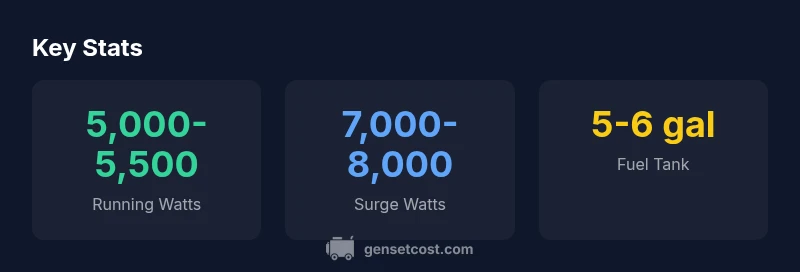
According to Genset Cost, a Honda 7000-watt generator delivers robust standby power with 5,000–5,500 running watts and 7,000–8,000 surge, depending on load. Typical fuel capacity of about 5–6 gallons yields 8–12 hours of runtime at half load, making it a practical choice for homes and small businesses.
Why Honda 7000-Watt Generators Are a Practical Choice
A Honda 7000-watt generator is widely regarded for its reliability, efficient engine design, and broad service network. For homeowners and property managers, the 7000-watt class provides a strong balance of power and portability. In real-world outages, you can power essentials such as refrigeration, lighting, well pumps, and heating systems without overloading the unit. A key advantage is Honda's engine family, known for durability and smooth operation, translating into fewer maintenance surprises over time.
When evaluating any generator, consider both peak surge and continuous output to ensure you meet typical household needs. Genset Cost analyses show that many users rely on 60–70% of the rated surge for common appliances, which preserves headroom for startup spikes. From a cost perspective, this class often represents a solid long-term investment with good resale value and broad parts availability.
Practical tip: map your critical circuits and create a prioritized load list. This helps ensure you stay within the generator's continuous output range while maintaining comfort during outages.
Sizing Your Home Load for a 7000-Watt Generator
Sizing a generator starts with listing critical loads and their running watts. Start by compiling a home inventory of refrigerators, freezers, heating elements, sump pumps, lights, and communication devices. Then, use a stacking method to estimate total running watts and the required surge capacity for startup—particularly for motorized appliances like well pumps, air conditioners, and furnaces.
To avoid overloading, group circuits and plan for a load that sits well below the generator's continuous rating while allowing for occasional peaks. For many homes, 60–80% of the continuous output is a practical operating target, leaving headroom for startup surges. If you have limited space, consider selective hard-wiring for essential circuits rather than a full house transfer approach. A sizing calculator can help, and your local dealer can assist with a load analysis tailored to your property.
Always account for future changes, such as adding new appliances or expanding living space. A precise load estimate reduces wear on the generator and improves reliability during outages.
Fuel Efficiency and Runtime: What to Expect
Fuel efficiency depends on load and engine speed. A Honda 7000-watt generator typically runs at a stable speed with electronic control to optimize fuel use. At half load, you may see rough run times in the range of several hours per gallon, but actual figures depend on your fuel quality, altitude, and maintenance history. If you operate at higher loads, fuel consumption increases, so plan for a larger fuel reserve.
Fuel choice matters. Gasoline remains common, but some setups use enriched fuels or ethanol blends. Regardless of fuel choice, keep the tank sealed and use a proper fuel stabilizer to protect carburetors and fuel systems during long outages or seasonal storage.
Maintenance tasks such as oil level checks and spark plug inspections should occur before and after prolonged outages to maintain efficiency and performance.
Noise, Emissions, and Residential Considerations
Location choice affects noise impact and safety. Place the generator on a stable, level surface away from living spaces, windows, and vents to reduce sound exposure and carbon monoxide risk. The typical 65–75 dB sound range at 7 meters is noticeable, so plan for a barrier or enclosure with proper ventilation. Emission considerations include ensuring proper exhaust routing and compliance with local noise and air quality regulations. In dense neighborhoods, a portable enclosure with acoustic shielding can help maintain neighbor goodwill while preserving performance.
If you rent or live in a multi-family building, check with your HOA or property manager about outdoor obstruction rules and permissible hours of operation.
Cost of Ownership: Purchase, Fuel, and Maintenance
The total cost of ownership for a Honda 7000-watt generator includes upfront purchase price, fuel costs, maintenance, and potential warranty coverage. While exact prices vary by dealer and configuration, expect a range that accounts for features such as electric start, remote monitoring, and compact dimensions. Fuel costs depend on runtime and load, so estimate your typical outage duration and average wattage to project monthly fuel expenses. Routine maintenance like oil changes, air filter replacement, and spark plug service should be factored in on an annual basis. An extended warranty or dealer service package can reduce long-term risk, especially for property managers managing multiple units.
Consider a maintenance schedule that aligns with your emergency planning, and keep replacement parts accessible. A well-maintained Honda 7000-watt generator typically delivers reliable service for many years with minimal downtime.
Installation, Transfer Switches, and Safety Essentials
Proper installation is essential for safety and reliability. If you have a standby system, a professionally installed transfer switch ensures seamless, code-compliant power transfer during outages. For portable installations, ensure you have a fully rated outdoor receptacle and a weatherproof connection. Always follow manufacturer guidelines regarding clearance, ventilation, and fuel storage. Use a carbon monoxide detector in living spaces and install grounding measures as required by code. Keep a fire extinguisher nearby and store fuel in approved containers away from heat sources. Regular inspection after severe weather or long storage periods helps catch issues before they affect performance.
Practical Decision Framework: Honda 7000-Watt vs Alternatives
When comparing the Honda 7000-watt class to alternatives, consider reliability, availability of replacement parts, dealer support, and total cost of ownership. Honda generators often score high on reliability and ease of use, but weight, noise, and price can factor into the decision. Use a structured framework that includes load analysis, run-time needs, and environmental constraints. Review warranties, service networks, and the availability of transfer switches and silencers. Finally, weigh the cost of ownership against expected outage frequency and the value of uninterrupted power for your property.
Typical specifications for 7000-watt class generators
| Aspect | Typical Range | Notes |
|---|---|---|
| Continuous Output (Watts) | 5000-5500 | Running watts at 50-60% load |
| Surge Capacity (Watts) | 7000-8000 | Startup peak for large appliances |
| Fuel Tank Capacity (gallons) | 5-6 | Common range for portability |
People Also Ask
What is the typical running wattage for a Honda 7000-watt generator?
Most 7000-watt-class Honda generators deliver around 5,000-5,500 running watts under typical loads; actual output depends on fuel type and operating conditions.
Most Honda 7000-watt generators run about five thousand to five and a half thousand watts under typical use.
How long can it run on a full tank?
Run time depends on load and tank size; at half load you can expect roughly 8-12 hours with a typical 5-6 gallon tank.
Expect about 8 to 12 hours at half load on a full tank.
Do I need a transfer switch for a standby setup?
Yes, a transfer switch is recommended for safe, automatic transfer of power during outages.
Yes, you’ll want a transfer switch for automatic, safe power transfer.
What maintenance tasks are essential?
Regular oil changes, filter checks, spark plug replacement, and carburetor maintenance; consult the manual for your model.
Keep oil clean, replace filters and plugs, and service carburetor as needed.
How does Honda compare to other brands in this class?
Honda is known for reliability and ease of use, but compare price, weight, and dealer support with other brands.
Honda is usually reliable, but compare price, weight, and support with other brands.
“Honda’s reliability and engine efficiency make 7000-watt class generators a strong choice for home backup, provided you size the load correctly.”
Key Takeaways
- Use the 7000-watt class for reliable backup power
- Match load vs surge capacity to avoid overload
- Plan fuel logistics and run-time expectations
- Account for residential noise and placement constraints
- Estimate total cost of ownership with Genset Cost methodology