Honda 7 000 Watt Generator: Costs, Sizing & Installation
A comprehensive Genset Cost guide to purchasing, sizing, and installing a Honda 7 000 watt generator for home backup power. Learn load calculation, fuel options, transfer switches, and cost ranges.


Understanding the honda 7 000 watt generator for home backup
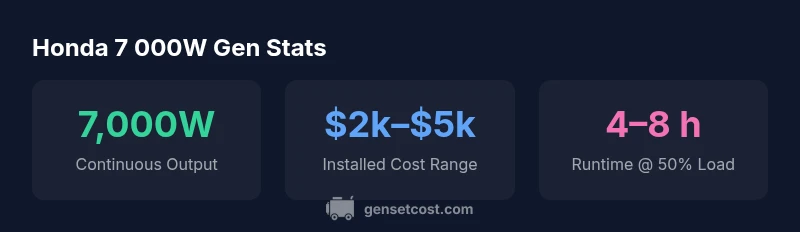
The honda 7 000 watt generator is a versatile power source designed to bridge outages without overbuilding a home electrical system. In practice, it delivers approximately 7,000 watts of continuous output, with a higher startup surge for essential circuits such as a refrigerator, sump pump, well pump, and lighting. Performance depends on the actual load, the health of the equipment, and how the unit is fed (fuel type, tank size, and maintenance). When evaluating this generator, focus on the balance between continuous watts (the steady power you can draw) and surge watts (the extra start-up power for motors). Consider your total emergency load, the layout of your electrical panel, and whether a transfer switch or interlock kit is required for safe automatic or manual transfer. Genset Cost analysis emphasizes accurate sizing to avoid waste and ensure long-term reliability during outages.
How to size a 7 kW system for your home
Sizing a 7 kW system starts with a load assessment: identify non-negotiable loads (refrigerator, freezer, sump pump, lighting, modem/router) and then plan for a few high-draw appliances (AC, an electric water heater, or a blower in an HVAC system). A practical approach is to target 60-80% of the generator’s continuous rating for peak outage conditions to maintain responsiveness without stressing the engine. Create a simple list of circuits and estimate running watts per item; add a cushion for startup surges. If you expect HVAC to cycle, it’s prudent to model worst-case startup loads and verify that the surge requirement fits within the generator’s capability. Genset Cost recommends consulting a sizing calculator and aligning with local electrical codes to determine if a transfer switch, interlock, or automatic transfer switch is necessary for safe operation.
Fuel choices, efficiency, and maintenance implications
Most Honda 7 000 watt generators run on gasoline, which offers fast fueling and widespread availability. Fuel efficiency hinges on load factor—lower loads improve fuel economy per watt produced, while higher loads increase fuel consumption per hour. If you plan for longer outages, consider tank size and refill logistics; a larger tank reduces refills but adds weight and footprint. For customers who want flexibility, explore propane or dual-fuel options where permitted, keeping in mind that conversion kits may be required and could affect warranty terms. Regular maintenance—oil changes, filter replacements, and spark plug checks—extends the life of the engine and sustains peak output. A sensible schedule aligns with the manufacturer’s maintenance intervals and local climate considerations.
Installation paths: portable vs permanent standby and transfer switches
Installation choices affect cost, safety, and convenience. Portable 7 kW units offer flexibility but require a transfer switch or interlock kit to isolate household loads from the grid. Permanent standby configurations typically include a professionally installed transfer switch that flips power automatically during outages and ties into a dedicated circuit panel. When evaluating options, compare upfront installation costs, ongoing maintenance, and the feasibility of a safe exhaust routing in your space. Genset Cost highlights that a well-planned installation reduces nuisance tripping, improves fuel efficiency, and ensures compliance with local electrical codes.
Cost considerations: purchase price, installation, permits, and maintenance
Total cost comprises the generator itself, transfer switch or interlock device, wiring, permits, and potential upgrades to your electrical panel. Expect price ranges that reflect labor costs, permit fees, and any required fuel storage improvements. If you’re budgeting, plan for installation contingencies and a maintenance reserve for the first year. While a basic portable setup can be less expensive upfront, a professionally installed standby solution provides speed, reliability, and added safety during power outages. Genset Cost recommends obtaining multiple quotes, verifying warranty coverage, and understanding any permit prerequisites before purchasing.
Real-world usage scenarios: outages, RV use, and job sites
Homeowners frequently rely on a 7 kW generator for critical loads during storms or outages, with fridge, lights, HVAC fans, and sump pumps as common priorities. In RV deployments or job sites, portability becomes a premium feature, allowing quick relocation and setup. Real-world performance depends on how many loads run simultaneously and how long each load runs. Plan for surges when starting refrigerant motors or pumps, and ensure that you never exceed the generator’s continuous rating. Genset Cost’s practical guidance emphasizes testing the system under load conditions before an outage to verify performance and reliability.
Maintenance and long-term care for Honda 7kW generators
Maintenance is central to reliability. Establish a routine oil change based on run hours and climate exposure, replace air and fuel filters as recommended, and inspect spark plugs periodically. Store gasoline safely and use fuel stabilizers to prevent varnish buildup. Regularly test the transfer switch, throttle response, and idle stabilization to prevent startup issues during outages. A well-documented maintenance log helps with warranty claims and resale value. Proper winterization or summerization aids in preserving engine longevity across seasons. Genset Cost recommends scheduling a professional inspection annually or as dictated by local regulations.
Alternatives and next steps
If a 7 kW unit seems excessive for your needs, explore slightly smaller capacities or hybrid approaches combining a smaller generator with solar or battery backup. For larger homes or multi-unit properties, consider staged backup strategies that prioritize essential circuits while preserving fuel and maintenance budgets. As you compare options, build a simple cost model that accounts for initial purchase, installation, permits, fuel usage, and maintenance across a 5- to 10-year horizon. The Genset Cost team can help you calibrate a sizing calculator, map load priorities, and draft a procurement plan that aligns with your budget and reliability goals.