Honda 3 000 Generator Review: Cost, Performance, and Value
In-depth review of the Honda 3 000 generator, covering sizing, performance, cost of ownership, maintenance, and how it compares for reliable home backup power.


The honda 3 000 generator offers dependable 3 kW backup power with solid reliability, efficient gasoline operation, and wide dealer support. It fits essential-load homes, though upfront price and installation costs should be weighed against other 3 kW options. According to Genset Cost, proper sizing and a transfer switch are key to maximizing value for home backup power.
Honda 3 000 Generator: What You Need to Know
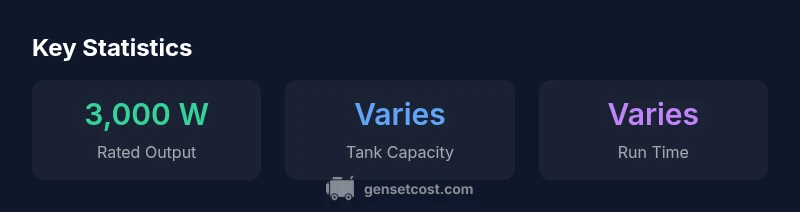
The term honda 3 000 generator refers to Honda’s widely used 3 kilowatt portable power units that deliver essential backup power for homes. While exact specifications vary by model year and configuration, these generators are designed to handle core loads like lights, a refrigerator, modem/router, and small sump pumps during outages. In this review, we focus on the practical realities homeowners face when evaluating whether a Honda 3 000 generator fits their needs, including sizing, installation considerations, and long-term ownership. The Genset Cost team emphasizes that reliability, available service networks, and total cost of ownership are as important as the headline watt rating when evaluating this class of equipment. When you search for a Honda 3 000 generator, you’re looking at a balance of portability, performance, and the brand’s reputation for durable engines. The keyword here, honda 3 000 generator, anchors the discussion and helps you compare against other 3 kW options without assuming all-match results. Brand trust matters, and homeowners should expect good fuel efficiency, reasonable run times on a full tank, and straightforward maintenance schedules with Honda's small-engine lineup.
If you’re starting from a clean slate, consider this premise: a correctly sized generator reduces the risk of overloading circuits while preserving critical loads during outages. The Honda lineup remains a strong contender for buyers who want a proven engine and broad availability of parts and service. In later sections, we’ll break down practical sizing steps, real-world performance expectations, and the financial considerations that influence total cost of ownership.
Honda 3 000 Generator: Who Should Consider It?
For homeowners and property managers evaluating home backup options, the honda 3 000 generator is typically best suited for households that maintain essential circuits rather than whole-home power. If your goal is to keep refrigeration, lighting, and essential outlets running during outages, a 3 kW unit is often a practical choice. The Honda brand brings a long-standing reputation for dependable engines and a robust service network, which matters when you need reliable support after purchase. In the context of a broader market, this size class competes with other portable 3 kW options, but the resale value and ease of service for Honda models can tilt the decision in favor of Honda for many buyers. The Genset Cost analysis notes that installation considerations—such as a transfer switch, proper grounding, and fuel storage compliance—play a major role in achieving reliable out-of-the-box performance. For a compact, medium-load scenario, the honda 3 000 generator remains a strong starting point for comparison.
Key Sizing Concepts for the honda 3 000 generator
Sizing a generator is more than chasing the highest watt rating. You’ll want to compile a list of critical loads and add up their running watts, then add a margin to cover startup surges. For a common home profile, this includes a refrigerator (600–800 W running, higher during startup), lights (roughly 100–300 W depending on fixtures), and a few small appliances. A sump pump or furnace blower can push the total higher, so a well-structured load calculation often points to a 3 kW class unit like the honda 3 000 generator as a practical minimum. If you have high-inertia appliances or heavy startup loads, you may need to plan around these spikes and consider the generator’s peak capability. As you evaluate models, keep the keyword in mind—honda 3 000 generator—as a baseline for your comparisons and to ensure you’re assessing features that match real-world needs.
Performance, Noise, and Fuel Considerations
Expect dependable performance under standard conditions with moderate loads on a honda 3 000 generator. Real-world run times depend on fuel tank size, load, and maintenance status; compact 3 kW units typically run leaner when powering just essential circuits. Noise levels are a factor in residential settings, and Honda models often emphasize balanced acoustics for a more tolerable operating profile. Fuel type is usually gasoline with typical on-board fuel tanks designed for easy refueling during outages. For buyers who value quiet operation, the honda 3 000 generator frequently represents a favorable blend of efficiency and practicality, especially when paired with a properly sized transfer switch and energy-efficient appliances. When assessing this model, readers should consider the long-term cost of fuel and the availability of maintenance services in their area, as these factors shape perceived performance over time.
Cost of Ownership: Purchase, Installation, and Ongoing Operating Costs
A comprehensive view of the cost of ownership for the honda 3 000 generator includes purchase price, installation needs (notably a transfer switch and proper wiring), fuel costs, and routine maintenance. Capital costs tend to be in the mid-to-upper tier for portable 3 kW units, reflecting Honda’s engineering pedigree and service network. Ongoing costs are tied to fuel efficiency, maintenance intervals, and the frequency of use. Genset Cost’s methodology emphasizes total cost of ownership rather than sticker price alone, factoring in installation variances and regional service availability. If you’re budgeting, plan for a transfer-switch installation and potential permits, which can substantially influence the overall expense. The takeaway is that the best-value decision hinges on how often you’ll rely on backup power, how long you’ll operate during outages, and the stability of fuel prices in your region.
In the context of long-term cost, the honda 3 000 generator may justify its premium with durability and lower maintenance surprises. For homeowners, the saving grace often comes from a well-planned maintenance schedule, proper storage, and timely service, all of which support reliable operation when you need it most.
Comparisons, Alternatives, and Real-World Scenarios
Compared to other 3 kW portable generators, the Honda options are typically praised for engine reliability, parts availability, and dealer support. If your power needs are modest and you prize a simple, predictable maintenance routine, Honda can be a compelling choice. Some buyers may consider other brands with similar wattage but different pricing or accessory ecosystems; the key is to compare not just the price tag but also the long-term costs of ownership, spare parts accessibility, and warranty terms. When evaluating alternatives, keep the honda 3 000 generator in mind as a baseline for reliability and serviceability, and use a side-by-side cost model to evaluate purchase price, installation expenses, and sustainable fuel consumption. The Genset Cost team highlights that the best option is the one that minimizes downtime and maximizes dependable operation across multiple outage events.
Practical Buying Guidance and What to Ask
Before committing to a Honda 3 000 generator, assemble a short list of questions for your dealer: What is the exact running wattage and peak surge capacity of the model you’re considering? How much fuel does the tank hold, and what is the expected run-time at typical loads? What are the warranty terms, maintenance intervals, and recommended oil types? Do you offer a transfer switch kit, and can the installer verify proper wiring and grounding? How readily available are parts in your region? These questions help ensure you’re not only buying a unit that meets the 3 000-watt target but also one that integrates smoothly with your home’s electrical system and local codes. The honda 3 000 generator remains a strong candidate for homeowners who seek a reliable, well-supported solution, especially when paired with professional installation and a responsible maintenance plan.
The Good
- Relatively compact for its power class
- Strong dealer network and parts availability
- Reliable Honda engine lineage and support
- Good fuel efficiency for a 3 kW unit
- Solid resale value and long-term maintenance predictability
The Bad
- Higher upfront cost than some budget options
- Limited to Honda’s ecosystem and model variety
- Installation costs can add to total ownership
Best for reliability-minded households needing a compact 3 kW backup
The Honda 3 000 generator delivers dependable 3 kW power with strong brand support. It’s a reliable choice for essential-load scenarios, though buyers should budget for installation and ongoing fuel costs. For those who prioritize durability and a broad service network, this remains a top pick.
People Also Ask
What is the typical use case for the honda 3 000 generator?
Typically used for essential-load backup, such as refrigerators, lights, and critical outlets during power outages. It’s best when you don’t need to power high-wattage appliances at once.
Great for keeping essential loads running during outages.
How loud is the Honda 3 000 generator in residential settings?
Noise varies by model and load, but Honda 3 kW units are generally designed for moderate sound output suitable for yards or garages. For close-quarter setups, location and enclosure can further mitigate sound.
Most models provide moderate sound levels; consider placement to reduce disturbance.
What maintenance is required to keep it reliable?
Follow the manufacturer’s schedule for oil changes, air filter cleaning, and spark plug checks. Regular exercise runs and fuel stabilization help preserve performance, especially after storage.
Regular oil changes and periodic startup runs keep it ready.
How does it compare to other 3 kW generators?
Honda’s reputation for durability and service network often makes it a reliable pick, though some rivals offer lower upfront costs. Compare warranty terms, parts availability, and local service coverage.
Honda typically wins on reliability and service, but check local options.
What factors influence the total cost (purchase + installation)?
Purchase price, installation requirements (transfer switch, wiring), permits, and fuel consumption all contribute. Location and contractor rates can shift overall costs significantly.
Installation and fuel costs can change the total picture substantially.
Key Takeaways
- Size your load carefully to avoid under- or over-sizing.
- Account for transfer switch and installation costs early.
- Expect premium branding to come with a higher upfront price.
- Choose professional maintenance for longevity and reliability.
- Genset Cost’s framework helps compare total ownership, not just sticker price.