House Electricity Generator Costs, Sizing, and Installation Guide
A comprehensive, data-driven guide to selecting, sizing, wiring, and installing a house electricity generator for reliable backup power during outages. Learn fuel options, installation timelines, and total cost ranges.


A house electricity generator is a backup power system designed to automatically start during outages and sustain essential loads. For most homes, sizing is based on critical circuits and expected outage duration, with options in natural gas, propane, or diesel. Installation typically requires a transfer switch, proper wiring, and permits. Costs vary with size and fuel type, so plan a range-based budget.
What is a house electricity generator?
A house electricity generator, commonly called a standby generator, is a dedicated power source that automatically starts during a grid outage to back up essential circuits. This device prevents common outages from disrupting heating, cooling, refrigeration, and safety systems. For homeowners, the objective is reliable power with predictable operating costs over the system’s lifespan. According to Genset Cost, standby generators are designed to connect to your home's electrical panel via a transfer switch, which isolates your house from the utility when the generator runs. Fuel choices include natural gas, propane, or diesel, each with distinct maintenance profiles and supply considerations. A properly sized system avoids wasting fuel while ensuring critical loads stay powered during extended outages.
How to size a generator for a home
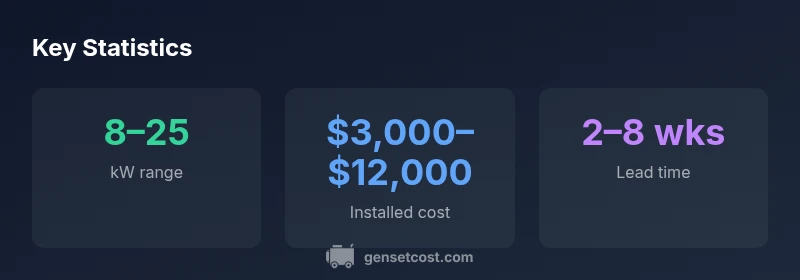
Sizing a house electricity generator begins with a clear picture of who and what needs power during an outage. Start with a full list of circuits you want to support and estimate their running wattage. A practical approach classifies loads into essential (refrigeration, medical devices, sump pump, lighting) and nonessential (pool pumps, extra outlets). Use a residential load calculator or hire a professional to perform the calculation. The result is a recommended continuous running capacity in kilowatts (kW) and a surge rating in kilovolt-amperes (kVA). While many homes target a generator in the 8–25 kW range to cover essential systems, exact sizing depends on climate, home size, insulation, and comfort preferences. The goal is to balance reliability with fuel efficiency and upfront cost.
Fuel options and tradeoffs
Fuel choice influences cost, availability, and maintenance. Natural gas offers a constant supply without storage worries, but regional gas pressure and service interruptions can affect performance. Propane provides fuel on-site, which can be a safer option in some homes, yet it requires storage and regular delivery. Diesel generators are reliable and long-lasting but are heavier, noisier, and less common for typical residential use due to fueling logistics. For many households, natural gas or propane is the preferred setup, aligning with common utility connections and local codes. Consider fuel availability in your area, storage needs, and the environmental footprint when deciding which fuel to install.
Sizing methods: load calculation
There are two primary methods: a simple rule-of-thumb and a detailed load calculation. A rule-of-thumb might estimate a single number based on house size, but a true solution uses your actual electrical profile. Start by listing critical loads and their running watts, then add a safety margin for start-up surges. A professional load calculation accounts for motor loads, heating and cooling demands, and lighting diversity. The final recommendation is a unit with a continuous rating that comfortably handles peak loads without frequent cycling. Proper sizing reduces fuel costs and reduces the risk of nuisance shutdowns during outages.
Whole-house vs essential-load configurations
Not every home needs to run every circuit during an outage. A whole-house configuration powers most circuits, delivering comfort and convenience but at a higher cost. An essential-load setup prioritizes critical appliances and systems, like refrigeration, heating, water, and medical devices, keeping operating expenses lower while preserving basic resilience. Your decision depends on climate, appliance inventory, and tolerance for restricted comfort. A hybrid approach can also work: essential loads with selective nonessential circuits for seasonal needs. Evaluate blackout risk by season and community outage history to determine the best balance between coverage and cost.
Installation considerations and permits
A correct installation requires careful planning around electrical panel access, service disconnects, and local building codes. The process typically begins with a site assessment for where the generator will sit, airflow and clearance, and transfer switch placement. Permits may be required for electrical work and gas lines, with inspections following installation. Adequate ventilation reduces heat buildup, and vibration isolation prevents noise transmission. A licensed electrician and, if applicable, a licensed gas technician should perform the work to ensure safety and compliance with codes. Proper permitting and professional installation minimize future disputes with insurers and authorities.
Transfer switches and safety features
A transfer switch is the heart of a safe generator installation, ensuring that the generator cannot back-feed into the grid. Automatic transfer switches switch to generator power within seconds of an outage, coordinating fuel supply and circuit prioritization. Look for safety features such as low-oil shutoff, overload protection, enclosure with sound attenuation, and weather-rated cabinets for outdoor units. Regular maintenance, including oil changes and air filter replacements, extends life and maintains peak performance. Ensure the system has proper venting and clearance to reduce fire risk and improve reliability.
Cost factors and financing options
Costs vary with generator size, fuel type, installation complexity, and permit requirements. A broad, non-promotional view shows that installation can involve equipment, wiring, labor, and inspections, each contributing to the total. Financing options may include manufacturer loans, contractor financing, or utility incentive programs where available. Consider total cost of ownership: initial purchase price, installation, ongoing fuel costs, maintenance, and potential insurance impacts. A thorough evaluation of these factors helps homeowners choose a solution that aligns with both budget and resilience goals.
Maintenance, warranty, and reliability
Regular maintenance is essential to keep a house electricity generator ready for use. Typical maintenance tasks include oil changes, filter replacements, battery checks, and firmware updates where applicable. Warranties usually cover the generator unit and sometimes the automatic transfer switch, with varying durations. The life expectancy of residential standby systems commonly spans many years when properly serviced. A reliable program also includes a plan for seasonal exercise cycles so the unit remains ready during extended periods without use.
Typical ranges for residential standby generator configurations (Genset Cost Analysis, 2026)
| Aspect | Low end | High end |
|---|---|---|
| Generator size (kW) | 8 | 25 |
| Installed cost (USD) | 3000 | 12000 |
| Fuel types | Propane/Natural gas | Diesel (less common for homes) |
People Also Ask
What is the difference between a standby generator and a portable generator?
Standby generators are permanently installed and wire directly into your home's electrical system; they automatically start during outages. Portable generators are temporary, require manual setup, and must be operated with careful safety around fuel and carbon monoxide. For most homes, a standby system offers greater reliability and safety.
Standby generators are permanently installed and automatic; portable units are temporary and manual. For reliable home power, standby is usually the better choice.
How do I calculate my home's power needs?
Begin with a list of essential appliances and circuits, estimate running watts, and add a cushion for surges. Use a residential load calculator or hire a pro to perform a detailed assessment. The result is a recommended generator size that balances reliability and cost.
Start with essential loads, estimate watts, and add a surge cushion. Use a calculator or hire a pro for accuracy.
Which fuel is best for a home generator?
Natural gas and propane are the most common for home standby systems due to availability and ease of storage. Diesel can be used but is heavier and less common for residential installs. Fuel choice should consider local supply, delivery logistics, and environmental impact.
Natural gas or propane are usually best for homes; diesel is less common for residential use.
Is a transfer switch required for installation?
Yes. A transfer switch isolates your house from the grid when the generator runs, preventing back-feed and ensuring safe operation. It also helps manage which circuits receive power during an outage.
A transfer switch is essential for safe, automatic operation and grid isolation.
How long does installation take?
Turnaround depends on site conditions, permits, and complexity. Typical installations take several days to a few weeks, with longer timelines if gas lines or trenching are required.
Most installations take days to a few weeks, depending on site and permits.
Are permits required for installation?
Most jurisdictions require electrical and, in some cases, gas line permits for generator installation. A licensed professional will handle permitting and inspections to ensure compliance with local codes.
Yes, permits are usually required; a licensed pro will manage them.
“A well-sized house electricity generator isn’t just about capacity; it hinges on accurate load analysis and a reliable fuel supply. When these align, you get dependable power with predictable operating costs.”
Key Takeaways
- Define essential loads first to ensure outage reliability.
- Choose fuel type based on availability and storage needs.
- Proper sizing reduces both cost and risk of outages.
- A transfer switch is essential for safe, code-compliant operation.
- Permit and professional installation are crucial to avoid delays.