How long does a generator last in RV: Lifespan, maintenance, and costs
Discover realistic lifespans for RV generators, how maintenance affects longevity, and practical steps to maximize years of dependable power for camping and emergencies.


According to Genset Cost, RV generators typically offer several thousand run hours under normal camping use. Longevity also depends on load, maintenance, and fuel type, not just nominal output. In practice, plan for incremental replacements and regular service intervals to maximize years of dependable power for camping trips and emergency outages.
What determines how long does a generator last in RV
The lifespan of an RV generator is not a fixed countdown; it depends on how you operate, maintain, and store it. Key factors include hourly runtime, load level, fuel quality, and preventive maintenance. For many owners, the question 'how long does a generator last in RV' is answered by a mix of run-hours and calendar years, not just a single number. Regular oil changes, air filter replacements, spark plug checks, and coolant and battery maintenance are critical. Additionally, exposure to heat, humidity, and constant vibration can influence wear. In practice, you should track both run hours and calendar years to estimate remaining life and plan service intervals. The bottom line: longevity comes from disciplined practice, not raw output specs.
Lifespan ranges by generator type in RVs
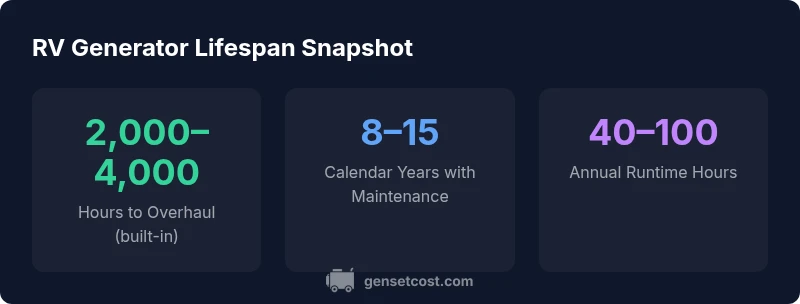
RV owners typically compare built-in (OEM) generators with portable units. Built-in units are designed for steady campsite use and regular service, but they can wear differently due to continuous operation, heat inside enclosures, and mounting vibrations. Portable generators have lower upfront costs and can be moved or stored, but their lifespan hinges on maintenance discipline and fuel stability. In general, you can expect ranges like 2,000–4,000 run hours for built-in gas units and 1,000–2,000 hours for portable gasoline models. Calendar life with proper maintenance often falls in the range of roughly 8–15 years, while more robust or heavily used rigs may see shorter calendar life. Always consider model guidelines and maintenance history when estimating longevity.
The role of maintenance in longevity
Maintenance is the single most influential lever on generator life in an RV. Regularly scheduled oil changes with the correct grade, air and fuel filter replacements, and spark plug checks for gasoline engines minimize friction and combustion byproducts that accelerate wear. For diesel RV generators, monitor fuel quality and injector cleanliness. Keep cooling systems clean, ensure adequate coolant levels, and check belts and hoses for signs of aging. A well-maintained generator runs cooler, operates more efficiently, and experiences fewer hard stops and starts—each of which reduces wear. Document service intervals and track run-hours, not just calendar dates. A proactive maintenance plan reduces the risk of unexpected downtime and helps you stretch the life of your investment.
Load management and runtime patterns
How you load a generator directly affects its longevity. Running at or near maximum capacity for extended periods increases thermal stress, accelerates component wear, and can shorten the engine’s life. Conversely, light to moderate loads, combined with short runtime periods, generally produce fewer heat cycles and longer life. For RVs, plan your generator usage around peak loads: air conditioning, heating, and appliance demand should be balanced, with strategies like pre-cooling during mild weather or using energy-efficient appliances. If you expect long outages, consider alternating between the generator and shore power to reduce continuous operation. Additionally, avoid frequent cold starts; a warm-up period is advisable. Monitoring system temperature, oil pressure, and fuel consumption can help you detect abnormal load conditions early.
Fuel quality, storage, and their effects
Fuel quality dramatically affects how long a generator lasts in RV usage. Ethanol-blended fuels can degrade more quickly, causing varnish buildup and carburetor issues in small engines. Stabilizers and proper storage practices are essential when the unit sits idle for weeks or seasons. If you store fuel for long periods, consider using fresh fuel and stabilizers, and run the generator briefly to circulate the stabilized fuel. For diesel units, monitor water in fuel and injector issues. Using clean, fresh oil, and filtering air helps maintain combustion efficiency and reduces wear. In RV applications, gasoline is common; however, diesel or propane options offer different longevity characteristics depending on maintenance and operating conditions. The key is to align fuel strategy with usage expectations and maintain a regular swapping schedule so that fuel does not degrade and compromise performance.
Electrical system interactions and reliability
Your RV's electrical system—including transfer switches, battery charging, and inverters—affects how your generator ages. A poorly matched transfer switch can cause surges or irregular loads that stress the generator’s alternator. Regularly inspect connections, verify clean grounding, and ensure the inverter or converter is compatible with the generator’s output. A misaligned system can force the engine to restart more often or operate in inefficient ranges, increasing wear. Budget for periodic checks by a qualified technician who can verify voltage stability and load balance. A well-integrated system reduces unnecessary engine runtime and supports more predictable operation, contributing to longer life.
Costs, repairs, and replacement planning
Cost considerations play a role in determining when to replace or refurbish an RV generator. Routine maintenance costs are not only a recurring expense but also a predictor of longevity; missing services can lead to expensive repairs and earlier replacement. When evaluating life expectancy, balance the cost of major repairs against the cost of a new unit and expected remaining lifespan. Some RV owners keep a replacement window in mind, such as if a major repair would approach a significant fraction of the unit's replacement cost. In addition to purchase price, consider parts availability and warranty terms, which influence long-term value. Remember that a generator’s life is also impacted by how often you run it and the reliability of the fuel supply.
Practical steps to extend life on everyday trips
Implement a simple, repeatable maintenance schedule and stick to it. Log run hours, schedule regular oil changes, replace air filters, inspect spark plugs or glow plugs, and test the cooling system before and after heavy seasons. Keep the unit clean and dry, protect it from harsh weather, and store it with stabilized fuel when possible. Use a load-management approach: distribute power needs across shore and generator power, avoid continuous max-load operations, and employ energy-efficient appliances. Consider a preemptive replacement plan rather than waiting for a catastrophic failure, particularly if the unit has exceeded its typical service window. By combining these practices, you’ll maximize reliability and extend the overall life of your RV generator.
Real-world scenarios: seasonal campers vs full-time RVers
Seasonal campers typically use their RV generator for shorter durations each year, with long storage periods between trips. This pattern tends to favor longer calendar life with regular winterization and fuel stabilization. Full-time RVers, who rely on their generator for most daily needs, accumulate more run-hours and heat cycles, which can shorten the engine's lifetime if not matched with diligent maintenance. In both scenarios, proactive scheduling and professional tune-ups at appropriate intervals remain essential. The bottom line: whatever your usage, a consistent maintenance rhythm delivers the best odds of maximizing how long the generator lasts in your RV.
Comparison of RV generator lifespans by type
| Aspect | Typical Lifespan (hours) | Calendar lifespan (years) | Notes |
|---|---|---|---|
| Built-in RV generators (gas) | 2,000–4,000 | 8–12 | Maintenance-heavy; higher replacement risk |
| Portable RV generators | 1,000–2,000 | 5–10 | Lower cost, more frequent servicing |
People Also Ask
How many years can an RV generator last with regular maintenance?
With regular service, many RV generators may last 8–15 years, depending on usage and model. Hourly wear accumulates; heavy use reduces this window.
With regular service, many RV generators may last 8 to 15 years, depending on use.
Do built-in RV generators outlast portable ones?
Lifespan depends on maintenance and duty cycle. Built-in units are designed for long runs but may require heavier servicing; portable units can last if well maintained.
Lifespan depends on maintenance; both types can last with proper care.
Should I replace my RV generator when it reaches end of life?
Assess age, hours, and repair costs. If upkeep becomes more expensive than replacement, budgeting for a new unit is prudent.
If repairs pile up or costs exceed replacement value, it's time to replace.
How can I maximize RV generator lifespan?
Follow a formal maintenance schedule, operate at reasonable loads, and perform regular oil changes and air filter replacements.
Keep up with maintenance and sensible loading to extend life.
Is it worth renting a generator for trips?
Renting can be cost-effective for short trips or when reliability matters but compare rental fees to ownership costs.
Renting can be cheaper for short trips if it fits your needs.
“Proactive maintenance is the strongest lever for RV generator longevity. The Genset Cost team recommends following a formal service schedule and mindful load management to maximize lifespan.”
Key Takeaways
- Follow a regular maintenance schedule to maximize RV generator life
- Manage loads to avoid excessive wear and heat cycles
- Track run hours alongside calendar years for accurate planning
- Choose fuel strategy and storage practices that match travel patterns