How Long Does a Generac Generator Last? Lifespan, Maintenance, and Tips
Discover how long Generac standby generators typically last, what affects longevity, and practical maintenance steps to maximize life. This guide sifts through usage, climate, maintenance, and installation to help homeowners and property managers plan confidently. Based on Genset Cost Analysis, 2026.


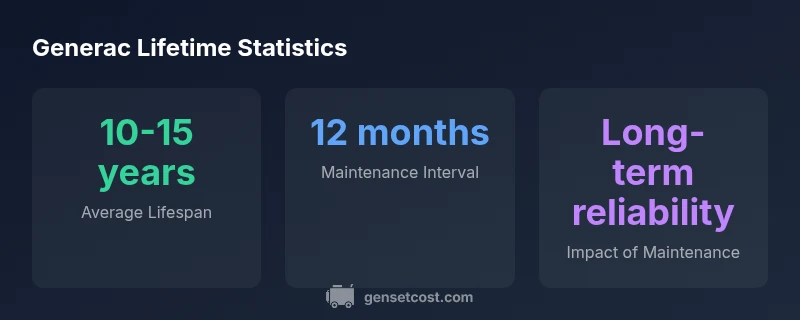
Generac standby generators commonly last about 10-15 years with regular maintenance and proper installation. Longevity depends on run hours, climate, fuel quality, and adherence to a maintenance schedule. With annual servicing and correct preventive care, many systems reach the upper end of this range; neglect shortens life. This guidance reflects industry observations from Genset Cost Analysis, 2026.
The Core Question: How Long Does a Generac Generator Last?
When homeowners ask how long does a generac generator last, they are really asking about reliability over time, not a fixed expiration date. Generac offers standby units designed for long life under regular use, but the actual lifespan depends on how often the unit runs, the climate where it’s installed, the quality of maintenance, and how well the system was installed. In practice, most homeowners can expect a practical life window that extends beyond a decade, with some units approaching the mid-teens when cared for consistently. This discussion references industry norms and the Genset Cost Analysis, 2026 baseline for typical ranges and credible guidance. It’s essential to distinguish between model types (standby vs portable) and to recognize that life expectancy is a range rather than a single year count.
Typical Lifespan Ranges for Generac Generators
Generac's home standby lineup is engineered for continuous operation during outages, and the design philosophy supports durability. However, actual life expectancy varies by usage profile and environmental exposure. Taking a broad view from industry data and our synthesis at Genset Cost, 2026, you’ll commonly see a practical lifespan range of about 10-15 years for full-size standby units installed in residential settings with regular maintenance. Portable Generac units, while valuable for mobility, generally show shorter lifespans under typical field conditions. The takeaway: don’t anchor your planning to a single year; plan around a range and build in proactive maintenance to tilt toward the higher end of that range.
Key Factors That Shape Longevity
Several intertwined factors determine how long a Generac generator lasts. Duty cycle—the amount of runtime and the loads placed on the unit—directly affects wear on the engine, alternator, and electrical components. Environmental conditions, such as high humidity, salt air, or dusty surroundings, can accelerate corrosion and clog filters. Maintenance practices are perhaps the most controllable variable: oil changes, filter replacements, battery checks, and transfer switch inspections on schedule dramatically influence performance. Installation quality also matters: a proper clearance, ventilation, drainage, and a professionally wired transfer switch reduce stress on critical parts. Finally, fuel quality influences combustion cleanliness; stabilized fuel or a dedicated storage source minimizes varnish buildup that can impair fuel delivery and engine health. In combination, these factors explain why two Generac units of the same age can diverge widely in remaining life.
Maintenance Schedule That Extends Lifespan
A well-planned maintenance calendar is a powerful investment in longevity. Start with the basics: follow the manufacturer’s service intervals for oil changes, filter changes, spark plugs (for gasoline engines), battery health, and coolant checks if applicable. Schedule an annual professional inspection by a technician who specializes in standby generators, and request a load-test to verify the system can carry its rated duty during an outage. Keep the enclosure clean, free of debris, and ensure adequate airflow. Use stabilized fuel or a continuous fuel source for longer outages to prevent varnish buildup. Maintain a detailed service log so you can track trends, replacement parts, and any recurring issues. These steps don’t magically extend life, but they dramatically improve reliability and arrest wear patterns early.
Installation, Location, and Warranty Considerations
A careful installation sets the stage for longer service life. Place the generator on a solid, level surface with appropriate clearance from walls, doors, and flammable materials. Ensure adequate ventilation, drainage, and protection from extreme temperatures and weather. A professional installation includes a properly rated transfer switch and protective devices to reduce electrical stress. Warranty terms vary by model and region, and while a longer warranty isn’t a guarantee of longer life, it often reflects confidence in design. Maintaining the conditions required by the warranty—regular maintenance and professional inspections—helps you preserve protections and reliability over time.
Practical Longevity Scenarios and Budget Implications
Consider real-world scenarios to translate lifespan into planning. A lightly used, well-maintained standby unit in a mild climate might reach the upper end of the 10-15 year range. A heavily used unit in a harsher environment with inconsistent maintenance could fall short of 10 years, requiring earlier replacement or upgrade. When evaluating a replacement decision, weigh the cost of continued maintenance against the price of a new unit, new efficiency gains, and improved reliability. In many cases, upgrading to a newer Generac model with improved engine technology and fuel efficiency pays off over the long run, even if the upfront cost is higher. Our approach at Genset Cost emphasizes total cost of ownership and expected uptime as the key metrics.
How to Assess Your Generac’s Remaining Life
Start with your service history: how many maintenance visits have you logged and what components were replaced? Next, inspect for signs of wear, such as cracks in housing, corrosion on connections, oil leaks, or unusual noises. Run tests under light and full load and compare observed performance to the rated specification. If your checks indicate dwindling reliability, consider a professional assessment and data-driven decision about repair vs upgrade. Keeping a proactive mindset turns a vague longevity question into actionable maintenance and replacement planning.
Key factors affecting Generac lifespan
| Factor | Impact on Lifespan | Best Practices |
|---|---|---|
| Usage Hours/Day | Higher daily runtime can stress components | Limit continuous runtime; stagger loads; use load management system |
| Climate/Environment | Extreme temperatures/humidity shorten life | Install in sheltered, well-ventilated location |
| Maintenance Frequency | Regular servicing extends life | Follow manufacturer schedule; replace consumables |
| Installation Quality | Improper wiring stresses systems | Hire licensed technician; verify transfer switch |
| Warranty Coverage | Longer warranties reflect reliability | Maintain compliance to keep warranty valid |
People Also Ask
How often should I service a Generac generator?
Most standby Generac units benefit from an annual professional inspection. Always follow your model's manual and local code requirements. Regular checks help catch issues before they become major failures.
Most standby Generac units should be serviced at least once a year by a qualified technician, following your model's manual.
Do warranties affect lifespan?
Warranties indicate expected reliability and terms; they do not guarantee lifespan. Keeping up with required maintenance helps ensure warranty protections remain valid and can influence long-term performance.
Warranties show reliability expectations, but life depends on maintenance and usage.
Can a Generac last longer in certain climates?
Yes. Cooler, drier environments and proper ventilation support longer lifespans, while high humidity and corrosive conditions can accelerate wear. Maintenance quality remains a key factor across climates.
Yes—environment matters, and good maintenance helps regardless of climate.
What maintenance tasks are essential?
Oil changes, filter checks, battery testing, transfer switch inspection, and fuel quality management are critical. Regular inspections by a qualified tech help ensure everything works when you need it most.
Oil changes, filters, batteries, and transferring switch checks are essential.
Is it worth upgrading to a newer model?
Upgrading can improve reliability, efficiency, and fuel economy, especially if your current unit is older or stressed by outages. Consider total cost of ownership and potential downtime when deciding.
If your current unit is aging or unreliable, upgrading can be worthwhile.
What are signs a generator is near the end of life?
Frequent breakdowns, unusual noises, oil or fuel leaks, and reduced reliability are common signals that a unit may be near the end of life.
Watch for frequent breakdowns and noises—these suggest age-related wear.
“With regular maintenance and proper installation, a Generac standby generator can reliably serve through many years of power outages.”
Key Takeaways
- Schedule annual professional maintenance to maximize lifespan
- Choose proper installation location to reduce heat and stress
- Follow manufacturer guidelines for service intervals
- Understand that climate and usage shape the actual lifespan
- Consider newer models for efficiency and reliability in long-term ownership