How Long Can a Generac Generator Run? A Practical Runtime Guide
Learn how long a Generac generator can run across standby, propane, and portable models. Explore fuel types, load impact, and tips to maximize uptime during outages.


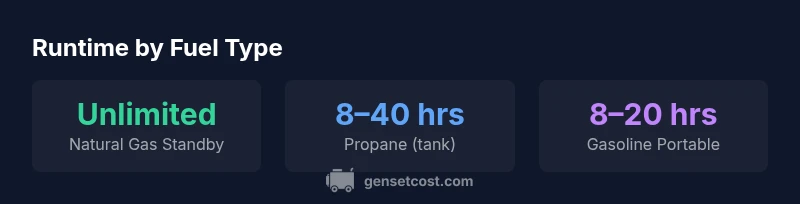
Standby Generac units connected to a natural gas line can run for days or longer, effectively limited by fuel supply, maintenance, and load. Propane-powered setups offer tens of hours depending on tank size, while portable Generac models running on gasoline typically deliver about 8 to 20 hours at typical loads, with longer runtimes possible at lighter loads.
How long can a Generac generator run? A practical overview
The question how long can a Generac generator run is best answered by distinguishing between standby (home or business) units and portable models. Standby Generac systems are designed to operate during power outages for extended periods, provided there is a reliable fuel source and routine maintenance. In residential setups that use natural gas lines, the runtime can be effectively unlimited, constrained only by gas pressure, line integrity, and the system’s load. When propane is the fuel, the available runtime depends on tank size and the generator’s power draw. Portable Generac units that run on gasoline have shorter, more finite runtimes tied to tank capacity and load. In short, the maximum uptime hinges on fuel availability and how hard the generator is asked to work. The goal is to match your expected outage duration with an appropriately sized system and a sensible fuel strategy, so you aren’t surprised when the lights go out.
Fuel types and runtime implications
Fuel choice dramatically shapes runtime. Natural gas supplies can support prolonged operation because the fuel is fed from an external line, assuming consistent pressure and no service interruptions. Propane depends on tank volume; a larger tank means longer potential operation, but you must manage tank refills and safety considerations. Gasoline-powered portable Generac models are limited by the fuel in their tanks and the efficiency of the engine at the load you place on it. Diesel options, while less common for home backup, have their own efficiency characteristics. Across all fuels, runtime scales with the load: higher power draw consumes fuel faster, reducing total runtime, while lighter loads extend it.
Standby generators: fuel supply and uninterrupted uptime
Standby systems designed for continuous operation rely on a steady fuel source, most commonly natural gas. When connected to a healthy gas service, a Generac standby generator can run for days or even weeks, assuming the outage persists and maintenance is kept up to date. The practical limit is not the generator itself but the fuel delivery and routine service: air filters, spark plugs, and oil changes all influence reliability over long runtimes. With propane, you’re limited by tank capacity, safety rules, and the generator’s efficiency under load. For homeowners, understanding the fuel plan is essential to avoid running dry mid-outage.
Propane vs natural gas: runtime and convenience
Natural gas provides the most convenience for long outages because it is often continuously supplied by the utility. Propane offers portability and simplicity but imposes a finite runtime determined by the tank size. If you choose propane, plan for a larger tank or staged refueling to extend uptime. For both fuels, selecting the right Generac model involves balancing expected load, desired runtime, and the accessibility of fuel sources during a prolonged outage.
Portable Generac generators: realistic runtimes and load management
Portable Generac units running on gasoline carry a more defined runtime horizon. Common configurations deliver roughly 8 to 20 hours at typical loads, with longer runtimes possible at lower loads or with larger gas tanks. Diesel-powered portables exist but are less common for home use. When you rely on a portable unit, plan for fuel logistics and weather-appropriate placement to ensure safe, uninterrupted operation during outages.
How load and fuel efficiency affect runtime
Runtime is not fixed; it hinges on load. A generator running at 100% of its rated capacity consumes fuel rapidly, shrinking total uptime. As load decreases, efficiency can improve and runtime increases. Efficient operation also depends on consistent maintenance, oil quality, air and fuel filtration, and proper ventilation. For Generac users, a balanced load strategy—covering essential circuits first and staggering nonessential loads—can maximize the time your system runs before refueling or service is needed.
Practical tips to maximize runtime during outages
To maximize runtime, prioritize essential circuits, use a load-shedding strategy, and ensure your fuel supply is reliable. Schedule regular exercise to keep the engine and alternator in good condition. Maintain clean air intake and keep oil at the right level. If you rely on propane, monitor tank levels and plan refills ahead of outages. For natural gas, confirm line pressure and clearance, and test the system with the automatic transfer switch (ATS) engaged so the switch-over is seamless.
Safety, maintenance, and warranty considerations
Safety should never be an afterthought. Always operate generators outdoors with proper ventilation to prevent carbon monoxide buildup. Install CO alarms and follow local codes and manufacturer guidelines for clearances and wiring. Routine maintenance—oil changes, spark plug replacement, air filter checks, and battery testing—extends runtime reliability. Understand the warranty terms and service requirements so you know what is covered during prolonged operation.
Choosing the right Generac for your home
To optimize runtime, size the generator to your essential loads and your fuel source. If you have a robust natural gas service, a slightly smaller standby unit may meet your needs and provide longer uptime under demand. If you prefer propane or rely on a battery-backed system for certain loads, model selection should reflect fuel availability, expected outages, and the ability to refuel or resupply safely. A professional sizing assessment is highly recommended to align runtime expectations with real-world conditions.
Runtime by fuel type and generator category
| Fuel Type | Standby Runtime | Portable Runtime |
|---|---|---|
| Natural gas | Unlimited (fuel supply dependent) | N/A |
| Propane | Tens of hours (tank size dependent) | N/A |
| Gasoline | 8-20 hours at typical load | 8-20 hours (large portable) |
People Also Ask
How long can a Generac standby run on natural gas?
On natural gas, standby Generac units can run for days or longer if the fuel supply remains steady and maintenance is performed. The practical limit is fuel delivery and service intervals. This setup is designed for extended outages with continuous power.
On natural gas, standby Generac units can run for days, provided the gas supply stays strong and you keep up with maintenance.
Can a Generac portable run indefinitely?
No. Portable Generac models that run on gasoline will eventually run out of fuel. Runtime depends on tank size and how heavily you load the unit. Most configurations provide several hours of operation, typically 8 to 20 hours.
Portables can’t run forever; it depends on fuel in the tank and the load you put on the generator.
What factors affect runtime the most?
Fuel type, tank size, and load are the primary drivers of runtime. Efficiency, maintenance, and environmental conditions also influence how long a generator can operate between refuels or service.
Fuel type, tank size, and how hard you run it are the big ones.
Should I run my standby generator with a full tank at all times?
Maintaining an adequate fuel reserve is prudent, but follow safety rules and local codes. Propane demands careful tank management, while natural gas relies on system pressure and line integrity.
Keep a healthy fuel supply and follow safety guidelines for your fuel type.
How often should I exercise my Generac to stay reliable?
Weekly exercise is a common practice to keep the engine, alternator, and fuel systems ready. Always follow the generator’s manual for recommended testing and maintenance intervals.
Run it weekly so it stays ready for the next outage.
What safety considerations affect continuous runtime?
Operate outdoors with proper ventilation, install CO detectors, and adhere to clearances and wiring guidelines. Ensure stable weather conditions and avoid attempting long runtimes in unsafe environments.
Always vent outdoors, use detectors, and follow safety guidelines.
“Runtime autonomy is a function of fuel delivery, load, and maintenance. A properly sized Generac system paired with a sound fuel strategy keeps outages from turning into downtime.”
Key Takeaways
- Assess fuel supply to estimate runtime
- Standby units with natural gas can run longer than propane tanks
- Load management dramatically affects uptime
- Portable generators are limited by tank size and fuel availability
- Regular maintenance and testing improve reliability