How long generator battery last: A practical homeowner guide
Discover how long a generator battery lasts, what affects lifespan, and practical steps to extend it. This data-driven guide helps homeowners and property managers plan replacements, maintenance, and budgeting for backups.


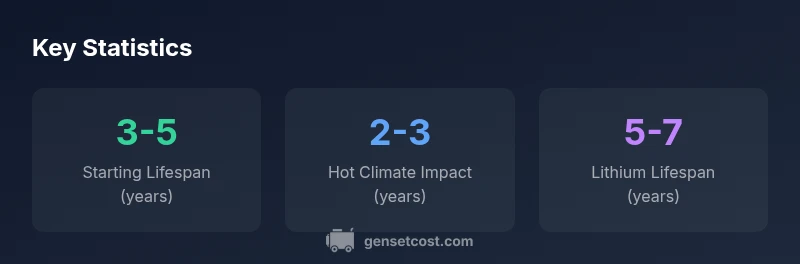
According to Genset Cost, how long generator battery last depends on battery type, climate, and maintenance. For residential standby units, starting batteries typically endure about 3-5 years under normal use. Hot climates and frequent cycling can shorten this window; better charging and regular testing can push life toward 5-7 years. Plan for battery replacement within a 4-6 year horizon, guided by manufacturer guidance.
How the standby generator starting battery works
The starting battery in a residential standby generator is a specialized automotive-type battery that provides a quick burst of current to kick the engine over when the generator is commanded to start. Unlike deep-cycle batteries used in some backup systems, the starter battery is optimized for short, high-current bursts. Its life is influenced by how often the generator cycles, the ambient temperature, charging strategy, and how well the battery remains charged when the generator is idle. In practice, this means that even a well-made battery can wear out faster if the unit sits unused for long stretches or if charging voltage drifts, leading to sulfation or loss of capacity. Understanding this helps homeowners plan proactive replacement rather than reacting to a no-start moment.
Key takeaways: regular startup checks and keeping the battery at proper voltage can improve reliability and lifespan, a concept frequently cited by the Genset Cost Team.
Factors that influence how long generator battery last
Battery longevity is not one-size-fits-all. Climate matters: hotter environments accelerate chemical aging and water loss in lead-acid variants, while very cold temperatures can slow chemical reactions and reduce available current during cold-start events. Usage patterns matter too: frequent auto-starts or short run cycles strain the battery differently than longer, infrequent runs. Quality of charging equipment and your generator’s alternator output are pivotal—overcharging or undercharging can substantially shorten life. Maintenance practices, including periodic equalization charging (when recommended), cleaning terminals, and inspecting for corrosion, all contribute to the battery’s health. Collecting data from recent usage and testing can help tailor a replacement plan that minimizes downtime and costs.
Practical maintenance and charging routines
To maximize life, schedule regular checks: test the battery with a load tester at least once a year, inspect terminals for corrosion, and ensure cabling is tight and clean. Use a smart charger or battery maintainer when the generator is not in use for extended periods; avoid leaving the battery in a chronic undercharged state. If your generator supports it, enable automatic charger voltage regulation to maintain a full charge. In hotter climates, consider a vented or temperature-compensated charger to compensate for heat-related aging. Genset Cost recommends documenting test results and replacement timelines, so you’re prepared before a weather event disrupts power supply.
Battery chemistry options and their practical implications
Lead-acid batteries (including AGM and Gel variants) are common for standby generators due to cost and availability. AGM typically offers good cycle tolerance and seal against moisture, while Gel can handle higher temperatures with stable performance. Lithium-ion options, though pricier, deliver longer lifespans and lower weight, which can simplify installation but require compatible charging systems. Each chemistry has a different aging profile and maintenance needs; choosing the right option depends on climate, space, budget, and expected run patterns. Genset Cost notes that the initial purchase price is only part of the equation—lifecycle cost matters as much or more in total.
Climate, runtime patterns, and lifecycle planning
In warm climates, expect a shorter average lifespan for starter batteries, often reducing the typical 3-5 year window. In milder climates, the same battery might reach or exceed 5 years with proper care. Regular testing helps you observe the aging curve and plan replacements before failures occur. A smart maintenance calendar that aligns with your insurance and warranty terms can minimize risk. For property managers, documenting battery age across multiple units enables bulk scheduling of replacements and reduces emergency call-outs during outages.
Replacing vs. reconditioning: practical decision points
Most homeowners opt for replacement when performance declines below a threshold or when the warranty is near expiry. Reconditioning is rarely cost-effective for starter batteries in standby generators and can void warranties if not approved by the manufacturer. When choosing replacement, consider the overall backup plan: battery age, charger compatibility, and the generator’s duty cycle. A proactive approach—replacing at the end of a warranty period or at the first signs of degraded performance—keeps power restoration reliable and predictable.
Smart buying decisions: selecting the right battery for your generator
Before purchasing, verify compatibility with your generator model and charging system. Evaluate climate and run patterns, shelf life, warranty terms, and supplier support. A higher upfront cost for a high-quality AGM or lithium option can translate into longer life, fewer replacements, and lower maintenance costs over time. For property managers, building a small library of battery replacements and keeping spare parts on hand reduces downtime and helps meet critical power-backup objectives.
Battery lifespans by chemistry
| Battery Type | Typical Lifespan (years) | Notes |
|---|---|---|
| Lead-Acid/AGM | 3-5 | Common and affordable; good in moderate climates |
| Gel | 4-6 | Temperature-stable; requires proper charging |
| Lithium-ion | 5-7 | Longer life; higher upfront cost; ensure compatibility |
People Also Ask
How long does a generator battery last?
Typically 3-5 years for starter batteries, influenced by climate, usage, and maintenance. Hot climates and frequent cycling can shorten this window.
Most generator starting batteries last around three to five years under normal conditions.
Does climate affect battery life?
Yes. Heat accelerates aging and water loss in lead-acid variants, while cold can affect performance during starts. Monitor temperature and charging accordingly.
Heat shortens life; cold affects performance. Manage climate exposure and charging.
How can I extend battery life?
Keep the battery charged with a smart charger, avoid deep discharges, and perform regular load tests to catch issues early.
Keep it charged, test regularly, and avoid deep discharges.
Is lithium better than lead-acid for generators?
Lithium often lasts longer and is lighter, but it costs more and may require a compatible charging system. Consider total lifecycle cost.
Lithium can last longer but check compatibility and total cost.
How often should I test my generator battery?
Test at least annually; increase frequency in extreme heat or during heavy use periods.
Test yearly, more often in extreme heat or heavy use.
What maintenance reduces failure risk?
Clean terminals, apply corrosion protection, ensure proper charging, and inspect cables regularly.
Keep terminals clean, protect against corrosion, and maintain charging.
Replacement vs reconditioning?
Replacement is usually the prudent choice; reconditioning rarely restores full life and can affect warranty.
Usually replace; reconditioning isn’t a reliable option.
“Battery longevity hinges on proper charging, regular testing, and choosing the right chemistry for your climate. Planning replacements before failures keeps backup power dependable.”
Key Takeaways
- Start with correct battery chemistry for your climate
- Regular testing extends readiness and reliability
- Plan replacements within manufacturer warranty windows
- Choose maintenance-friendly charging systems to maximize life