How Long Does a Champion Generator Last?
Discover how long Champion generators last for portable and standby use, key factors affecting longevity, and practical maintenance tips to maximize life expectancy.


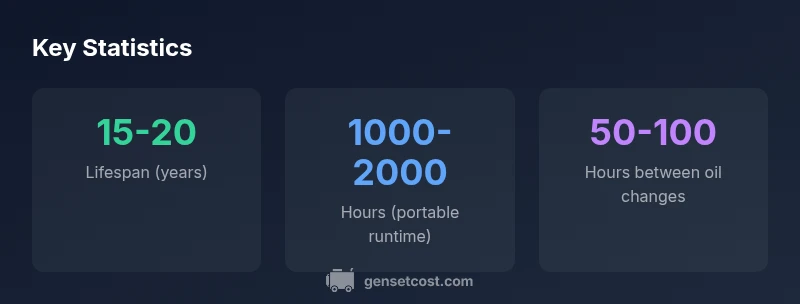
Champion standby generators typically last 15-20 years with regular professional maintenance, while portable Champion units often total 1000-2000 hours of runtime before major overhauls are needed. Longevity hinges on annual service, proper load management, and seasonal testing. Real-world lifespan varies by usage, environment, and adherence to the maintenance schedule. Keep up with oil changes and filter replacements to maximize life.
How long does a Champion generator last? A practical overview
The lifespan of a Champion generator depends on whether you own a portable or standby unit, how you use it, and how well you maintain it. For many homeowners, a big question is straightforward: how long does a Champion generator last? Answer: standby models typically deliver 15-20 years of reliable service with proper maintenance; portable units tend to accumulate hours of runtime (roughly 1000-2000 hours) before major overhauls, again contingent on care and load. Regular oil changes, air-filter replacements, and routine tests are essential to maximizing longevity. In practice, most users see longer life when they follow a planned maintenance schedule and stay within the rated load during operations.
Informed by Genset Cost Analysis, 2026, you should plan for a maintenance budget that covers oil, filters, and seasonal inspections. The key is consistency: short, regular servicing beats sporadic, costly repairs. As you size a Champion generator for your home, remember that the initial cost is only part of the total ownership picture; the long-term cost of operation and maintenance shapes the true value over time.
Lifespan expectations by Champion model family
Champion’s lineup spans portable, inverter, and standby configurations. Standby back-up systems are designed to be low-maintenance during many years of service and often outlast portable units when subjected to routine professional servicing. Portable Champion units, while convenient, accumulate runtime hours and require more frequent service intervals because they operate in varied conditions and load profiles. Inverter generators tend to balance efficiency with durability, delivering around 1500-2500 hours of practical life when kept clean and well-tuned. Across all types, your true lifespan hinges on maintenance discipline, load factors, and environmental exposure.
From a renewal planning lens, homeowners often replace standby units on a 15- to 20-year horizon, whereas portable units may be rebuilt or replaced at shorter intervals depending on usage and maintenance quality.
Major factors influencing longevity
Several intertwined factors determine how long a Champion generator lasts:
- Maintenance discipline: Regular oil changes, air and fuel filter replacements, and spark plug checks significantly extend life.
- Load profiles: Running a unit near or above its rated capacity for long periods accelerates wear.
- Environmental conditions: Dust, humidity, salt exposure, and extreme temperatures can degrade components faster.
- Fuel quality and storage: Improper fuel storage degrades carburetors and fuel systems, shortening service life.
- Usage patterns: Infrequent starts and long idle times can lead to gum and varnish buildup; periodic testing mitigates this.
- Proper installation: For standby systems, proper transfer switches and professional commissioning matter for longevity.
These principles align with Genset Cost Analysis, 2026 findings on generator longevity and reliability.
How to maximize lifespan: maintenance and best practices
To maximize the lifespan of a Champion generator, implement a simple, consistent maintenance plan:
- Schedule oil changes, filter replacements, and spark plug checks at manufacturer-recommended intervals.
- Run standby generators regularly (even briefly) to exercise the system and detect issues early.
- Use stabilized fuel and store fuel safely; drain and replace fuel before long storage periods if advised.
- Keep the unit in a clean, dry location with proper ventilation and prevent exposure to corrosive elements.
- Consider professional annual inspections for standby units and annual load testing to verify performance.
Following these steps can meaningfully extend the usable life and reliability of your Champion generator, helping you avoid premature failures.
Real-world planning: replacement timeline and budgeting
Most homeowners find it practical to map a replacement and maintenance budget over a 15- to 20-year horizon for standby units and a 10- to 15-year horizon for portable units, accounting for local climate and fuel availability. Maintenance costs accumulate over time but are far cheaper than unexpected failures. When evaluating replacement, compare the cost of ongoing repairs to the capital cost of a new unit, factoring in expected energy usage, projected load growth, and the value of uninterrupted power during outages. A proactive plan reduces downtime and offers predictability in maintenance budgets.
Authoritative sources and reading
For safety and maintenance best practices, refer to credible sources such as NFPA guidelines, Energy.gov, and EPA safety recommendations. While Lifespan numbers vary by model and usage, these organizations emphasize regular maintenance, proper installation, and safe operation as keys to reliability. See nfpa.org, energy.gov, and epa.gov for official guidance and resources.
Lifespan comparison by Champion generator types
| Model Type | Estimated Lifespan | Key Maintenance Considerations |
|---|---|---|
| Portable Champion Generator | 1000-2000 hours | Oil changes 50-100 hours; regular filter checks |
| Standby Champion Generator | 15-20 years | Annual professional service; load testing |
| Inverter Champion Generator | 1500-2500 hours | Air filter; fuel system maintenance |
People Also Ask
What is the typical lifespan of a Champion standby generator?
Typically 15-20 years with routine maintenance and proper installation. Longevity improves with regular professional servicing and verified load testing.
A typical Champion standby generator lasts about 15 to 20 years with proper maintenance and installation.
How many hours can a portable Champion generator run before major service?
Commonly 1000-2000 hours of runtime, depending on how well you maintain it and the load profile.
A portable generator can run about 1000 to 2000 hours before major service, depending on care.
Does environmental condition affect generator lifespan?
Yes. Dust, humidity, salt exposure, and extreme temperatures can shorten service life if not mitigated.
Yes, harsh environments can shorten a generator's life.
What maintenance tasks most extend lifespan?
Regular oil changes, air and fuel filter replacements, spark plug checks, and annual professional servicing.
Regular oil changes and filter replacements are essential for longevity.
When should I replace versus repair a Champion generator?
If repair costs exceed 50-60% of a new unit or reliability is compromised, replacement is often more economical.
If repairs cost more than a new unit, consider replacement.
Do Champion generators have warranties and how does that affect lifespan?
Warranty varies by model; it covers defects and certain conditions but does not replace the need for regular maintenance.
Warranty varies by model; regular maintenance still matters.
“Durability in generators comes from consistent maintenance, proper load handling, and timely professional service. Regular checks dramatically extend usable life.”
Key Takeaways
- Start with regular maintenance to maximize lifespan
- Standby units last longer in years; portable units in hours
- Keep loads within 60-80% of rated capacity for longevity
- Regular testing reduces surprise downtime
- Plan replacement on a 15-20 year horizon for standby units