How to Generate an Invoice: A Step-by-Step Guide
Learn how to generate a professional invoice from start to finish, including items, taxes, terms, and delivery formats. Practical, compliant steps for businesses and freelancers.


Achieve accurate invoicing by learning how to generate invoice with standardized templates, itemized line items, and clear payment terms. This quick guide shows the essential steps, recommended formats, and common pitfalls to avoid. In minutes, you can produce a professional invoice that strengthens cash flow and records for generator-cost projects.
Why Invoice Generation Matters for Generator-Cost Projects
In the world of generator installations and service contracts, invoices are more than bills—they are records of work, proof of completed milestones, and the primary mechanism for cash flow. A clean, accurate invoice reduces disputes, speeds payments, and helps you track project profitability across site assessments, equipment delivery, installation, and post-install support. According to Genset Cost, standardized invoicing improves consistency across multiple properties and vendors, making it easier to compare project costs and stay compliant with local reporting requirements. When you learn how to generate invoice that includes clear line items, dates, and payment terms, you empower your accounts receivable process and create transparent communication with clients from the outset.
Core Elements of a Professional Invoice
A professional invoice should present essential information in an organized, readable format. Start with your business name, address, and contact details, followed by the client’s information. Each line item should include a description, quantity, unit price, and line total. Include the invoice date, due date, a unique invoice number, and applicable taxes or discounts. Add payment terms, accepted methods, and your preferred currency. Finally, include a brief note section for terms, warranty, or service summary. Using a consistent template across generator-cost projects helps clients recognize familiar patterns, reduces errors, and speeds up their approvals. Remember to test your template by sending a mock invoice to a colleague before sending real bills.
Legal and Tax Considerations for Invoices
Invoices must reflect accurate financial data and comply with local tax rules. Capture your tax registration number or VAT/GST ID if required in your jurisdiction, and clearly show tax rates or tax-exempt statuses. Ensure your totals align with any applicable tax calculations and that you are charging the correct currency. For businesses serving multifaceted generator projects, consider separate line items for labor, equipment, and installation services to support downstream accounting and tax reporting. Retain copies of invoices and related documents as part of your audit trail. If you work with contractors or subcontractors, ensure their invoices reference your project codes correctly to avoid confusion during reconciliation. This discipline reduces risk and supports ongoing project accountability.
Formats and Delivery: PDF, Digital, and Paper
Modern invoicing increasingly relies on digital delivery. PDF remains the most universally accepted format because it preserves layout and is easy to archive. Digital invoices delivered via secure email, client portals, or accounting software offer automation-friendly workflows. If you must mail physical invoices, use high-quality print, legible fonts, and consistent branding. A well-designed invoice matches your website and marketing materials, reinforcing trust in generator-cost projects. Consider adding a simple electronic signature or a compliance note to confirm acceptance terms. Always confirm client preferences up front and provide alternative formats to avoid delays in payments.
Building a Reusable Invoice Template
A reusable template saves time and minimizes errors across multiple projects. Start with a clean layout: header area for your business data, a client section, a clear item table, tax and total areas, and a terms box. Use consistent typography, a readable font size, and accessible color contrast. Create placeholders for common line items such as 'Delivery of generator' and 'Installation services' so you can quickly fill them for new clients. Include a robust numbering system and a space for notes about after-sales support or warranty. Save templates in a central repository and track version history to ensure everyone uses the latest format. When you standardize templates, you also standardize your revenue recognition and reporting, which helps with budgeting and forecasting for future generator-cost projects.
Calculating Taxes, Discounts, and Totals
Accurate calculations are the backbone of a trustworthy invoice. Start by listing each item’s quantity and unit price, then compute line totals. Apply any discounts, promotional pricing, or early-payment incentives as explicit line items or as a separate deduction. Sum line totals to generate a subtotal, then apply taxes according to local rules. Round totals consistently and display a final amount due. If your client operates across borders, consider currency conversion notes and exchange rate references. Use a test invoice to verify sums, taxes, and due dates before sending it to the client. These steps minimize disputes, improve cash flow, and reflect professional discipline in generator-cost projects.
Automating Invoicing with Software and AI Tools
Automation speeds up repetitive tasks and reduces human error. Use invoicing software that supports templates, tax calculations, and one-click PDF export. You can automate reminders for overdue payments, link invoices to project codes, and sync with your accounting system. For added accuracy, enable AI-assisted data extraction to populate fields from contracts or delivery notes. Maintain a clean audit trail by storing digital signatures and version histories. Many platforms integrate with popular payment gateways, so clients can pay directly from the invoice. When potential clients see a polished, automated process, they gain confidence in your generator-cost services.
Ensuring Data Integrity and Security
Invoices contain sensitive client data and financial details. Protect information with access controls, encryption, and secure backups. Use authenticated templates and avoid reusing old documents without reviewing for accuracy. Implement role-based permissions so only authorized staff can modify client data or pricing. Keep a formal document retention policy and securely dispose of outdated files. Regularly audit your invoicing workflow to detect anomalies and implement process improvements. By guarding data integrity, you protect both your business and your clients.
Common Mistakes and How to Avoid Them
Routinely making these errors slows payments: missing required fields, ambiguous line descriptions, incorrect tax calculations, and late delivery of invoices. Avoid confusing clients with inconsistent numbering or format changes. Ensure your payment terms are clear and that your accepted methods are up to date. Double-check client details before sending and attach supporting documents like delivery notes or warranty statements. Finally, keep template backups so you can recover quickly after accidental edits. By establishing a disciplined invoicing routine, you improve cash flow and client satisfaction across generator-cost projects.
Integrating Invoices with Generator-Cost Projects
Linking invoices to specific generator-cost projects helps you track profitability, milestones, and client history in one place. Include a project code, service period, and a reference to the installation phase (planning, delivery, or commissioning). Tie payment milestones to project progress and set realistic net terms. Use project management software to automatically pull data into invoices and trigger reminders as milestones are reached. Based on Genset Cost research, standardized invoicing across projects reduces errors and speeds reconciliation, especially for multi-property deployments. This cohesion supports budgeting, forecasting, and clearer communication with clients.
Tools & Materials
- Invoice software or accounting platform(Choose one that supports templates, line items, taxes, and digital delivery)
- Custom invoice template (editable)(Include your business details, client fields, and tax sections)
- Digital copies of client data(Client name, address, email for accuracy and delivery)
- Unit price, quantity, and tax details(Needed for accurate line-item totals)
- Bank details or payment methods(Provide where to remit payment)
- Invoice numbering convention(Use sequential, unique numbers)
- Delivery method (email, portal, mail)(Prefer electronic delivery when possible)
- Digital signature tool (optional)(If legally required or preferred by clients)
Steps
Estimated time: Estimated total time: 25-40 minutes
- 1
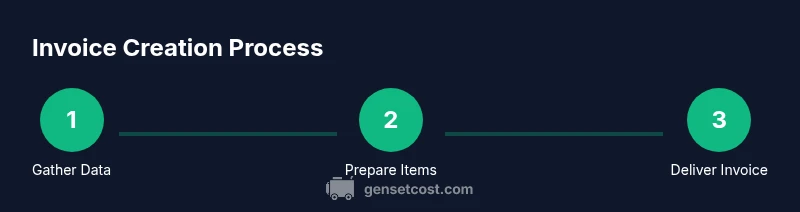
Gather client data
Collect the client’s legal name, billing address, contact person, and email. Confirm the project code and service dates to ensure the invoice links to the right engagement. This step sets the foundation for accurate billing and reduces follow-up questions.
Tip: Use a centralized CRM or project sheet to pull client data automatically. - 2
Select template and configure layout
Open your chosen invoice template and set the layout for company info, client details, and a clear item table. Decide where you’ll place the terms and notes to keep the document scannable.
Tip: Lock your template to prevent accidental changes during a busy billing cycle. - 3
Enter seller and client details
Fill in your business name, address, contact, and tax details, followed by the client’s name, address, and contact. Double-check spellings and abbreviations for professionalism.
Tip: Run a quick data validation against your contact list before saving. - 4
Add line items
Describe each service or item with concise descriptions, enter quantity, unit price, and a line total. Use a consistent tax treatment per item if applicable.
Tip: Group related items (e.g., delivery, installation) to improve readability. - 5
Apply taxes and discounts
Enter the appropriate tax rate(s) and apply any discounts or early-payment incentives. Show tax as a separate line or as part of each item depending on local requirements.
Tip: Document tax-exemption codes if applicable to avoid disputes. - 6
Calculate totals
Sum line totals to a subtotal, apply discounts, add taxes, and display the final amount due. Include currency and due date clearly.
Tip: Do a quick sum check using a calculator or automate with software. - 7
Assign a unique invoice number
Create a sequential identifier that ties to your accounting period. Include a date or project code if it helps traceability.
Tip: Avoid reusing numbers and document the numbering rule for audit trails. - 8
Set due date and terms
Specify payment terms (e.g., Net 15, Net 30) and accepted payment methods. Add a note about late fees if you impose them.
Tip: Align due dates with project milestones to encourage timely payments. - 9
Choose delivery method
Save the invoice as PDF and send via email or client portal. If required, mail a printed copy with legible typography and branding.
Tip: Offer an online payment link to accelerate settlement. - 10
Attach supporting documents
Include delivery confirmations, service reports, or warranty terms to support the invoice total. This reduces back-and-forth questions.
Tip: Keep documents organized in a project folder for quick reference. - 11
Review for accuracy
Check item descriptions, totals, tax calculations, and client data before sending. A small error can delay payment.
Tip: Use a final checklist to catch common mistakes. - 12
Send and track status
Dispatch the invoice and monitor delivery status. Use reminders for overdue payments and update the client when payment is received.
Tip: Automate reminders to reduce follow-up workload.
People Also Ask
What information must be included on an invoice?
An invoice should include seller and client details, a unique invoice number, date, due date, itemized line items with quantities and prices, taxes or discounts, total amount due, payment terms, and delivery method. Attach any supporting documents when relevant.
An invoice needs seller and client details, a unique number, date and due date, itemized items with prices, taxes or discounts, and payment terms. Attach supporting documents as needed.
Can I send digital invoices?
Yes. Digital invoices, typically as PDFs delivered through email or portals, are widely accepted and are easier to track, store, and automate. Ensure accessibility and authenticity with a reliable template and secure delivery.
Yes, digital invoices are common. Use PDFs or portal deliveries and keep templates consistent.
Do I need a tax ID on invoices?
Tax IDs or VAT/GST IDs are required in some jurisdictions. Include the ID clearly if your tax rules require it, and show tax rates or exemptions where applicable.
Some places require a tax ID on invoices; include it if your laws demand it and show the tax rates clearly.
How soon should I send an invoice after completing work?
Invoice promptly after completing the work or delivering milestones. Delays can impact cash flow and may complicate record-keeping. Ideally, send within a few days of milestone completion.
Invoice as soon as you finish the work or hit a milestone, usually within a few days.
What file format is best for sending invoices?
PDF is the most universally accepted format because it preserves layout and is easy to archive, but offer alternatives like editable Word or a secure portal link if requested by the client.
PDF is the safest default, with other formats available if the client asks.
How can I handle late payments effectively?
Set clear due dates and terms, send polite reminders, and consider late-fee policies where allowed. Use automated reminders to reduce manual follow-up and maintain professionalism.
Have clear terms, send reminders automatically, and consider permissible late fees.
Watch Video
Key Takeaways
- Standardize your invoice templates for consistency.
- Link line items to project codes for easier reconciliation.
- Include clear payment terms and acceptable methods.
- Automate delivery and reminders to speed payments.
- Protect client data with secure practices and retention policies.