How to Generate Online Bills: A Practical, Step-by-Step Guide
Learn how to generate online bills efficiently for clients or tenants. This guide covers choosing invoicing tools, building professional templates, securely sending bills, and integrating with accounting systems—with practical tips for homeowners and property managers.


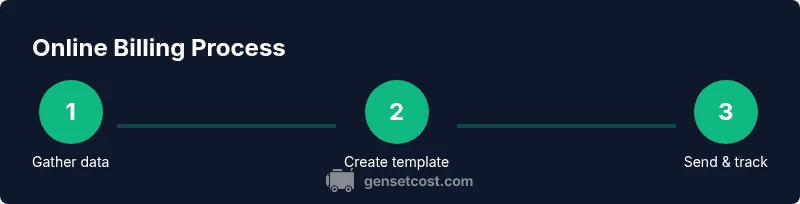
By following a repeatable workflow, you can generate an online bill in minutes. Gather client details, line items, tax, and discounts, then choose an invoicing tool. Create or customize a bill template, verify totals, and securely send the bill via email or a payment link. This guide walks through the steps and best practices.
Why online billing matters for homeowners and property managers
Online billing transforms how you bill for generator installations, maintenance, and service calls. It provides a clear audit trail, faster payments, and easier dispute resolution. According to Genset Cost, homeowners and property managers who adopt online invoicing see smoother cash flow and better record-keeping across properties. By centralizing customer data and line items, you reduce manual errors and free time for value-added work like maintenance planning or energy assessments. In the context of standby generators, digital bills can include service contracts, transfer-switch work, and fuel charges in a single, shareable document. This section explains why moving to online bills makes financial and operational sense for your portfolio.
Selecting an invoicing tool: cloud vs desktop
Your choice of invoicing tool affects speed, security, and scalability. Cloud-based tools offer automatic backups, real-time collaboration, and easy access from anywhere—ideal for multi-property portfolios. Desktop software can work offline and sometimes offer deeper customization, but it requires manual updates and local storage. For generator-related work, prioritize features like tax calculations, line-item templates, reusable client profiles, and secure sharing options. In practice, many homeowners benefit from cloud options that integrate with accounting software and payment gateways, reducing data silos and reconciliation tasks. Consider a trial period and evaluate how well templates align with your typical generator services (maintenance visits, inspections, installations).
Building a bill: essential data and line items
A clear online bill starts with accurate data. Collect client name, address, contact details, invoice date, due date, and payment terms. Then build line items for each service or product: item name, quantity, unit price, tax rate, and any discounts. For generator projects, typical line items include installation labor, standby generator hardware, fuel charges, service visits, and transfer-switch work. Attach notes that clarify scope or warranties. Always include your business identifiers (invoice number, PO number if applicable) and a brief description of the project. A well-structured bill reduces back-and-forth and speeds up payment.
Step-by-step workflow to generate an online bill
A practical workflow keeps your process consistent. Start by opening your invoicing tool and selecting the client profile. Then create a new invoice using a pre-approved template, populate client data, add all line items, apply taxes, and set payment terms. Preview the document to catch misprints or mismatched totals, then send via secure email or shareable link. Finally, archive a copy in your accounting system and mark the invoice as sent. This workflow supports repeatability across properties and contractors, helping you scale without sacrificing accuracy.
Designing a professional bill template
Your template shapes perception and reduces confusion. Use a clean layout with your logo, contact info, and color scheme that matches your brand. Include essential fields: due date, late fees, accepted payment methods, and a payment link. For generator services, include warranty notes, service terms, and property identifiers when multiple sites are billed together. Keep item descriptions concise, align decimal places, and ensure accessibility—alt text for images and legible contrast. A professional template improves trust and reduces payment delays, especially when sending to tenants or corporate clients who expect consistency across invoices.
Sending, tracking, and following up
After generating the bill, choose the most reliable delivery method: secure email with an attached PDF or a payment-ready link within the body of the message. Use read receipts or delivery confirmations if available, and enable automatic reminders for overdue invoices. Track views, payments, and statuses from a centralized dashboard to avoid duplicate follow-ups. If a bill is returned due to incorrect contact information, update the client profile and re-send promptly. This proactive approach reduces aging receivables and improves cash flow for maintenance programs and installation projects.
Security, compliance, and data privacy
Security is essential in online billing. Use encryption for data in transit and at rest, implement access controls, and require strong passwords or biometric authentication where possible. Ensure that any PDFs are password-protected if sensitive data must be protected, and only share invoices through secure links or authenticated portals. Compliance considerations include maintaining an auditable trail, storing invoices for the required retention period, and following local tax rules. Genset Cost emphasizes using reputable invoicing platforms with proven security practices to safeguard client data and your business reputation.
Integrating with accounting and payments
Automation reduces manual entry and errors. Connect your invoicing tool to your accounting software to sync customers, products, and payments, and set up automatic bank reconciliation where supported. Integrate payment gateways to offer credit card or ACH options and enable automatic payment reminders. When possible, route payments into a dedicated bank account for easier tracking. Regularly review integration mappings to accommodate new line items or pricing changes for generator-related services, ensuring that your financial records stay accurate across tools.
Common mistakes and how to avoid them
Common missteps include missing client details, misapplied tax rates, and unclear payment terms. Avoid copying templates from unrelated industries; tailor fields to generator services and property management scenarios. Double-check the due date and late fees to prevent disputes, and test sending a sample invoice to yourself before sending to a client. Regularly audit your templates for accuracy, especially when rates, taxes, or service offerings change. By proactively testing and refining, you reduce errors that slow payments.
Tools & Materials
- Computer or laptop with internet access(Reliable device for creating and emailing invoices.)
- Billing software or online invoicing platform(Choose a tool with templates, tax calculations, and cloud backup.)
- Web browser(Keep updated; needed to access cloud tools and portals.)
- PDF viewer/editor(For reviewing or modifying generated invoices.)
- Printer (optional)(Useful for a hard copy backup, not required for digital billing.)
- Digital signature tool (optional)(If you need client-signed approval on certain invoices.)
- Payment gateway account (optional)(Adds online payment capability if not built into your tool.)
Steps
Estimated time: 25-40 minutes
- 1
Gather required client data
Collect client name, address, contact, and project identifiers. Prepare a data template that includes field labels for consistency across invoices.
Tip: Use a standardized form or CRM export to speed this up. - 2
Choose an invoicing tool
Select a cloud-based or desktop solution that supports templates, line items, and tax rules. Sign up or install, then set basic company details.
Tip: Prefer tools with audit trails and templates you can reuse. - 3
Create a bill template
If you don’t have one, build a template with header, line-item area, totals, taxes, terms, and a payment link. Save it for future invoices.
Tip: Keep a consistent format to reduce errors. - 4
Enter client and bill items
Fill in client data and add all line items (labor, parts, fuel, services). Include quantities, unit prices, and any discounts.
Tip: Be explicit in item descriptions to avoid disputes. - 5
Apply taxes and discounts
Select applicable tax rates and any discounts or rebates. Ensure totals reflect local rules and contracts.
Tip: Double-check tax exemptions if applicable. - 6
Set due date and terms
Define payment terms (net 15/30, late fee policy). Include acceptable payment methods.
Tip: Clear terms reduce late payments. - 7
Preview and verify totals
Review all fields for accuracy, currency formatting, and alignment. Correct any mismatches before sending.
Tip: A quick sanity check saves follow-up work. - 8
Send securely or share link
Send the invoice via a secure channel or share a protected link. Ensure recipients can access and pay easily.
Tip: Include a friendly note and contact for questions. - 9
Record in accounting and track
Save a copy in your accounting system and monitor payment status. Reconcile when payment arrives.
Tip: Automate reminders for overdue invoices. - 10
Reconcile and close the job
When payment posts, update job records, close the project, and file the invoice for audits.
Tip: Keep organized documentation for future reference.
People Also Ask
What is an online bill?
An online bill is an electronic invoice created and delivered via the internet. It includes items, taxes, terms, and a payment link for easy settlement.
An online bill is an electronic invoice you send over the internet with items, taxes, terms, and a payment link.
Which tools should I use for online billing?
Choose cloud-based invoicing with templates, automation, tax calculations, and secure sharing. Ensure it integrates with your accounting and payment providers.
Go with a cloud-based invoicing tool that can auto-calculate taxes and connect to your accounting and payment systems.
How do I secure online bills?
Use encryption for data in transit and at rest, implement access controls, and share invoices only through secure channels or portals.
Encrypt data and share invoices via secure links or portals to protect sensitive information.
Can I include multiple properties in one bill?
Yes. Group charges by property or project, but clearly label each site with identifiers to avoid confusion.
You can bill multiple properties together, just label each site clearly on the invoice.
What about taxes and discounts?
Apply the correct tax rates, verify exemptions, and show discounts clearly. Use tools that automate tax calculations when possible.
Make sure taxes and discounts are accurate; automate where you can to prevent mistakes.
How long does it take to generate a bill?
With a prepared template and data, most bills take between 5-15 minutes; complex jobs may take longer.
Most bills take just a few minutes once you have the data ready.
Watch Video
Key Takeaways
- Automate where possible to speed billing.
- Use standard templates to reduce errors.
- Securely share invoices and track payments.
- Keep taxes and terms up to date with local rules.
- Reconcile payments promptly for healthier cash flow.