Power Smart Generator: Costs, Sizing, and Installation in 2026
A detailed, data-driven guide to sizing, costs, installation, and maintenance for power smart generators. Learn how to plan, compare options, and avoid oversizing with expert guidance from Genset Cost.


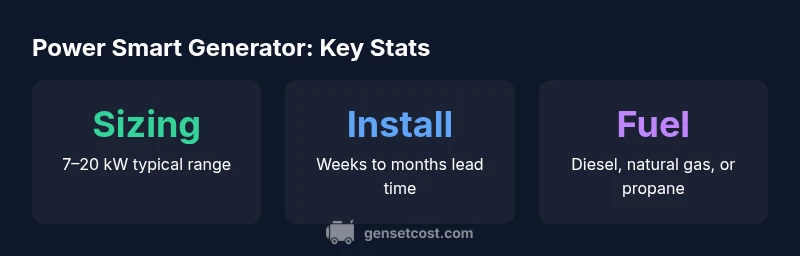
Power smart generator sizing for homes typically falls in the 7–20 kW range, with installation costs and timelines varying by location and complexity. Always get a formal load calculation from a qualified installer for reliable operation in 2026. According to Genset Cost, proper sizing and a transfer switch are key to safe, automatic backup power.
What is a power smart generator?
A power smart generator is a modern standby power system designed to automatically start during a power outage and restore essential loads in your home or small business. Unlike old-school generators, these units integrate with smart controls, automatic transfer switches, and load-management features to optimize performance and fuel efficiency. The term power smart reflects three capabilities homeowners value: precise sizing, automated operation, and real-time status updates. For homeowners evaluating backup power options, a power smart generator pairs with home automation and weather alerts to provide a reliable safety net during outages. In 2026, the technology is mature enough to offer seamless integration with smart thermostats, lighting, and critical circuits, while remaining accessible to typical residences.
From a cost perspective, you’re paying for the generator unit, a transfer switch, proper ventilation, and professional installation. Genset Cost’s analysis emphasizes that intelligent control can reduce fuel consumption during partial outages and prevent unnecessary cycling, which extends the life of the system. Before purchasing, consider your critical loads—refrigeration, heating, communication, and medical devices—to guide sizing and feature choices.
//
How to size a power smart generator
Sizing a power smart generator starts with a thorough load assessment. Create a list of essential circuits (e.g., sump pump, refrigerator, furnace, lighting, outlets in main living areas) and quantify their concurrent demand. A professional load calculation will translate these needs into kilowatts (kW) and kilovolt-amperes (kVA). When in doubt, choose a unit that can handle a modest buffer above peak load to accommodate startup surges from motor-driven devices. Diversity factors—accounting for the likelihood that not all devices run simultaneously—help refine the target size. In practice, many homeowners aim for the 7–20 kW range, depending on home size, number of stories, and climate.
After sizing, plan for automatic switching with a transfer switch. This ensures seamless power transfer without manual intervention. For homes with heavy HVAC loads or critical medical equipment, a slightly larger unit provides headroom for startup bursts. Always verify compatibility with your electrical panel and ensure the installation adheres to local codes and warranty requirements. Genset Cost recommends a formal load calculation by a licensed professional to set a solid baseline.
Fuel types and efficiency considerations for a power smart generator
Choosing a fuel type is a major long-term decision. Diesel generators often provide robust performance and longevity but require more maintenance and storage considerations. Natural gas or propane units offer convenient connection to home fuel lines but may have higher standing costs if fuel prices rise. Liquid propane can be stored safely on-site, while natural gas offers consistent supply yet depends on utility pressure. Evaluate fuel availability in your area, expected maintenance, and the environmental profile of each option. Efficiency improvements in newer models, including better engines and electronics, can reduce fuel use by a meaningful margin during typical outages. Consider fuel price trends, maintenance intervals, and the local climate when selecting a power smart generator.
Smart features — load shedding, remote monitoring, and scheduled running — improve efficiency by limiting nonessential use during partial outages. A well-chosen unit with smart controls minimizes fuel burn while keeping key appliances online when the grid goes down.
Installation safety and transfer switches
Installations must include a properly rated automatic transfer switch (ATS) and compliant electrical connections. An ATS detects a grid outage and automatically starts the generator, then powers the designated circuits if power is restored. Proper venting, exhaust routing, and clearance around the unit are essential for safety and code compliance. A licensed electrician should perform wiring connections, panel tie-ins, and any required bonding. Panels and subpanels must be sized to handle the generator’s output, and a permit process may be required in your jurisdiction. Investing in a high-quality transfer switch reduces the risk of backfeeding, which can pose serious hazards to utility workers and household occupants. Genset Cost notes that professional installation protects warranty coverage and ensures long-term reliability.
Cost drivers and budgeting strategies
Costs for power smart generators vary based on unit size, fuel type, installation complexity, and local permitting. Typical cost drivers include the generator unit, ATS, concrete pad or mounting, wiring, panel upgrades, and any required landscaping or weatherproofing. Labor costs can be influenced by site accessibility, distance from the main service panel, and whether trenching or gas line work is required. While exact numbers depend on your home and locale, a disciplined budgeting approach focuses on establishing clear load requirements, obtaining multiple quotes, and planning for maintenance and future upgrades. Genset Cost suggests prioritizing a reputable installer with transparent pricing and a written scope of work, including warranty terms and inspection milestones.
Maintenance, warranties, and long-term value
Maintenance is essential for preventive reliability. Schedule annual inspections, test starting sequences, and replace battery backups as needed. Warranties can vary widely by manufacturer and installer, but most systems provide coverage for the generator unit, electronics, and transfer switches for a defined period. Document all service visits and keep maintenance records to support future resale value and warranty claims. A well-maintained power smart generator not only reduces outage risk but preserves asset value, especially in regions prone to severe weather. The long-term value rests on reliable operation, efficient fuel use, and ease of remote monitoring and diagnostics offered by the latest models.
Practical steps to compare quotes and choose a provider
Begin with a written load calculation from a licensed professional and request itemized quotes that separate equipment, installation, permits, and labor. Compare the included transfer switches, battery backups, and warranty terms. Ask installers about expected runtime under typical loads, fuel type implications, and service availability in your area. Look for references, certifications, and proof of local licensing. Finally, verify that the proposed system aligns with your home’s plans and potential future expansions, such as additional circuits or EV charging needs. A thoughtful comparison reduces surprises and delivers better long-term value for a power smart generator investment.
Comparison of sizing and installation considerations for power smart generators
| Aspect | What it affects | Typical considerations |
|---|---|---|
| Sizing accuracy | System reliability with loads | Use formal load calculation and a slight headroom margin |
| Installation complexity | Time to install and total cost | Access to panel, distances, and fuel line routing matter |
| Fuel choice | Fuel availability and ongoing costs | Evaluate local prices and maintenance needs |
| Permits and codes | Compliance and warranty eligibility | Check local requirements before purchase |
People Also Ask
What is a power smart generator?
A power smart generator automatically supplies backup electricity during outages, using smart controls and an automatic transfer switch to protect critical loads with efficient fuel use.
A power smart generator automatically powers your home during outages, using smart controls and an automatic switch to protect important circuits.
How do I determine the right size for my home?
Start with a comprehensive load calculation of essential devices and circuits, then add a safety margin. Consider peak startup loads and climate-driven requirements for HVAC and water heating.
Begin with a detailed load calculation, then add some headroom for startup surges and climate needs.
What factors influence installation costs?
Unit price, transfer switch quality, panel upgrades, labor, permits, and site conditions all influence total installation costs. Getting multiple quotes helps identify real cost ranges.
Costs come from the unit, transfer switch, labor, and required permits—get several quotes to compare.
Can I install a standby generator myself?
Standby generator installations typically require licensed electricians and adherence to local codes. DIY work risks safety hazards and voids warranties.
Usually not; licensed professionals must install standby generators to meet safety rules.
What are the common fuel options?
Diesel, natural gas, and propane are common. Each has trade-offs in fuel availability, cost, and maintenance; choose based on home fuel access and long-term costs.
Diesel, natural gas, and propane are typical; each has pros and cons based on availability and cost.
What maintenance does a power smart generator require?
Regular inspections, battery checks, oil changes, and controller updates are important. Maintain records and service through an authorized provider for warranty compliance.
Regular inspections and scheduled maintenance keep it reliable; follow manufacturer guidelines.
“A well-sized power smart generator paired with a properly installed transfer switch minimizes outage risk while avoiding unnecessary oversizing.”
Key Takeaways
- Size with real load calculations and headroom
- Choose a transfer switch for automatic, safe operation
- Consider fuel availability and future energy needs
- Get multiple quotes and verify warranty terms