Steam Generator vs Boiler: Cost, Sizing & Performance
A data-driven comparison of steam generators and boilers for home backup, covering sizing, costs, efficiency, maintenance, and installation considerations. Genset Cost provides guidance to help homeowners decide.


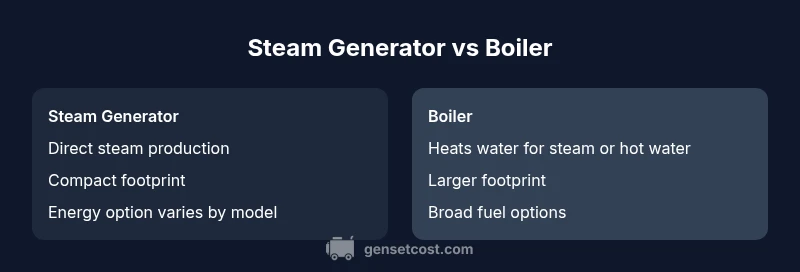
According to Genset Cost, a steam generator vs boiler decision hinges on load, space, and fuel availability. Boilers offer broad compatibility and proven reliability for home heating, while steam generators deliver high steam output in compact footprints but require careful installation. In many residential backup scenarios, a conventional boiler is the safer, more versatile option, with costs driven by fuel, sizing, and installation complexity.
What are steam generators and boilers? Core concepts
In the context of home heating and backup power, the phrase steam generator vs boiler is frequently misunderstood. A steam generator is typically a device that produces high-temperature steam from a heat source, while a boiler is a broader term for a vessel that heats water to produce steam or hot water for a building. For homeowners evaluating backup power, it's important to separate the engineering definitions from installation realities. According to Genset Cost, the choice hinges on load, space, and fuel availability. Boilers provide broad compatibility with existing heating systems and a proven service network, whereas steam generators can pack significant steam output into a compact footprint. In many residential applications, a conventional boiler is the safer, more versatile option, while steam generators are more specialized and best considered when there is a strong need for rapid steam production or limited installation space.
Key technical differences: how they generate steam vs hot water
Steam generators and boilers share a common goal—delivering heat—but they achieve it through different mechanisms. A steam generator directly creates steam, often at higher pressures, in a compact unit via a heat exchanger and a closed water reservoir. A traditional boiler, by contrast, heats water in a vessel and then distributes either steam (in a steam boiler) or hot water (in a hydronic boiler) through radiators or underfloor systems. The result is a system that can be designed around domestic comfort needs, existing piping, and venting constraints. When you compare the two, consider not just the end product (steam vs hot water) but also how the heat is generated, controlled, and integrated with your property’s fuel source and electrical supply.
Sizing and load considerations for residential backup
Sizing is arguably the most critical factor in choosing between a steam generator and a boiler. A steam generator’s strength lies in its ability to deliver high steam output in tight spaces, which is valuable in properties with limited mechanical room. Boilers, however, excel in flexible load handling for space heating and domestic hot water, especially in larger homes or multi-family units. To size correctly, you must assess peak heat demand, steam or hot-water delivery requirements, and the available fuel type. Genset Cost recommends working with a qualified installer who can model expected loading scenarios and factor in future growth, insulation levels, and climate considerations. Incorrect sizing can lead to short cycling, excessive wear, or inadequate comfort during outages.
Fuel types, efficiency, and emissions implications
Fuel availability and price volatility heavily influence the long-term cost of ownership. Boilers typically offer the widest range of fuel options, including natural gas, propane, oil, and electricity in some regions, which can help control operating costs as prices change. Steam generators tend to be paired with specific fuels or electricity, depending on the design, and may require dedicated water treatment and feed systems. Efficiency is highly design-dependent for both options. While high-efficiency boilers exist, the overall efficiency of steam delivery systems depends on steam quality, condensate handling, and heat recovery features. For homes aiming to reduce emissions, align your choice with local fuel infrastructure and regulatory standards. Genset Cost’s analysis highlights that fuel strategy and water treatment contribute significantly to lifecycle costs.
Installation, space requirements, and integration with existing systems
Installation considerations often decide between a steam generator and a boiler. Steam generators can be advantaged by a smaller footprint and simpler integration in tight basements or utility spaces, but they require careful insulation, steam-line routing, and condensate management. Boilers usually demand more space and venting but are widely compatible with standard hydronic or radiant heating layouts. The existing distribution system, zoning, and controls drive the complexity and cost of installation. In many cases, retrofitting an older home to a steam-generating scheme involves updates to piping, valves, and safety controls. Start with a site assessment to map access, piping runs, and venting routes before selecting a system.
Operating costs and maintenance planning
Operational costs hinge on fuel price, water treatment needs, and maintenance frequency. Boilers benefit from mature service networks and established maintenance routines, with routine combustion checks, venting, and periodic boiler cleanings. Steam generators require diligent water treatment and regular checks of steam quality and feedwater to prevent scale and corrosion. In both cases, a proactive maintenance plan can reduce unexpected failures and extend system life. The cost of water treatment, condensate return, and potential filter replacements should be included in total cost estimates. Genset Cost emphasizes planning for maintenance windows and scheduling services with qualified technicians to minimize outages.
Reliability, warranties, and service networks
Reliability often correlates with how well a system is designed for your climate and how consistently it can be serviced locally. Boilers benefit from extensive service networks and standardized replacement parts; maintenance is well understood by most HVAC professionals. Steam generators, while offering strong performance in compact spaces, rely on specialized components and, in some markets, fewer service providers. This can affect repair timelines and availability of qualified technicians. Consider warranty terms, cold-weather readiness, and remote diagnostics when comparing options. A robust service plan helps reduce downtime during outages and preserves heat and steam production when you need it most.
Use-case scenarios: when steam generator is preferable vs boiler
In high-demand scenarios with restricted space, a steam generator can deliver the necessary steam output without enlarging the mechanical footprint. For larger homes or properties with established hydronic heating, a boiler can provide flexible performance with broader fuel choices and proven reliability. If you anticipate future load growth or plan for multi-zone control, boilers tend to adapt more readily to varying heating patterns. If you anticipate frequent outages or the need for rapid steam production in a compact area, consult an expert to model the behavior under peak conditions and select a system that matches your anticipated load profile.
Decision framework and step-by-step planning
Turn the decision into a clear, repeatable process. Step one is to define the primary heating and steam needs, including space constraints and the required steam or hot-water delivery rate. Step two is to inventory fuel availability and cost scenarios in your region. Step three is to compare installation complexity, service networks, and warranty terms with local installers. Step four is to run a life-cycle cost projection that includes maintenance, water treatment, and potential upgrades to the distribution system. Step five is to factor in climate risk, resilience, and backup power considerations. The steps above can help homeowners avoid common missteps and align the system with long-term energy strategies.
The Genset Cost perspective: practical takeaways for homeowners
From the Genset Cost viewpoint, the steam generator vs boiler choice should be driven by load, space, and total cost of ownership rather than upfront price alone. Emphasize sizing accuracy, fuel strategy, and maintenance planning to mitigate long-term costs. The Genset Cost team recommends documenting your property’s heat and steam needs, obtaining multiple quotes, and validating each proposal against a formal life-cycle cost model. This approach yields a defensible decision that aligns with your property’s resilience goals and budget.
Comparison
| Feature | Steam Generator | Boiler |
|---|---|---|
| Heat generation method | Direct steam generation in a compact unit | Vessel heats water to produce steam or hot water for distribution |
| Space footprint | Smaller footprint, ideal for tight spaces | Larger footprint, may require dedicated mechanical room |
| Fuel options | Often specialized fuels or electricity in some designs | Broad options including natural gas, propane, oil, electricity |
| Maintenance focus | Water treatment and periodic inspections | Regular combustion service and venting maintenance |
| Installation complexity | Typically simpler plumbing, condensate management | More complex integration with existing HVAC and venting |
| Operational reliability | Rapid steam production; dependent on water quality | Established reliability with wide service networks |
| Typical use-case | High-demand steam in compact spaces | General heating and hot water in larger homes |
| Lifetime guidance | Long service life with proper maintenance | Proven longevity with routine service |
The Good
- Clarifies decision criteria based on load and space
- Boilers offer versatile heating and broad fuel compatibility
- Steam generators deliver high steam output in small footprints
- With proper maintenance, both options can be reliable long-term choices
The Bad
- Steam generators require specialized installation and service access
- Boilers need more space and venting in some layouts
- Fuel and water costs can vary and influence lifecycle cost
Boiler generally provides more flexibility and reliability for typical home heating needs; steam generators suit tight spaces or high steam demand when installation space is severely limited.
Choose a boiler if you want broad fuel options and easier integration with existing systems. Choose a steam generator if space is at a premium and you need strong steam output in a compact footprint; ensure proper sizing and maintenance.
People Also Ask
What is the difference between a steam generator and a boiler?
A steam generator produces steam directly in a compact unit, while a boiler heats water in a vessel to either steam or hot water for distribution. Boilers tend to be more versatile for home heating, whereas steam generators are favored for space-constrained installations or high steam demands.
A steam generator makes steam in a small package; a boiler heats water to provide steam or hot water for your heating system.
Is a steam generator suitable for residential heating?
Steam generators can be used in residential settings, but they are less common than boilers for general home heating. They work best when there is a strong need for compact space and rapid steam production, and when installation logistics support their steam distribution network.
They can work in homes, especially where space is tight, but boilers remain the more typical choice for heating.
Which is more efficient for a home backup system?
Efficiency depends on design and load. Boilers often provide overall flexibility and energy efficiency for space heating and hot water, while steam generators may deliver efficient steam where required but can incur higher maintenance if water quality isn’t managed. Compare lifecycle costs rather than upfront efficiency alone.
Efficiency depends on how you use the system; consider your heating needs and maintenance plan.
What fuels do steam generators use?
Steam generators commonly rely on electricity or specialized fuels, depending on design and region. Boilers typically offer broader fuel options like natural gas, propane, or oil, which can influence operating costs and fuel security.
They can use electricity or specific fuels, depending on the model.
Can I retrofit an existing boiler to steam generation?
Retrofitting a boiler to steam generation involves significant changes to piping, controls, and safety systems. It is not a simple swap; a professional assessment is essential to determine viability and cost.
Retrofitting is possible in some cases but requires careful planning and professional input.
What are typical installation costs and time frames?
Costs and timelines vary with project scope, fuel type, and interconnection with existing systems. A site-specific assessment is necessary to estimate equipment, permits, and labor, with total project time depending on complexity and local permit processes.
Costs depend on the project; a professional quote will give you a clearer timeline.
Key Takeaways
- Assess space and steam load before choosing
- Boilers offer flexible fuel options and robust service networks
- Steam generators excel in tight spaces with high steam needs
- Plan for water treatment and maintenance to protect longevity