Can a Gas Generator Be Converted to Propane? A Practical How-To
Explore whether a gas generator can be converted to propane, what’s involved, safety and warranty considerations, and practical alternatives for homeowners and property managers in 2026.


Converting a gas-powered generator to run on propane is possible on some models with a purpose-built LPG kit, but it isn’t universal. Compatibility depends on engine design, fuel system access, and kit quality. This guide covers feasibility, required parts, safety considerations, and typical steps while noting warranty implications. According to Genset Cost, the best path is to verify model compatibility and use manufacturer-approved components.
Understanding propane conversion for gas generators
A propane (LPG) conversion changes how a generator’s engine receives fuel. In practical terms, it often means replacing or augmenting the gasoline delivery system with LPG-compatible components, including lines, a regulator, and a carburetion or fuel-muel adjustment kit. This process can improve storage stability and reduce certain emissions, but it also introduces new operating parameters. Not all engines accept LPG kits, and some designs rely on fuel metering that isn’t easily adapted. For homeowners evaluating backup power, the key questions are: Is your model a candidate for LPG, what kit is designed for your engine family, and how will the conversion affect warranty and service options? The goal is to achieve reliable operation under load with safe handling of propane. The Genset Cost team emphasizes validating compatibility before purchasing parts.
Feasibility: model compatibility and kit options
Compatibility hinges on several factors: engine family, carburetion type, and whether an LPG kit is designed for your generator’s specific intake and throttle setup. Some makers publish approved LPG options, while others offer dual-fuel kits or factory propane models. Choose a kit that matches the engine family and includes installation instructions, regulators, hoses rated for propane, and a means to adjust fuel delivery. If a kit isn’t explicitly designed for your model, attempting a DIY conversion can lead to unreliable performance or safety hazards. Always confirm with the manufacturer or a qualified technician before purchasing.
Safety, warranty, and legal considerations
Safety cannot be overstated when dealing with propane systems. LPG requires proper venting, leak testing, and adherence to local codes. Converting can affect warranty coverage; many manufacturers consider non-approved LPG installations as grounds to void warranties. Some jurisdictions require permits or inspections for home backup installations. Before proceeding, document all changes and ensure you understand the regulatory landscape and the impact on service availability.
When to opt for factory propane or dual-fuel
If your primary goal is reliable cold-start performance, longer storage stability, and simpler maintenance, a factory propane model or a dual-fuel solution may be preferable. Factory propane units are designed from the ground up for LPG and typically include certified safety and warranty support. Dual-fuel configurations may offer flexibility, but ensure the kit is supported by the generator’s maker and complies with local codes. For many homeowners, starting with a ready-made propane solution reduces risk and simplifies service.
What you need: planning, tools, and parts
Successful LPG conversion requires a well-defined plan and quality components. Gather a kit designed for your engine family, LPG-rated fuel hoses, a regulator compatible with propane, adapters, a leak-detection solution, and basic hand tools. You’ll also need personal protective equipment and a clean workspace. Before you touch any hardware, read the generator’s service manual and the LPG kit documentation. Planning prevents missteps that could compromise safety or performance.
The installation flow at a high level
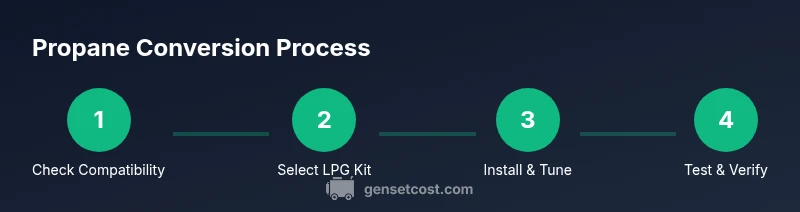
A high-level view of the installation includes: (1) verifying kit compatibility with your model; (2) safely isolating fuel sources and ensuring ventilation; (3) removing or bypassing gasoline lines where required by the kit; (4) installing the LPG components, regulator, and lines; (5) configuring any fuel-air adjustments and throttle settings; (6) performing a careful leak test and initial low-load run; (7) documenting changes and updating maintenance schedules. This overview is not a substitute for the kit’s installation guide and should be performed by someone with appropriate expertise.
Post-conversion testing and maintenance
Post-conversion testing focuses on safe operation and continued reliability. Perform a thorough leak check using approved solutions, verify that fittings are torqued to specification, and confirm the regulator is delivering stable pressure. Start the unit and run under load to observe air-fuel behavior and engine temperature. Establish a maintenance plan that includes periodic leak checks, hose inspections for propane compatibility, and routine servicing in alignment with the generator’s service intervals.
Alternatives to conversion: factory propane and dual-fuel
If you’re unsure about the conversion route, consider a factory propane or dual-fuel unit. These options provide certified safety, predictable performance, and warranty protection. They also avoid potential legal or insurance concerns associated with aftermarket LPG conversions. Evaluate lifecycle costs, fuel availability, and your storage needs to determine the best long-term solution for reliable backup power.
Quick-start planning and decision guide
Begin by listing your generator model, intended backup load, and storage plans for propane. Check for manufacturer-approved LPG options or dual-fuel configurations. If no approved LPG path exists, compare the risks and benefits of a factory propane or dual-fuel model. Create a decision checklist that weighs compatibility, warranty impact, safety considerations, and long-term maintenance.
Tools & Materials
- Propane conversion kit compatible with your generator model(Ensure the kit is designed for your engine family and includes LPG regulator, hoses, fittings, and installation instructions)
- Wrenches and sockets set(Assorted sizes for mounting brackets and fittings)
- Screwdrivers (flathead and Phillips)(For clamps and fasteners)
- Torque wrench(To meet manufacturer torque specs on critical fittings)
- Propane-rated fuel lines and fittings(Hose should be compatible with propane pressure and temperature ranges)
- Gas regulator compatible with LPG(Match regulator pressure to engine needs and kit specifications)
- Leak-detection solution(Liquids or spray for identifying LPG leaks at connections)
- Safety gear (gloves, eye protection, fire extinguisher)(Always prioritize personal safety and have a fire extinguisher rated for fuel fires nearby)
- Owner’s manual and service documentation(Refer to model-specific guidance and any warranty disclosures)
Steps
Estimated time: 4-6 hours
- 1
Assess compatibility and plan
Review your generator model to confirm LPG compatibility or dual-fuel kit availability. Check the literature for approved LPG options and ensure your intended steps won’t violate warranty terms. Create a parts list and workspace plan before touching the unit.
Tip: Document model numbers and kit part numbers for future service and warranty. - 2
Select kit and confirm warranty
Choose an LPG kit that explicitly supports your engine family. Verify that installation by you won’t void warranties or, if needed, consult the manufacturer or a qualified technician. Keep receipt and documentation of approvals.
Tip: If in doubt about warranty impact, contact the manufacturer before purchasing. - 3
Prepare workspace and safety gear
Set up a well-ventilated, dry workspace. Gather PPE and safety equipment, disconnect the battery if applicable, and ensure the area is free of ignition sources. Have a fire extinguisher within reach.
Tip: Work only with the gas supply fully isolated and the engine cool. - 4
Remove gasoline supply and install LPG components
Carefully disconnect gasoline lines per kit instructions, then mount LPG components, routes hoses away from hot surfaces, and connect the regulator and filters. Tighten clamps to specified torque values and verify hose routing.
Tip: Double-check that no gasoline lines remain connected before ignition tests. - 5
Tune air-fuel and test fittings
Configure basic air-fuel settings per the kit guide, ensuring consistent propane delivery and proper throttle behavior. Verify all fittings are secure and leak-free using a non-flammable leak-detection method.
Tip: Start with conservative settings and adjust gradually under no-load first. - 6
Leak test and initial start
Perform a thorough LPG leak test at every connection using the leak-detection solution. If no leaks are detected, perform a cautious engine start and observe for abnormal sounds, heat, or smoke.
Tip: If you detect a leak, shut off fuel immediately and re-torque fittings. - 7
Load testing and documentation
Run the generator under load to ensure propane supply remains stable and engine performance is consistent. Document changes, update maintenance schedules, and note any warranty implications for future service visits.
Tip: Keep a log of operating conditions and any adjustments for future reference.
People Also Ask
Is it legal to convert a gas generator to propane?
Regulations vary by location, but most conversions are allowed when performed correctly and with proper components. Check local codes and obtain any required permits before starting.
Legal requirements vary by area, so check local codes and permits before converting.
Will conversion void my generator warranty?
Converting can void all or part of a manufacturer’s warranty if the modification is not approved. Always confirm with the maker and keep documentation of approved components.
Modifying the unit can void warranties; confirm with the manufacturer beforehand.
Can every generator be converted to propane?
No. Only certain engines and kits are designed for LPG. Check the engine family compatibility and kit documentation to determine feasibility.
Not every generator can be converted; check compatibility first.
What are safer alternatives to conversion?
Factory propane models or dual-fuel generators offer LPG support with certified safety and warranty coverage, often with more predictable performance.
Factory propane or dual-fuel options are safer and easier.
What maintenance is needed after a propane conversion?
Perform regular leak checks, inspect LPG hoses for wear, and follow a revised maintenance schedule. Have any modifications reviewed during routine service.
Regular leak checks and updated service schedules are essential.
Can I revert back to gasoline after converting to propane?
Reverting may be possible only if the original gasoline fuel system is preserved and kit components are designed to be removable. It can be complex and might affect warranty.
Reverting is possible in some cases but not always; consult a professional.
Watch Video
Key Takeaways
- Verify compatibility before purchasing any kit.
- Understand warranty and legal implications upfront.
- Use LPG-rated components from approved manufacturers.
- Perform thorough leak testing and load testing.
- Consider factory propane or dual-fuel if unsure about DIY conversion.