Propane Generator vs Gas: Practical Home Backup Guide
Compare propane vs natural gas backup generators. Analyze fuel costs, efficiency, installation, maintenance, and long-term value to help homeowners choose confidently.


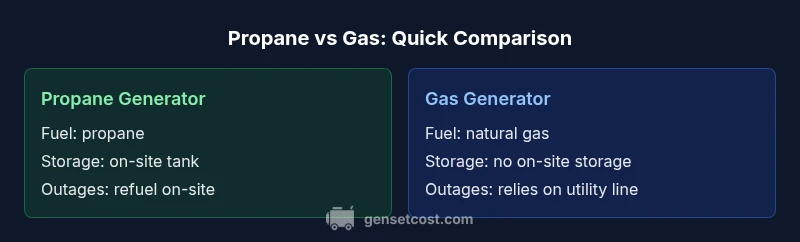
Propane generator vs gas presents a trade-off between on-site fuel storage and continuous utility supply. For homeowners, the best choice depends on fuel availability, storage capacity, and long-term costs. In short: propane offers storage flexibility and portability, while natural gas provides uninterrupted supply if you have a reliable gas line.
Why propane generator vs gas matters
Choosing between propane generator vs gas is not only about fuel cost; it's about storage, reliability, and long-term ownership. For homeowners, the fuel logistics—on-site propane tanks you fill vs a natural gas line connected to the grid—drive safety practices, maintenance schedules, and installation choices. The phrase propane generator vs gas captures a central trade-off: portability and independent fuel supply on one side, versus uninterrupted utility gas on the other. In this guide, we explore practical implications for typical residences, from storage considerations to maintenance cycles, to help you start making an informed choice. By framing the decision around accessibility, price stability, and contingency planning, you can map your backup strategy to real-world scenarios and avoid common pitfalls.
Key context: fuel delivery quality, refill logistics, and local regulations shape every major decision, from tank size to regulator type. A careful assessment early in the process saves time, money, and outages frustration later. Throughout, we reference the insights from Genset Cost to ground our comparisons in industry context and practical economics.
Fuel cost dynamics: propane vs natural gas
Fuel costs are a major driver of total ownership, but the comparison is nuanced. Propane prices can fluctuate with regional supply, weather events, and distribution constraints, but you gain the benefit of on-site storage that shields you from short-term price spikes when power outages are common. Natural gas, by contrast, offers a price path tied to regional market dynamics and utility rate structures, with the advantage of no on-site storage and a continuous feed when the gas line is intact. The propane generator vs gas decision often hinges on volatility exposure: homeowners who can forecast longer outages and can maintain a propane stockpile may experience more predictable short-term costs, while households with stable natural gas pricing and reliable utility service enjoy simplicity and fewer refill cycles. In either case, a cost-per-kWh mindset helps balance fuel price against efficiency, maintenance, and installation expenses. For planning, consider your local fuel markets, tank availability, and expected outage frequency. The Genset Cost framework emphasizes analyzing total cost of ownership, not just sticker price, to capture the full picture of ongoing expenses.
Installation, sizing, and fuel delivery considerations
Sizing a backup system requires understanding both your load profile and the fuel delivery mechanism. Propane storage involves tank sizing, regulator selection, and safe venting; larger homes or longer outages may justify bigger storage tanks, but this adds upfront cost and space considerations. Natural gas systems remove on-site storage entirely but require a licensed installer to connect to a gas line, arrange for proper meter capacity, and address code compliance. In the propane generator vs gas comparison, installation complexity often becomes a practical differentiator: propane can be installed where a gas line isn’t feasible, while natural gas shines in urban or suburban settings with robust gas service. Consider propane tank location (outdoors vs indoors as permitted), distances to the home, and accessibility for refueling or switching tanks. A clear plan for tank maintenance, leak detection, and regulator checks will improve safety and reliability over the system’s life. Clarify traversal distances, building codes, and permit requirements before committing to either option.
Reliability, availability, and outage performance
Reliability hinges on fuel supply and system design. Propane systems excel when you need fuel independence and portability, especially in locations with sparse natural gas service or frequent outages. A well-maintained propane setup can be ready during prolonged grid failures, provided you maintain an adequate propane inventory and protect tanks from extreme temperatures. Natural gas systems benefit from a continuous supply line, reducing the need for on-site refueling and enabling seamless operation during outages as long as the utility maintains service and the line remains intact. However, a gas line can be compromised by physical damage or service interruptions, so a hybrid approach or dual-fuel capability is sometimes worth considering. In the propane generator vs gas discourse, the best choice depends on your outage profiles, fuel availability, and risk tolerance for supply interruptions.
Safety, storage, and maintenance realities
Safety is central to any generator decision. Propane storage requires proper tank placement, venting, and leak monitoring. Storage tanks should be located away from living spaces and exhaust routes, with safeguards to prevent tampering or accidental ignition. Regular regulator and hose inspections, periodic leak tests, and correct venting reduce the risk of hazardous incidents. Natural gas systems eliminate on-site storage but introduce different safety considerations, including gas line integrity, odorant detection, and leak response protocols. Maintenance for propane engines often emphasizes clean burn and spark plug health, as well as fuel system cleanliness to avoid varnish or sediment buildup in storage lines. Regular servicing, fuel filter checks, and appropriate winterization help sustain reliability. Both fuels benefit from a clear safety plan, carbon monoxide detectors, and a qualified technician for installation and service. In our assessment, the right choice aligns with your home layout, local codes, and your capacity to manage fuel storage safely.
Environmental impact and efficiency differences
Fuel type influences emissions, efficiency, and environmental footprint. Propane generally burns cleaner than gasoline and can reduce particulate emissions, contributing to lower indoor exposure when used with quality equipment designed for clean combustion. Natural gas also tends to burn cleanly and can offer lower carbon intensity per unit of energy delivered, depending on the fuel mix and engine tuning. Efficiency differences between propane and natural gas engines come from fuel delivery characteristics and appliance design, not just the fuel itself. Your decision should consider not only immediate cost but also long-term environmental considerations, local air quality goals, and equipment efficiency ratings. When evaluating a propane generator vs gas, look for units with certified efficiency metrics, proper combustion tuning, and low idle losses to maximize the environmental benefits of your chosen fuel path.
Practical decision framework and scenarios
To decide between propane generator vs gas, follow a simple framework: 1) assess your fuel infrastructure (tank availability, line access, and space); 2) model expected outages and refueling needs; 3) compare installed costs, maintenance schedules, and fuel price forecasts; 4) consider local regulations, permitting, and safety requirements. For off-grid properties or locations with unreliable utility service, propane storage can be a strategic hedge against price spikes and service gaps. For homes with a robust natural gas line and predictable usage, a gas-fired generator may deliver convenience with fewer refill events. In mixed-use properties or rental units, a dual-fuel capability can provide the best of both worlds. The emphasis should be on total ownership costs, reliability under typical scenarios, and ease of maintenance over the system’s lifespan. Use a decision matrix that weighs upfront costs, ongoing fuel costs, and the value of fuel independence to reach a balanced conclusion.
Common myths about propane vs natural gas and how to verify facts
One common misconception is that propane is always cheaper; price swings and energy content per gallon complicate comparisons. Another myth is that natural gas never runs out; outages can impact gas lines as well. A rigorous verification approach includes running a cost-per-kWh analysis, evaluating fuel availability in your region, and consulting manufacturer efficiency ratings and local utility advisories. Genset Cost emphasizes gathering real-world data from multiple suppliers, obtaining professional installation quotes, and calculating total cost of ownership. By verifying fuel prices, storage costs, and maintenance needs, you can dispel myths and select the fuel path that aligns with your risk tolerance and home energy goals.
Comparison
| Feature | Propane Generator | Natural Gas Generator |
|---|---|---|
| Fuel type | propane | natural gas |
| Fuel availability | on-site storage (tank) | utility-connected gas line |
| Storage needs | tank required, located on-site | none on-site; relies on gas line |
| Installation complexity | tank/regulator setup, venting | gas line connection, meter capacity, code compliance |
| Running cost drivers | fuel price volatility, tank size, efficiency | gas price with utility rates, continuous supply |
| Maintenance needs | tank checks, regulator checks, periodic fuel filtration | line integrity checks, leak testing, meter maintenance |
| Best for | remote/off-grid, fuel storage flexibility | homes with reliable natural gas service, minimal on-site storage |
The Good
- Propane offers on-site storage, giving fuel independence during outages
- Propane engines can run cleanly with lower carbon buildup when properly tuned
- Gas-powered units remove on-site storage needs and simplify refueling logistics
- Natural gas provides uninterrupted supply where utility service is robust
The Bad
- Propane requires tank space, venting, and regular fuel management
- Propane price volatility can affect long-term running costs
- Natural gas depends on utility service stability and uninterrupted gas lines
- Gas line leaks or service interruptions can delay outages recovery
Propane is best for storage flexibility and off-grid readiness; natural gas is best where a reliable utility line exists.
Choose propane if you need fuel independence and portable storage. Choose natural gas if you want continuous supply with minimal on-site fuel management, provided your gas service is stable and adequately sized for your load.
People Also Ask
Is propane cheaper than natural gas for home backup generators?
Costs depend on local fuel prices and consumption patterns. Propane can be cost-effective for outages and off-grid use, while natural gas often offers lower ongoing fuel costs when a stable gas line is available. A cost-per-kWh analysis will help you compare accurately.
Costs vary by market. Do a cost-per-kilowatt-hour comparison to see which fuel path is cheaper for your usage and outage profile.
Which fuel is more reliable during power outages?
Natural gas is reliable if your utility service remains active, with no need to refuel. Propane is reliable when you maintain an ample on-site supply and the tank is accessible. Both can be dependable with proper installation and maintenance.
Natural gas stays steady if the line is intact; propane stays strong if you keep the tank filled and ready.
How do installation requirements differ between propane and natural gas?
Propane requires a tank, regulator, and venting considerations, plus safe outdoor placement. Natural gas needs a connection to the gas line, meter capacity, and compliance with local codes. Both require professional installation.
Propane needs a tank and venting setup; natural gas requires a line connection and code checks.
What is the expected maintenance difference between propane and gas generators?
Propane engines often benefit from cleaner fuel combustion, but propane storage requires regular tank and regulator checks. Natural gas engines focus more on line integrity and leak prevention. Regular servicing and fuel system upkeep apply to both.
Propane needs tank and regulator checks; natural gas needs line checks and leak prevention.
Do running costs favor propane or natural gas over time?
Durable cost comparisons depend on local fuel prices and system efficiency. Propane can be price-stable with stored fuel but may carry storage costs; natural gas offers steady pricing but relies on utility rates and line reliability. Evaluate both against your load and outages.
It depends on local prices and how you use the generator; do a full ownership cost comparison.
Are there safety concerns specific to propane?
Propane is highly flammable. Ensure proper tank placement, venting, leak detection, and adherence to manufacturer guidance. Install carbon monoxide detectors and schedule professional inspections.
Yes—keep propane tanks ventilated, check for leaks, and follow safety guidelines.
Key Takeaways
- Assess fuel access before choosing a fuel type
- Propane offers on-site storage and portability
- Natural gas provides uninterrupted supply with a reliable line
- Model total cost of ownership, not just upfront price
- Prioritize safety, professional installation, and regular maintenance