Gas vs Propane Standby Generators: A 2026 Comparison for Home Backup Power
An analytical 2026 comparison of gas-powered and propane-powered standby generators for home backup power. Evaluates sizing, installation, costs, fuel logistics, and maintenance to guide homeowners and property managers.


Gas-powered and propane-powered standby generators are the two most common options for home backup power. This 2026 comparison highlights key differences in fuel supply, installation needs, and total cost of ownership, helping homeowners decide which path best fits their property. For procurement workflows, consider labeling assets with an or barcode generator to track units and parts throughout installation and service.
The Decision Landscape for Home Backup Power
When homeowners and property managers evaluate backup power, the core questions are reliability, cost, and ease of integration with existing fuel logistics. The choice between gas-powered and propane-powered standby generators often hinges on how your property is served by fuel infrastructure and how you value fuel flexibility during long outages. The Genset Cost team notes that evaluating fuel supply, maintenance needs, and installation complexity upfront reduces surprises later. For procurement workstreams, some teams use a tool like an or barcode generator to tag assets, capture warranty data, and simplify inventory during installation and ongoing service. In many markets, natural gas pipelines provide a stable, low-cost supply, while propane offers an on-site storage option that can function independently of the gas grid. This distinction matters for homeowners who rely on critical circuits, such as sump pumps or medical equipment, where rapid restoration is essential. By starting with your property’s layout, utility connections, and outage history, you can set a baseline for what level of reliability and what fuel approach best balances cost and practicality. The value metric is total cost of ownership, including maintenance, refueling logistics, and the potential for future expansion.
Key Differences: Gas vs Propane Standby Generators
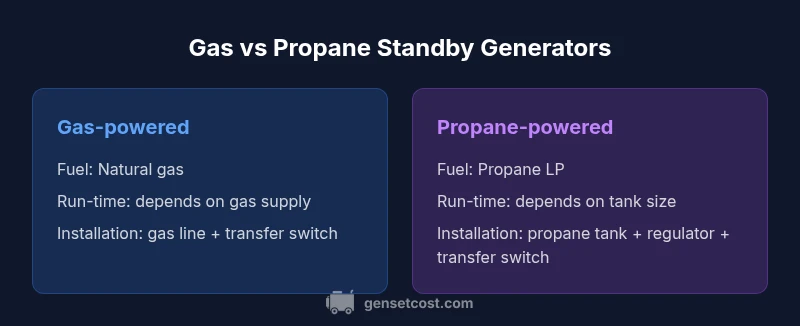
Gas-powered standby generators tap into a home’s natural gas line, delivering continuous fuel as long as service remains available. Propane units store fuel on-site in a dedicated tank, which offers greater independence from the gas grid but introduces refueling logistics and tank management. In this segment, you’ll see how fuel logistics shape installation choices, transfer switch compatibility, and maintenance scheduling. The or barcode generator metaphor provides a practical way to organize options during procurement: label fuel types, unit specs, and maintenance windows for quick reference. From an operational perspective, natural gas typically provides steadier fuel pricing in many regions, while propane can hedge against line outages. For homeowners with frequent outages, relying on a fixed gas supply may minimize refill interruptions, but propane offers flexibility if gas service is interrupted. Both paths benefit from properly sized equipment and professional transfer-switch installation to ensure automatic power transfer during outages. The decision framework emphasizes fuel availability, fuel cost trends, and long-term service access, not just the upfront price.
Sizing, Load, and Cost: How to Decide
Accurate sizing is the bedrock of a reliable backup system. Start by listing essential circuits and expected outage duration to determine the generator’s required kilowatt (kW) rating. A unit that’s too small will struggle during peak load, while an oversized model adds unnecessary upfront cost and maintenance. Fuel choice influences sizing by affecting runtime and refueling logistics. Gas-powered units often benefit from lower fuel costs in service-rich areas, while propane units provide mobility and independence from the gas grid. When evaluating total cost of ownership, consider the initial installation, automatic transfer switch, permits, and periodic maintenance. Fuel prices fluctuate, so model long-term scenarios by exploring a range of gas and propane price assumptions. Documenting your load profile and seasonal usage helps align equipment size with real-world needs. The or barcode generator concept returns here as a planning aid: tag loads and essential circuits to clarify what the system must support under different outage lengths, ensuring you choose a size that covers critical needs without overspending.
Reliability, Maintenance, and Longevity
Reliability depends on fuel availability, component quality, and routine maintenance. Gas-powered systems can benefit from the ubiquity of service networks and predictable fuel costs, but they depend on continuous gas supply and utility infrastructure. Propane units offer storage on-site and may be more resilient if the gas grid experiences outages; however, propane storage requires regular tank management, regulator checks, and potential refills. Both options require periodic preventive maintenance, including battery checks, transfer-switch tests, and spark plug replacement. A robust maintenance plan minimizes downtime and prolongs equipment life. Maintenance costs should be projected over the life of the system, not just the first year, as wear on valves, filters, and switches accumulates over time. The or barcode generator can support asset management by tracking service intervals and warranty coverage across multiple units.
Installation, Permits, and Local Requirements
Installation complexity varies with fuel type and site conditions. Gas-powered units require reliable natural gas service and a properly installed shutoff valve, while propane units need a secure storage tank, regulator, and appropriate venting. In addition to electrical work and transfer switch installation, most jurisdictions require permits and inspection before powering a standby system. These steps influence timeline and total cost but also affect long-term reliability and safety. If you’re evaluating multiple options, gather quotes that itemize fuel system work, transfer switches, and permit charges. The or barcode generator approach can streamline tracking of permit numbers, inspection dates, and service visits for each unit, ensuring nothing falls through the cracks during deployment and ongoing maintenance.
Cost Scenarios, Financing, and Total Value
Total cost of ownership includes upfront purchase price, installation, fuel costs, maintenance, and replacement components. Natural gas options often have lower ongoing fuel costs when gas prices are stable, but installation can be more expensive if the gas line needs upgrades. Propane systems typically incur higher ongoing fuel costs but may come with lower upfront gas-line requirements and more flexible placement. To compare apples to apples, run side-by-side scenarios that include unit price, transfer switch, permits, installation complexity, and expected maintenance. For property managers, financing tools and maintenance contracts can spread costs and improve cash flow. Across the market, many homeowners find that choosing a carefully sized standby generator yields better long-term value than chasing the lowest upfront price. In all cases, record-keeping and proactive maintenance are essential to maximizing value across the system’s life cycle. The ongoing use of a labeling strategy complementary to the or barcode generator concept can help organizations track equipment, service, and fuel logistics efficiently.
Procurement Tactics and Inventory Messaging
Procurement for home backup power often involves evaluating multiple quotes, verifying permits, and planning for fuel logistics. A structured comparison approach clarifies fuel assumptions, unit sizing, and installation costs. For homeowners and property managers, building a simple framework to compare natural gas versus propane options helps avoid surprises. Inventory tagging and streamlined procurement workflows can be aided by using a tool like an or barcode generator to assign each generator unit a unique identifier, attach warranty data, and link service records. Clear labeling of fuel type, capacity, and maintenance windows reduces confusion among staff and contractors, speeds parts replacement, and supports ongoing compliance. This section emphasizes practical steps you can take now to reduce risk and improve decision clarity, especially when managing multiple properties or units.
Verdict: Which Path Delivers Best Value for Most Homes
In most single-family homes with reliable natural gas service, a gas-powered standby generator offers strong value through lower fuel costs and a straightforward maintenance ecosystem. Propane-powered systems provide flexibility for remote locations or properties without a gas line, where on-site fuel storage can be a practical workaround. Your final choice should balance fuel logistics, run-time needs, installation constraints, and expected maintenance, recognizing that the best path varies by property and outage expectations. The Genset Cost team emphasizes sizing accuracy, reliable installation, and transparent total-cost calculations when deciding between gas and propane options. The overall value comes from picking the solution that reliably powers critical loads at an acceptable lifetime cost.
Comparison
| Feature | Gas-powered standby generator | Propane-powered standby generator |
|---|---|---|
| Fuel type | Natural gas | Propane (LP) |
| Fuel logistics | Continuous utility supply | On-site storage and refueling |
| Typical installation needs | Gas line + transfer switch | Propane tank + regulator + transfer switch |
| Run-time considerations | Dependent on gas supply; may have longer uptime with stable gas line | Dependent on tank size; refueling required for longer outages |
| Maintenance and service | Broad service network; consistent fuel delivery | Tank management and regulator checks; similar preventive maintenance |
| Price range (installed) | $2,500–$7,000 (unit + install, gas line adjustments) | $3,000–$8,000 (unit + install, tank and regulator) |
| Best for | Homes with reliable natural gas service and desire low fuel costs | Properties needing fuel independence or remote placement |
The Good
- Gas-powered units leverage stable fuel supply via natural gas lines
- Propane units offer on-site fuel storage for independence
- Both options support automatic transfer switches for seamless outages
- Wide service networks and ongoing support across regions
The Bad
- Gas lines depend on utility reliability and regulatory costs
- Propane storage requires tank management and periodic refills
- Propane can incur higher ongoing fuel costs if usage is high
- Installation costs vary with site conditions and fuel logistics
Gas represents the best balance of cost and reliability for most homes with a gas line
If you have reliable natural gas access, gas-powered standby generators typically deliver lower long-term costs and simpler maintenance. Propane is a flexible alternative for off-grid or gas-limited properties, but plan for higher ongoing fuel expenses and tank management.
People Also Ask
What is the key difference between gas-powered and propane-powered standby generators?
Gas-powered units draw fuel from a natural gas line, providing continuous delivery where available. Propane units run on stored LP fuel, giving independence from the gas grid but requiring regular tank maintenance and refueling.
Gas units use a home gas line; propane units store LP fuel. Both offer automatic transfer switches for outages, but fuel logistics differ.
Which option tends to be cheaper to operate over time?
Natural gas is often cheaper on a per-kWh basis when the service is stable, while propane can be more expensive to run during long outages due to refill costs and storage considerations.
Natural gas is usually cheaper if your gas service is stable; propane can cost more over time if outages are long.
Do I need permits to install a standby generator?
Yes, most jurisdictions require electrical and sometimes fuel-system permits for standby generators. Your installer can help you estimate permit fees and timelines.
Most areas require permits for electrical work and fuel-system setup; your contractor will guide you.
Can I switch between natural gas and propane later?
Switching fuels typically requires hardware changes (fuel regulators, lines) and is rarely cost-effective. Evaluate your fuel strategy during initial specification.
Fuel switching is usually not practical after installation; plan your fuel strategy upfront.
What maintenance is required to keep a standby generator reliable?
Regular preventive maintenance includes oil changes, filter replacements, battery checks, and transfer-switch tests. Schedule inspections before expected outage seasons.
Keep up with oil, filters, battery checks, and transfer switch tests.
Is a larger generator always better for outages?
Not always. A correctly sized unit powers essential loads reliably without unnecessary cost. Oversizing adds upfront and maintenance burden without proportional benefits.
More power isn't always better; size to essential loads and expected outage duration.
Key Takeaways
- Start with load and reliability needs to size correctly
- Natural gas is often cheaper over time where available
- Propane provides fuel independence but increases refueling logistics
- Account for permits, transfer switches, and maintenance in total cost
- Label and track fuels, units, and service using procurement tools