Can a Generator and Solar Work Together? A Practical Guide
Learn how generators and solar power can operate in harmony for reliable home backup. Explore system design, interconnection, sizing, costs, and step-by-step setup tips for a safe, efficient hybrid solution.


Yes—can a generator and solar work together as a hybrid home power system. Solar handles daytime loads and can keep a shared buffer charged, while the generator starts automatically during outages or when solar production and storage aren’t enough. With the right transfer switch, controller, and safety interlocks, you get seamless handoffs, reduced fuel use, and true resilience.
How hybrid solar-generator systems work
A hybrid solar-generator system blends photovoltaic (PV) generation with a fuel-powered generator to deliver grid-like reliability during outages and variable weather. In practical terms, solar panels feed an inverter, which powers essential circuits and charges any energy storage you may have. When daytime production or storage falls short, a generator can automatically start via a transfer switch or a dedicated controller. The key is a coordinated sequencing strategy that prevents backfeeding, ensures safe interconnection, and avoids cycling the generator more than necessary. A well-designed hybrid also considers how loads shift between solar, storage, and the generator, so you aren’t over-relying on any single source.
For homeowners evaluating can a generator and solar work together, think of the system as a team: solar covers daytime demand; the generator provides resilience during outages and high-load events. An intelligent controller coordinates start/stop, prioritizes cleaner solar energy, and minimizes generator runtime. Likelier success comes from clear load assessment, appropriate equipment, and adherence to electrical codes and safety practices. In this context, “best” isn’t about a single component, but rather the orchestration of all parts to meet your specific needs.
Core benefits of a hybrid approach
The hybrid approach delivers several benefits worth noting. First, it increases reliability: during an outage, you still have power for essential circuits, thanks to solar production and generator support. Second, it can improve efficiency by using solar energy first and drawing generator fuel only when needed, reducing fuel costs and emissions. Third, it provides load flexibility as your family’s needs evolve—solar capacity, storage, and generator sizing can be adjusted without starting from scratch. Lastly, a properly designed hybrid can help you manage peak loads, such as HVAC demand in hot summers, more predictably than a solar-only system alone.
Sizing and planning considerations
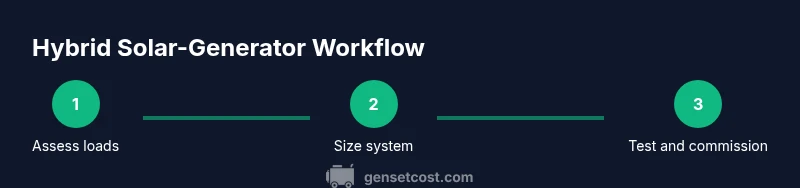
Sizing a hybrid system requires careful alignment of solar production, storage (if used), and the generator’s capacity. Start by listing critical loads (refrigeration, lighting, water heating, and communications), then estimate how many hours you anticipate relying on backup power during outages. Solar sizing should match your daytime loads and the intended storage discharge. The generator size needs to cover peak demand plus a safety margin, but not so large that it runs excessively. A common design approach is to have solar and storage handle a majority of daytime energy needs while the generator is reserved for outages or when loads exceed solar production and storage capacity. Interconnection equipment, such as a compatible transfer switch and a intelligent controller, ensures automatic, safe switching between sources while preventing backfeed into the utility.
Interconnection, safety, and codes
Interconnecting solar with a generator introduces additional safety considerations. A transfer switch or a hybrid-ready automatic transfer switch isolates generation sources from the grid and each other, preventing backfeeding and protecting utility workers. An automatic generator start controller should be configured to respond to specific conditions: a drop in grid voltage, a rise in load demand, or a loss of solar production. Wiring must meet local electrical codes, and many jurisdictions require licensed electricians and, in some cases, permits. Using listed equipment with built-in anti-backfeed features reduces risk. Always review the National Electrical Code (NEC) requirements and consult your local authority having jurisdiction before installation.
Cost considerations and value proposition
Costs for a hybrid solar-generator system vary widely based on capacity, equipment brands, and installation complexity. A larger system with substantial solar capacity and storage will typically cost more upfront but can reduce ongoing fuel and maintenance expenses over time. While precise prices depend on your location and selections, a hybrid approach often offers a favorable payback when outages are common or when you live in an area with high electricity costs. Government incentives or utility programs may help offset upfront costs, depending on your region. The value proposition hinges on resilience, reduced generator runtime, and the ability to keep critical systems powered through extended outages.
Control strategies: how sequencing works in practice
Control strategies define how solar, storage, and the generator share loads. A typical approach prioritizes solar production and stored energy during the day, uses the generator for outages or when solar cannot meet demand, and shifts back seamlessly as solar returns or storage is refreshed. For example, a smart controller can detect when a critical load starts to surge and start the generator preemptively to prevent brownouts. This sequencing minimizes wear on the generator and reduces fuel usage. In some designs, battery storage works as a buffer that smooths transitions, allowing the generator to run less often while maintaining a stable power supply.
Practical case study: evaluating your home’s hybrid needs
Consider a home in a mixed climate with frequent outages and high summer air conditioning loads. A hybrid system here might feature a moderate solar array, a battery bank sized to cover several hours of essential loads, and a generator sized to handle peak demand during outages. The design would prioritize critical loads, with optional expansion for less critical loads as budget allows. A step-by-step assessment of your appliances, a site evaluation for solar mounting, and an on-site electrical assessment will reveal the most cost-effective solution. This approach helps homeowners avoid oversizing the generator or underutilizing solar generation, leading to a resilient system that respects budget constraints.
Tools & Materials
- Safety glasses(ANSI Z87.1 or local equivalent for eye protection.)
- Voltage tester(To confirm lines are de-energized before work.)
- Multimeter(For measuring loads and system responses.)
- Wire cutters/strippers(For basic wiring terminations.)
- Screwdrivers (Phillips and flat-head)(Assorted sizes.)
- Electrical tape and cable ties(Safe, organized wiring.)
- Transfer switch compatible with solar and generator(Essential for safe interconnection.)
- Inverter/charger combo with solar integration(Must be compatible with hybrid design.)
- Manuals for solar array, generator, and controller(Keep for reference and service.)
- Lockout/tagout kit(For safety during maintenance.)
Steps
Estimated time: 4-6 weeks
- 1
Assess power needs and goals
Document all essential loads and estimate peak demand. Clarify whether the priority is outage resilience, cost savings, or environmental impact. This determines generator size, solar capacity, and storage strategy.
Tip: Start with the critical circuits first to avoid over-designing the system. - 2
Inventory existing equipment and constraints
List existing panels, inverter, and main service panel. Check roof availability, shading, and wiring routes. Identify local permitting requirements and any utility interconnection rules.
Tip: Shading analysis early saves design changes later. - 3
Choose a hybrid approach and controller
Decide whether to pursue solar-first with generator backup or a true load-sh shifting approach. Select a controller capable of coordinating start/stop logic and ensuring anti-backfeed features.
Tip: Prioritize equipment with compatible interconnection standards. - 4
Size solar array, storage, and generator
Size the solar array to meet daytime loads plus a buffer for storage; select a battery bank if used; pick a generator that can handle peak loads during outages.
Tip: Avoid over-sizing beyond practical energy needs to keep costs reasonable. - 5
Plan electrical interconnection
Design a safe layout with a transfer switch, interlock kit, and clear separation between utility, solar, storage, and generator circuits. Obtain necessary permits.
Tip: Document all interconnection points and labeling clearly. - 6
Install and wire components
Have a licensed electrician perform all electrical work. Install solar hardware, inverter, transfer switch, battery storage (if included), and generator connections.
Tip: Follow manufacturer instructions and local codes at every step. - 7
Commission and test the system
Power down the main service, verify sequencing, test generator auto-start, simulate outages, and confirm that loads switch safely between sources.
Tip: Document test results and adjust settings for reliability. - 8
Develop a maintenance plan
Create a maintenance schedule for solar panels, inverters, batteries, and the generator. Include seasonal checks, fuel quality, and battery health routines.
Tip: Regular maintenance extends system life and reliability.
People Also Ask
Can a home solar system operate with a generator during outages?
Yes. When configured with the proper transfer switch and controller, a solar system can operate alongside a generator to provide uninterrupted power during outages. The controller coordinates charging, load sharing, and safe switchover between sources.
Yes. A solar-plus-generator setup can keep critical circuits powered during outages with proper safety controls.
What is required to interconnect solar and a generator safely?
A dedicated transfer switch or hybrid-ready automatic transfer switch, a compatible controller, and adherence to local electrical codes are required. This prevents backfeeding and ensures safe, automatic transitions between sources.
You’ll need a transfer switch and controller that are designed for solar and generator coordination.
Do I need batteries for a generator-solar hybrid?
Batteries are optional but recommended if you want to maximize solar use during outages and reduce generator runtime. They provide a buffer for short outages and high-load periods.
Battery storage is optional but can improve efficiency and resilience.
How do I estimate generator size for a hybrid system?
Estimate by listing critical loads and their startup surges, then add a margin for peak demand during outages. The generator should cover essential circuits and peak requirements without oversizing.
List your must-run devices first, then size the generator to handle the largest startup surge.
What are common safety risks with hybrids?
Backfeeding, shock hazards, and improper sequencing are common risks. Use listed equipment, ensure interlocks, and have qualified personnel perform installations.
Backfeeding or miswired interconnections are safety risks; use proper equipment and qualified installers.
Are there incentives for hybrid solar-generator installations?
Many regions offer incentives such as tax credits or rebates for solar, storage, or hybrid systems. Availability varies by location and program rules.
There are often incentives, but eligibility depends on where you live.
Watch Video
Key Takeaways
- Hybrid systems blend solar, storage, and generator for resilience.
- Correct sizing and sequencing are essential for efficiency and safety.
- Interconnection safety requires a transfer switch and proper codes compliance.
- Plan for maintenance to protect long-term reliability.