Generator and Battery System: A Comprehensive Home Backup Comparison
Compare generator-only backups with hybrid generator and battery systems to choose the best home backup solution. Learn sizing, installation, and cost implications for resilience and efficiency.


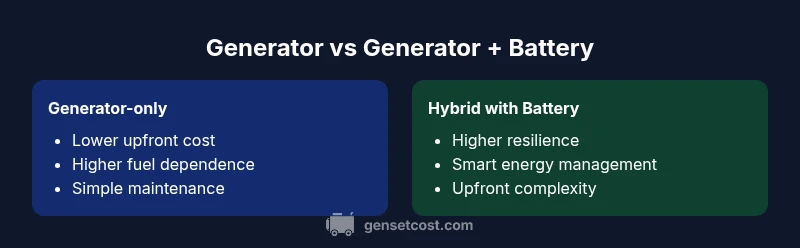
Hybrid backup setups that combine a generator with a battery system can deliver more reliable power during outages, optimize energy use, and reduce run-time constraints compared with a generator-only approach. The core decision is whether your home needs the added resilience and complexity of storage, or a simpler, upfront-cost focused generator solution.
The Shift Toward Hybrid Backups for Home Power
The term generator and battery system describes a shift from relying on a single fuel-powered generator to a hybrid approach that adds energy storage and smart control. For many homeowners and property managers, outages are not rare events, and the ability to store energy for critical loads can dramatically improve resilience. In this context, a generator and battery system works by using a traditional generator to charge a high-capacity battery bank, with an inverter/charger that ensures seamless switching and safe operation. This approach can mitigate fuel shortages, reduce generator run-time during the night, and smooth out power quality issues. When evaluating options, consider how often you experience outages, the typical length of those outages, and whether you want features like demand response or smart load shedding. The goal is to balance reliability with cost and maintenance complexity, while ensuring you still have essential circuits powered during grid failures.
How a Standalone Generator Differs from a Hybrid System
A standalone generator provides immediate, fuel-based back-up power without energy storage. It is generally simpler, with fewer control layers, and typically has lower upfront hardware costs. A generator + battery system adds a battery bank, an advanced inverter, battery management, and often a smart transfer switch. The battery can power critical loads while the generator runs to recharge, extend run-time, or handle high-demand events. The hybrid configuration supports smoother transitions during outages and can enable features like daytime charging, grid-tied operation, and even load prioritization. However, the added components require more skilled installation, ongoing monitoring, and potential battery replacement in the long run.
Core Components and How They Interact
In a generator and battery system, the key players include the generator, the battery bank (often lithium-based), the inverter/charger, a transfer switch, and a control platform (sometimes with software for monitoring). The transfer switch determines which circuits power the house, while the inverter converts DC battery energy to usable AC power. When the grid fails or drops, the system assesses loads and decides whether to draw from the battery, start the generator, or both. This coordination minimizes fuel use and battery strain, and ensures a fast, automatic response to outages. It also supports smoother power quality, which is important for sensitive electronics.
Sizing and Load Analysis for Home Use
Proper sizing is critical for either option, but the approach differs with a hybrid system. Start with a comprehensive load analysis that accounts for heating/cooling, appliances, hot water, and essential circuits. For a generator-only setup, you size primarily by the running load you intend to cover and the expected outage duration. With a generator + battery system, you add the battery energy capacity, discharging curves, and inverter efficiency into the equation. This helps determine how long you can sustain critical loads without refueling and how quickly the system can bring additional loads online after an outage. In practice, many homes use a tiered approach: essential loads (lights, fridge, medical devices) on the battery, and nonessential loads (plugged-in devices, entertainment) supported only when the generator is running. This approach preserves battery life and minimizes fuel consumption while maintaining reliability.
Cost and Total Cost of Ownership
Cost considerations for generator and battery systems go beyond upfront hardware. A standalone generator is typically less complex and cheaper to install initially, but ongoing fuel costs, maintenance, and refueling logistics can accumulate. A hybrid system adds the battery bank, advanced inverters, and potential battery replacement in the long term. While the upfront costs are higher, the hybrid setup can offer lower operational costs through optimized run-time, reduced fuel usage, and energy savings via smart load management. When evaluating total cost of ownership, consider the expected outage frequency, local fuel prices, and maintenance protocols, as well as the potential for future upgrades such as larger battery packs or integration with solar.
Efficiency, Emissions, and Fuel Types
Fuel type affects both the generator’s operating costs and emissions, while battery storage offers cleaner, quiet operation during battery discharge periods. Hybrid systems capitalize on stored energy during peak outages and when demand is highest, which can improve overall efficiency and reduce emissions per kilowatt-hour. Liquefied propane, natural gas, or diesel may be used in generators; battery choices vary from lead-acid to modern lithium-ion chemistries, with lithium options offering higher energy density and longer cycle life. When considering a generator and battery system, factor in fuel availability at your property, the environmental impact you’re aiming to meet, and the expected daily energy profile of your home. A well-maged system can reduce emissions and noise by limiting generator runtime during non-peak hours.
Installation, Permitting, and Maintenance
Installation complexity increases with a hybrid system. Expect more planning around electrical codes, battery siting, ventilation, and cooling for the inverter and battery bank. Permitting requirements can be more involved than for a standalone generator, particularly if you plan interconnection with the grid or a larger battery bank. Maintenance for a generator remains essential, and battery systems require periodic inspection, thermal management, and eventual replacement after a number of cycles. A robust maintenance plan should include a schedule for furnace checks, transfer switch testing, inverter firmware updates, and battery health diagnostics. Working with a qualified installer helps ensure safety, code compliance, and a smooth hand-off to homeowners.
Use-Case Scenarios and Decision Framework
Not every home benefits equally from a generator and battery system. In regions with frequent outages or longer closure times, hybrid systems can offer meaningful resilience and energy management advantages. If outages are rare, or if upfront capital is constrained, a generator-only solution might be more practical. Consider climate, insulation quality, and critical loads (medical devices, refrigeration) to decide which systems best align with risk tolerance and the desired level of automation. Use a decision framework that weighs outage frequency, load priority, budgets, and potential upgrades to solar or smart grid participation. The framework should also address future scalability, such as adding battery capacity or upgrading the generator to handle higher loads.
Common Myths and Real-World Trade-offs
A common myth is that more batteries always equal better resilience. In reality, optimal sizing depends on load profile, outage duration, and the ability to recharge quickly. Battery degradation and replacement costs are real considerations for long-term ownership. Another misconception is that the cheapest option will always save money; while generator-only costs may be lower upfront, long-term fuel and maintenance expenses can erode initial savings. Real-world trade-offs include increased complexity and the need for skilled maintenance, vs. the potential for smarter energy use and better outage readiness with a hybrid system.
Comparison
| Feature | Generator-only system | Generator + battery system |
|---|---|---|
| Primary power source | Fuel-powered generator with no storage | Fuel-powered generator plus battery storage and inverter |
| Autonomy during outages | Dependent on fuel stock and generator runtime | Energy from battery plus generator recharge capability |
| Load handling | Limited by generator size; high loads may require larger genset | Prioritized loads powered from battery during outage, with generator for recharge |
| Recovery time after outage | Automatic restart via transfer switch when grid fails | Hybrid enable faster recovery with pre-charged battery and rapid generator start |
| System complexity | Simpler, fewer components | Higher due to battery, inverter, and monitoring systems |
| Upfront cost focus | Lower initial hardware cost | Higher upfront cost for battery bank and advanced controls |
| Maintenance needs | Standard generator maintenance (oil, filters, etc.) | Generator maintenance plus battery health and inverter servicing |
| Smart home integration | Limited monitoring features | Rich monitoring, load shedding, and possible demand response |
The Good
- Supports informed decision-making through clear trade-offs
- Highlights life-cycle costs and maintenance implications
- Better alignment with homeowner resilience goals
- Helps plan for future upgrades and scalability
The Bad
- Hybrid setups add upfront complexity and cost
- Battery health and replacement add long-term considerations
- Requires skilled installation and ongoing monitoring
- More components mean more potential points of failure if not properly maintained
Hybrid generator and battery systems generally offer greater resilience and smarter energy use for frequent outages, but a generator-only setup can be sufficient for simple, infrequent outages and lower upfront costs.
Choose hybrid for higher reliability and energy management. Choose generator-only if simplicity and lower upfront cost are your priorities, and outages are rare.
People Also Ask
What is a generator and battery system for home backup?
A generator and battery system pairs a traditional standby generator with a rechargeable battery bank and an inverter. This combination stores energy for essential loads and uses the generator to recharge the batteries or power heavy loads, improving resilience during outages.
A generator and battery system uses a generator plus a battery bank to keep critical loads running longer during outages, with smart control to switch between battery power and generator power.
When is a hybrid system worth it for home use?
Hybrid systems are most beneficial for homes with frequent outages or long outage durations, where energy storage can reduce runtime and fuel use while preserving essential loads. For rare outages or tight budgets, a standalone generator may be more practical.
Hybrid systems shine when outages happen often; otherwise, a simple generator can be enough.
What loads should be prioritized with a hybrid system?
Prioritize critical loads such as refrigeration, medical equipment, lighting, and charging essential devices. The battery bank often powers these during outages, while the generator recharges or runs additional non-critical circuits.
Put the fridge, lights, and medical devices on the priority circuit first.
What maintenance should I plan for a generator and battery system?
Regular generator maintenance remains essential, including oil changes and filter replacements. Battery health checks and inverter firmware updates are also important for hybrids. Schedule professional inspections and testing of transfer switches.
Keep up with generator service and regularly test the battery/inverter system.
Can a generator and battery system operate with solar?
Yes. Many hybrids integrate with solar to charge the battery bank, expand capacity, and reduce grid reliance. Ensure the control system supports solar charging and that the inverter is compatible with the planned solar input.
Hybrid systems often pair well with solar to charge batteries and reduce fuel use.
What costs should I expect beyond equipment?
Expect costs for professional installation, permit fees, electrical upgrades, battery cabinets, and ongoing maintenance. Battery replacement may be needed after several years, depending on usage and climate.
Installation, permits, and battery upkeep matter as much as the hardware.
Key Takeaways
- Start with a formal load analysis to determine needs
- Weigh upfront costs against long-term fuel and maintenance
- Consider climate and outage frequency when deciding
- Hybrid systems offer smarter energy use and greater resilience