Can You Refuel a Generator While Running? A Safety Guide
Learn whether you can refuel a generator while it’s running, safety steps, best practices, and setup tips to prevent spills, fires, and fumes. This guide from Genset Cost covers fuel types, cooling times, and manufacturer guidance for homeowners and property managers.


No. Do not refuel a generator while it’s running or hot. Stop the engine, wait for it to cool, and move away from exhaust. Use a stable surface for the fuel container, wipe up any spills immediately, and follow the manufacturer’s fuel type, venting, and safety guidance to prevent fire or fumes.
Can You Refuel a Generator While Running?
Many homeowners ask can you refuel a generator while running, and the short answer is no. Fueling a live engine is dangerous because hot exhaust and engine components can ignite spilled fuel or vapors. Even a quick contact with a hot surface or a small fuel spill can lead to flash fires. For homeowners and property managers, the risk is amplified by cluttered workspaces, wet surfaces, or nearby combustibles. The short rule is simple: refuel only when the unit is off, unplugged, and cool to the touch. If you must be near fuel while the generator is cold, keep the container upright and away from any ignition sources, and ensure good ventilation. This approach also minimizes exposure to toxic fumes that can accumulate in enclosed spaces. If you operate in a climate where ground moisture, heat, or wind shifts vapor dispersion, adjust your fueling posture to maintain a safe distance from exhaust outlets and electrical components. Before refueling, confirm the fuel type, container condition, and manual guidelines. By instituting a disciplined fueling process, you lower risk and keep your backup power available when you need it most.
Fuel Types and Ventilation: Choosing the Right Fuel for Safety
Generators are designed to run on specific fuels: gasoline, diesel, or propane. Mixing fuels or using the wrong type is dangerous and can damage the engine. Gasoline vapors are highly flammable and heavier than air in some conditions; propane stores under pressure and can ignite in an enclosed space. Diesel emits fewer vapors but burns hotter; still, refueling while hot or near an ignition source is hazardous. Ventilation is critical: never refuel indoors or in attached garages, even if doors are open; always work in a well-ventilated outdoor area. If you operate in a climate where ground moisture, heat, or wind shifts vapor dispersion, adjust your fueling posture to maintain a safe distance from exhaust outlets and electrical components. Before you refuel, confirm the fuel container is clean, labeled, and compatible with your generator's fuel specification. Store spare fuel only in approved containers, away from living areas, and never in the same space as a running generator. In short, safety depends on matching fuel to the engine, ensuring proper storage, and maintaining clear separation from ignition sources.
Safe Refueling Alternatives and Preparedness
Instead of refueling while the unit is running, schedule fueling during a planned maintenance window. Prepare a dedicated fueling station outdoors, with a stable surface, adequate lighting, and a spill kit within reach. Keep a log of when you refuel and track fuel levels to avoid unexpected outages. If the power cut is extended, consider using a transfer switch or automatic generator startup options that minimize manual handling near fuel. Training family members or staff on the safe fueling protocol improves emergency readiness and reduces the likelihood of mistakes during an outage.
Spills, Static, and Fire Prevention: What to Keep On Hand
Always have spill containment materials and a fire extinguisher close to the fueling area. Place the generator on a non-slip surface and keep the area well ventilated; avoid fueling on dirt or wet grass where spills can spread. Use absorbent pads or rags to blot any small spills immediately and dispose of contaminated materials properly. Ground yourself if you anticipate static discharge, and never fuel near open flames, smoking materials, or ignition sources. After fueling, wipe down the surrounding surfaces and inspect the tank cap for a secure seal to prevent leaks.
Manufacturer Guidance and Local Regulations You Should Follow
Always consult the generator’s manual for model-specific fueling instructions, container requirements, and cooldown times. Local regulations may govern fuel storage, use in garages, and spill cleanup; following these rules protects occupants and your property. If in doubt, contact the manufacturer or a licensed technician for a safety check and a fueling protocol tailored to your setup. Adopting official guidelines reduces risk and simplifies maintenance over the long term.
Tools & Materials
- Approved fuel container (UL-listed)(Use containers designed for generator fuels; avoid glass or weak plastic)
- Fuel appropriate for your generator (gasoline, diesel, or propane)(Check the manual; do not mix fuels)
- Fire extinguisher (ABC rated)(Keep within 6-10 feet during fueling)
- Spill cleanup materials (absorbent pads or rags)(Use to control and clean spills immediately)
- Personal protective equipment (gloves and eye protection)(Nitrile gloves and splash goggles recommended)
- Owner's manual(Refer to model-specific refueling instructions)
Steps
Estimated time: 10-15 minutes
- 1
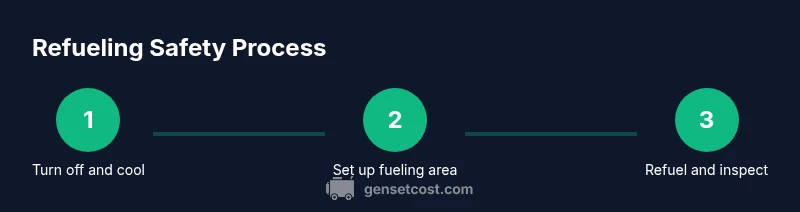
Turn off the generator and let it cool
Shut down the engine and wait until the exhaust and engine surfaces are cool to touch before approaching the fuel area. This reduces the risk of ignition from hot components or vapors. If you are unsure, wait at least several minutes and proceed only when you can touch the housing safely.
Tip: Never rush refueling after shutdown; cooling minimizes ignition risk. - 2
Move to a safe location away from ignition sources
Position yourself and the fueling area outdoors on a level, dry surface. Ensure no potential ignition sources such as cigarettes, flames, or sparks are nearby. Keep children and pets away during the refueling process.
Tip: Maintain a clear distance from exhaust outlets and electrical terminals. - 3
Place the approved fuel container upright on a stable surface
Set the container on a flat, non-slip surface and keep it upright to prevent spills. Do not place the container on a hot engine or directly against the fuel cap.
Tip: Keep the container away from your body to avoid spills on clothes. - 4
Open fuel cap slowly and Inspect for leaks
Carefully open the fuel cap to relieve pressure, then check for any signs of leakage around the cap or tank. If you notice leaks, stop and address the seal before continuing.
Tip: If you smell fuel, stop and move to a well-ventilated area. - 5
Refuel quickly and avoid topping off; wipe spills immediately
Pour fuel steadily to reach the appropriate level, avoiding overfilling. If a spill occurs, immediately blot with an absorbent material and move away any contaminated materials.
Tip: Turn off the container vent (if fitted) while filling to reduce splashes. - 6
Close the tank, tighten cap, and resume normal operation
Securely replace the fuel cap and ensure a tight seal. Check that there are no leaks and that the area is clean before restarting the generator.
Tip: Listen for unusual sounds after restart that could indicate a leak.
People Also Ask
Is it safe to refuel a generator while it is idling?
No. Refueling while the engine is running or idling is unsafe due to ignition risk from hot surfaces and vapors. Always shut down, cool, and refuel in a well-ventilated outdoor area.
No. Always turn off and cool the generator before refueling, in a well-ventilated outdoor area.
What should I do if fuel spills near a hot engine?
If a spill occurs, immediately turn off the engine if safe, move away, and blot the spill with an absorbent material. Clean up thoroughly and ventilate the area before reentering.
Turn off the engine, blot the spill, and ventilate the area before continuing.
Can I refuel a generator in a garage or indoors?
Refueling indoors or in attached spaces is strongly discouraged due to fumes and fire risk. Do it outdoors in a well-ventilated, dry area away from doors and windows.
No, refuel outdoors in a well-ventilated area.
How long should I wait after turning off the engine before refueling?
Wait at least several minutes until the engine and exhaust have cooled; in hot climates or heavy equipment, 10-15 minutes is a prudent cooldown.
Wait at least 10 minutes for cooling, longer in hot weather.
What kind of container should I use for refueling?
Use an approved, fuel-specific container suitable for your generator’s fuel type. Avoid glass or makeshift containers that can crack or spill.
Use an approved fuel container suitable for your fuel type.
Are there safer options during a power outage?
If possible, arrange fueling during a non-crisis window or have a qualified person assist with fueling during outages to minimize risk.
Plan fueling during safer times or have a professional assist during outages.
Watch Video
Key Takeaways
- Never refuel a running generator; always wait for cooling
- Use approved containers and keep the area well ventilated
- Contain and clean up spills immediately to prevent fires
- Follow manufacturer guidance and local regulations
- Maintain a ready safety kit and trained staff or household members