Can You Run a Generator 24/7? A Practical Guide
Learn whether you can run a home standby generator around the clock, with safety, maintenance, and cost guidance from Genset Cost.


Yes, you can run a generator continuously under the right conditions. Standby and commercial-grade units designed for 24/7 operation can supply power during long outages, but you must plan for fuel redundancy, cooling, maintenance intervals, and load management. Always verify with the manufacturer and install a proper transfer switch. Ask your installer about continuous-duty ratings and ventilation requirements.
Can You Run a Generator 24 7: An Overview
If you’re evaluating a whole-home standby solution, the question often asked is clear: can you run a generator 24 7? The short answer is: it depends on the generator’s design, the fuel strategy, and the installation context. Modern standby units built for continuous duty, combined with automatic transfer switches and proper ventilation, can handle extended outages and long runtime. However, not all models are suitable for nonstop operation, and misuse can shorten the unit’s life or create safety hazards. In this guide, we unpack the key considerations you should weigh before committing to any installation. For homeowners and property managers, the goal is reliable power with predictable maintenance, minimal downtime, and a clear plan for fuel, cooling, and load management. The Genset Cost team emphasizes planning first and validating requirements with your installer and local authorities to ensure a safe, compliant setup.
Understanding Continuous-Duty Generator Types
Continuous operation is typically associated with standby or industrial-grade generators rather than small portable units. Standby generators designed for 24/7 use come with weatherproof enclosures, robust cooling systems, and certified fuel supply options. Portable generators are generally limited by run-time before refueling and may require frequent maintenance or generator-tending during long outages. When evaluating options, consider the duty cycle (how many hours per day it runs) and the manufacturer’s continuous-use rating. Always verify that the unit you choose is rated for the intended load profile and climate conditions. By aligning specifications with your load expectations, you’ll avoid overtaxing the system while maintaining reliability for essential circuits.
Essentials for Continuous Operation: Transfer Switches, Fuel, and Ventilation
Running a generator around the clock hinges on three interrelated components: a safe transfer switch, a reliable fuel strategy, and adequate ventilation. A proper automatic transfer switch (ATS) isolates the generator from the grid when outages occur and reconnects when power is restored. Fuel strategy means ensuring an ample, redundant supply — whether you’re using natural gas, propane, or a secondary fuel storage plan — plus an orderly refueling protocol. Ventilation is essential for exhaust clearance and indoor air quality if the generator sits indoors or in an enclosed enclosure. Create clear space around the unit, install CO alarms, and follow local codes for exhaust routing. Together, these elements reduce the risk of backfeed, carbon monoxide buildup, and heat-related stress on the system.
Fuel Options and Management for Around-the-Clock Operation
Fuel choice directly influences how long you can run a generator continuously and how predictable operating costs will be. Natural gas and propane often offer cleaner, steady supply options, while diesel engines are known for endurance under heavy loads. Each fuel type has storage and delivery considerations: natural gas requires a service connection and regulator sizing; propane relies on external tanks and monitoring; diesel may need on-site storage and filter maintenance. Regardless of fuel, establish a monitoring routine that tracks tank levels (or gas pressure), plans for refueling without interrupting critical loads, and includes a contingency backup plan in case of supply disruption. Regularly inspect fuel lines, replace filters, and follow manufacturer-recommended maintenance intervals to avoid fuel-related outages.
Sizing, Load Management, and Scheduling
The cornerstone of successful 24/7 operation is accurate sizing and proactive load management. Before installation, perform a detailed load calculation that prioritizes essential circuits and defines non-critical loads that can shed under peak demand. A well-designed system uses smart load management or a transfer-switch-enabled strategy to sequentially power critical circuits and prevent tripping due to overload. Load shedding is not just a safety feature; it reduces fuel burn and extends runtimes. Consider integrating energy-efficient appliances and smart thermostats to lower overall demand. For continuous operation, plan for peak wind, heat, or cooling loads and ensure the generator can meet the combined demand while maintaining engine longevity.
Safety, Codes, and Installation Considerations
Safety and compliance should never be an afterthought. CO safety is paramount: install carbon monoxide detectors, ensure exhaust clearances, and avoid sharing vents with indoor air intakes. Local codes, building permits, and utility interconnection requirements may dictate how and where a generator can be installed, especially for continuous-duty models. A professional installation should include proper anchoring, enclosure ratings, and inspection after commissioning. Regular safety checks, including starting tests and voltage verification, are essential to sustain reliable operation. Don’t skip the transfer switch test or the battery condition check, as these can be failure points in a long runtime scenario.
Practical Setup Scenarios: Residential vs Multi-Unit Properties
A single-family home, a duplex, or a small multi-unit building have different optimization paths for 24/7 operation. In a home, you typically prioritize essential circuits, a reliable fuel plan, and a compact, weatherproof enclosure. In multi-unit properties, you’ll need a higher-capacity generator, multiple transfer switches, and possibly a transmission-grade transfer arrangement to handle shared loads without compromising safety. Property managers should coordinate with maintenance staff and coordinate with utility demand response programs if available. Regardless of setting, the core principles remain: ensure reliable power to critical systems, provide adequate cooling for continuous operation, and maintain compliance with local regulations.
Maintenance, Warranties, and Longevity
Continuous operation increases the importance of a robust maintenance program. Follow manufacturer-recommended intervals for oil changes, filter replacements, coolant checks, and battery testing. Record hours of operation, service visits, and any anomalies during runtime. A longer lifespan comes from proactive maintenance, timely part replacements, and predictable maintenance windows. Warranties may require regular service by a certified technician, so keep a log and retain receipts. By treating continuous operation as a scheduled duty cycle rather than ad-hoc use, you’ll protect both reliability and asset value over time.
Troubleshooting and Common Pitfalls
Even well-planned 24/7 operation can encounter issues. Common problems include fuel delivery interruptions, battery failure, and parasitic electrical loads that drag the engine. Start with the basics: verify fuel supply, test the ATS, inspect air filters, and run a no-load and full-load test to observe behavior. If odors, smoke, or abnormal noises occur, stop operation and consult a professional. A frequent pitfall is neglecting ventilation or failing to check exhaust clearance, which can lead to dangerous CO buildup. Maintain a detailed log of runtime, maintenance actions, and observed anomalies to help diagnose recurring issues and prevent long downtimes.
Cost Considerations and Budgeting for 24/7 Operation
Running a generator around the clock involves more than the upfront purchase. Ongoing costs include fuel, routine maintenance, parts, and potential enclosure or installation upgrades. Budgeting should account for fuel type, expected load, and local energy rates. While exact prices vary by model and region, think in terms of total cost of ownership rather than upfront price alone. Regular maintenance helps prevent expensive repairs and extends the unit’s life. For owners evaluating long-term reliability and resilience, a well-planned investment in continuous-duty equipment can provide peace of mind during outages and offer predictable performance when the grid is unreliable.
Final Thoughts on 24/7 Generator Operation
Continuing operation is feasible when you choose a generator designed for continuous duty, implement a robust fuel plan, and install the right safety and control systems. Preparation matters as much as the equipment itself. The goal is reliable power, safe operation, and a maintenance routine that keeps the system healthy year after year. With careful planning and professional guidance, a 24/7 generator setup can protect critical loads and support household resilience during extended outages.
Tools & Materials
- Standby generator (continuous-duty rating)(Sized for your critical load and climate)
- Automatic transfer switch (ATS)(Ensures safe transfer between grid and generator)
- Appropriate fuel supply (natural gas, propane, or diesel)(Include backup storage or service connections)
- Ventilation and exhaust clearance kit(Prevents CO buildup and overheating)
- CO detectors and alarms(Required for safety in enclosed spaces)
- Oil, coolant, and air filters(Maintenance parts for continuous use)
- Battery and charger (for starting)(Keep in good condition for reliable start)
- Wrench set and torque tools(Critical during installation and service)
- Fire extinguisher and emergency lighting(On-site safety provisions)
- Manufacturer-certified maintenance kit(Optional but recommended for schedule adherence)
- Clearance markers and enclosure(Meet code standards and protect residential areas)
Steps
Estimated time: 2-4 weeks for planning, permitting, installation, and commissioning
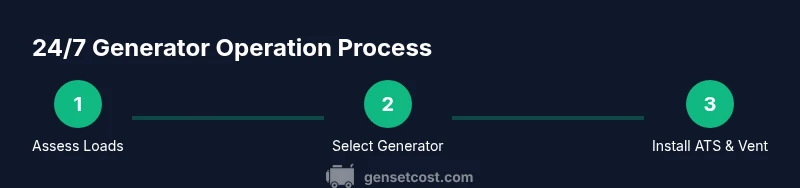
- 1
Assess needs and define continuous runtime goals
quantify essential vs non-essential loads, determine peak demand, and establish the desired runtime per outage. This step sets the foundation for generator sizing and fuel planning.
Tip: Document monthly runtime expectations to adjust the system as your loads change. - 2
Select a continuous-duty generator with an ATS
Choose a unit rated for continuous operation and pair it with an automatic transfer switch to ensure seamless power transfer during outages.
Tip: Confirm that the ATS and generator are compatible with your local electrical code and utility requirements. - 3
Plan fuel strategy and storage
Decide on fuel type and ensure a reliable supply pathway. For fuel storage, implement redundancy or service connections to mitigate outages.
Tip: Keep fuel lines clean and inspect storage containers for leaks or contamination. - 4
Design ventilation, exhaust routing, and clearances
Position the unit to maximize airflow, maintain manufacturer-recommended clearances, and route exhaust away from occupants and intakes.
Tip: Install CO detectors near living spaces and test them monthly. - 5
Install and commission the system
Work with a licensed electrician to install the ATS, wiring, and enclosure. Perform a no-load and full-load test under supervision.
Tip: Keep a commissioning checklist and document all settings for future maintenance. - 6
Establish ongoing maintenance and monitoring
Set a maintenance calendar for oil changes, filter checks, and battery tests. Use remote monitoring if available to track runtime and fuel levels.
Tip: Schedule annual professional inspections to validate safety and performance.
People Also Ask
Is it safe to run a generator 24/7 at home?
Yes, with proper equipment, ventilation, and maintenance, a generator can operate continuously for outages. Safety relies on CO protection, correct exhaust routing, and routine service by a qualified technician.
Yes. With the right equipment and maintenance, you can run a generator continuously, but safety features like CO detectors and proper ventilation are essential.
What maintenance schedule is required for continuous operation?
Follow the manufacturer’s service intervals for oil changes, filter replacements, and battery checks. Conduct periodic run tests and record operating hours to identify wear patterns and adjust maintenance plans.
Follow the manufacturer’s schedule for oil, filters, and battery checks, and perform regular run tests.
Do I need permits or codes for running a generator 24/7?
Yes. Local building departments and utility interconnection rules may apply. A licensed installer can help navigate permits, exhaust clearances, and safety requirements to stay compliant.
Yes, local permits and codes may apply. A licensed installer can help you stay compliant.
How does a standby generator differ from a portable unit for 24/7 use?
Standby generators are designed for continuous duty with automatic transfer switches and weatherproof enclosures. Portable units are typically not intended for long, uninterrupted runtimes and require manual setup and refueling.
Standby units are built for continuous duty with automatic switching; portable units aren’t ideal for long, nonstop operation.
Can a generator power an entire home during outages?
Yes, with proper sizing and load management. Some homes will require larger units or more than one system to cover non-essential loads only, depending on the electrical panel configuration.
Yes, with the right sized system and smart load management, you can power essential circuits, but it may not cover every appliance.
What should I do if my generator stops during a long outage?
Check fuel supply, inspect the ATS, and review service indicators. If problems persist, contact a qualified technician to diagnose electrical or mechanical faults before attempting further operation.
If it stops, check fuel and ATS, then call a technician if the issue continues.
Watch Video
Key Takeaways
- Plan first, then pick a continuous-duty generator.
- Use a proper ATS to prevent backfeed and ensure safe transitions.
- Maintain fuels, airflow, and routine service for reliability.
- Follow local codes and safety practices to protect occupants.