Can You Run a Generator Overnight? A Practical Guide for Home Backup Power
Explore whether you can safely run a home backup generator overnight, with safety guidelines, setup tips, fuel planning, noise considerations, and cost implications for homeowners.


Yes, you can run a generator overnight, but only with proper setup, safety, and monitoring. For homeowners evaluating backup power, the key is to protect occupants, manage fuel, and comply with local rules. With a transfer switch, outdoor placement, and a controlled load, overnight operation is feasible when done right. Always consult your generator manual and local codes.
can you run a generator overnight safely? An initial assessment for homeowners
When you ask can you run a generator overnight, the answer depends on how you plan, monitor, and protect people and property. Overnight operation is common in areas with prolonged outages, but it requires disciplined setup: outdoor placement, a proper transfer switch, and compliant exhaust routing. According to Genset Cost, evolving codes and best practices emphasize safety, ventilation, and robust maintenance. The goal is to provide continuous power while minimizing risk to occupants and neighbors, especially in enclosed spaces or poorly ventilated garages. This section lays out the fundamental considerations and helps you decide if an overnight run aligns with your home’s load profile and local regulations.
Overnight operation: core considerations for long outages
The core question remains: can you run a generator overnight? The practical answer is yes when you size the load properly, use a transfer switch, and keep the unit outdoors with adequate clearance. Load management is critical: don’t run on a near-full generator with high startup surges for long periods. Genset Cost analysis shows that predictable outages—like storms—are easier to manage when you plan fuel strategy, maintenance windows, and cooling needs. Consider your climate, insulation, and whether you have essential circuits that must stay powered. Designing for overnight use means balancing reliability with safety and budget.
Safety essentials for overnight use: ventilation, CO monitoring, and placement
Overnight generator operation hinges on safety. Never run a generator indoors or in an attached garage; exhaust is deadly in enclosed spaces. Place the unit outdoors at least the recommended minimum distance from doors, windows, and vents, shielded from rain yet with adequate airflow. Install a carbon monoxide detector near living spaces and test it monthly. A quality data-driven approach from Genset Cost emphasizes routine checks for fuel lines, oil levels, and belts. Ventilation, rather than volume, determines comfort and safety for overnight power needs.
Equipment and setup: transfer switches, enclosures, and weather protection
A secure overnight setup relies on the right equipment. Install a transfer switch to isolate the generator from the utility grid and to avoid backfeeding, which can injure line workers. Weatherproof enclosures reduce exposure to rain and debris, but they must allow exhaust and cooling air to escape. Use a shaded, well-ventilated outdoor location that complies with local codes. Ensure outlets are GFCI-protected and that the generator has a grounded connection. The setup should be verified by a licensed electrician where required.
Fuel, runtime, and maintenance planning for overnight operation
Fuel strategy is central to overnight running. Keep a consistent, fresh fuel supply matched to your anticipated run-time and expected load. Store fuel safely in approved containers and away from living areas. Track fuel levels and plan for refills during outages without overfilling, which can cause vapor hazards. Schedule routine maintenance and oil changes per the manufacturer’s guidelines, and log hours of operation to anticipate service intervals. Genset Cost recommends a proactive maintenance calendar to reduce overnight failure risk.
Noise, emissions, and neighborhood considerations during overnight runs
Noise and exhaust can disrupt sleep and invite complaints from neighbors. Choose a generator model rated for lower noise, use anti-vibration mounts, and position it further from property lines when possible. Consider a sound-dampening enclosure that still allows heat dissipation. Emissions vary by fuel type; propane generally burns cleaner than gasoline, but fuel choice should align with availability and storage safety. Check local noise ordinances and seasonal restrictions, especially in urban or suburban areas.
Cost, efficiency, and practical scenarios for overnight generators
Running a generator overnight involves trade-offs between upfront costs, ongoing fuel expenses, and potential maintenance. A properly sized unit with a transfer switch minimizes wasted fuel and reduces wear on the engine. In extended outages, overnight operation can be cost-effective by preserving perishables, protecting critical systems, and avoiding life-safety risks. When evaluating options, compare estimated runtime per tank, projected fuel costs, and the potential need for increased maintenance. The Genset Cost framework helps homeowners weigh these factors without guessing.
Real-world scenarios: when overnight running makes sense and when it doesn’t
Consider overnight generator operation for essential loads like refrigeration, heating systems, and critical medical devices during outages. If the outage is brief or if you have alternative power sources, running overnight may be unnecessary. Use your home’s load profile to decide which circuits matter most: lights, sump pump, HVAC controls, and security systems. Always have a plan B (cooling, cooling gear, and safe re-start procedures) in case conditions worsen. Genset Cost’s overall guidance emphasizes staying within rated capacity and adhering to safety practices.
Tools & Materials
- Outdoor-rated standby generator(Must be weather-protected and properly grounded)
- Automatic transfer switch (ATS)(Connects utility to generator seamlessly)
- Ground fault circuit interrupter (GFCI) outlets(Protects against shock hazards on external circuits)
- Weatherproof, outdoor enclosure or canopy(Provides rain protection while allowing heat dissipation)
- Carbon monoxide detector (CO) and battery backup(Critical for indoor safety; test regularly)
- Approved fuel containers and fuel stabilizer(Safe storage and fuel quality for smooth starts)
- Fire extinguisher and spill containment kit(Keep within reach for emergencies)
- Ventilation clearances and measuring tools(Maintain manufacturer-specified distances)
Steps
Estimated time: 45-60 minutes total for setup and a first overnight run review
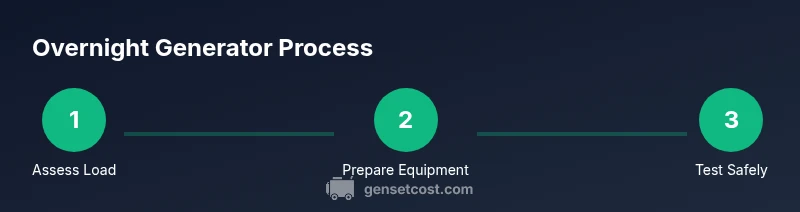
- 1
Assess load and select gear
Identify essential circuits and calculate the required generator size. Choose an ATS and outdoor-rated model, ensuring it can handle peak loads without overloading.
Tip: Document your anticipated load in advance to prevent oversizing. - 2
Position equipment safely outdoors
Place the generator on a hard, level surface with at least the recommended clearance from doors, windows, and vents. Install a weatherproof enclosure that still allows cooling air flow.
Tip: Avoid covered or cramped spaces to prevent heat buildup. - 3
Install and test transfer switch
Have a licensed electrician install the ATS and perform a transfer test to ensure smooth switching between utility and generator power.
Tip: Test monthly to confirm reliability and safety. - 4
Set up ventilation and CO monitoring
Install CO detectors near living spaces and verify ventilation paths are unobstructed. Confirm that exhaust fumes cannot re-enter the home.
Tip: Keep detectors fresh and batteries changed regularly. - 5
Load, start, and monitor the engine
Start the generator with a cold idle, then apply load gradually. Monitor oil levels, temperature, and fuel level while it runs overnight.
Tip: Avoid sudden high-load surges that strain the engine. - 6
Plan fuel and refueling logistics
Schedule refuel intervals if the outage persists. Use approved containers and keep fuel away from living areas to prevent hazards.
Tip: Never refuel a hot engine; wait for it to cool. - 7
Inspect and close out safely
At the end of the run, turn off the generator via the ATS, inspect for leaks or unusual noises, and secure the unit before night ends.
Tip: Document any anomalies and schedule service if needed.
People Also Ask
Can I run a home standby generator overnight?
Yes, but only with proper installation, ventilation, and safety measures. Use a transfer switch and keep the unit outdoors with adequate clearance and CO monitoring.
Yes, you can run a home standby generator overnight if you follow safety steps like outdoor placement, a transfer switch, and CO monitoring.
Do I need a transfer switch for overnight operation?
A transfer switch is highly recommended as it isolates the generator from the grid, prevents backfeeding, and ensures a clean transition during outages.
Yes. A transfer switch is essential to safely switch between utility power and the generator.
What are the main safety risks for overnight generator use?
Key risks include carbon monoxide exposure, fire hazards from fuel leaks, and improper exhaust placement. Mitigate these with outdoor placement, CO detectors, and regular maintenance.
Key risks are CO exposure and fire hazards; use outdoor placement, detectors, and routine maintenance.
How long can a generator run continuously on a full tank?
Runtime depends on load and tank size. Consult the manufacturer for expected endurance and plan refueling during outages without overfilling.
Runtime varies by load and fuel capacity; check your manual for expected endurance and refueling safety.
What should I do if I hear unusual noises overnight?
Shut down and inspect for loose components, fuel leaks, or cooling issues. If unsure, contact a technician before resuming operation.
If you hear strange noises, stop the generator and inspect or call a pro before using it again.
Watch Video
Key Takeaways
- Verify you have outdoor placement and a transfer switch.
- Always use CO detectors and proper ventilation.
- Manage fuel and load to avoid overload and outages.
- Follow manufacturer guidelines and local codes for overnight use.