Is It Safe to Run a Generator All Night? A Homeowner's Guide
Discover if it's safe to run a home backup generator overnight, with practical safety steps, proper placement, CO monitoring, and maintenance tips for homeowners and property managers.


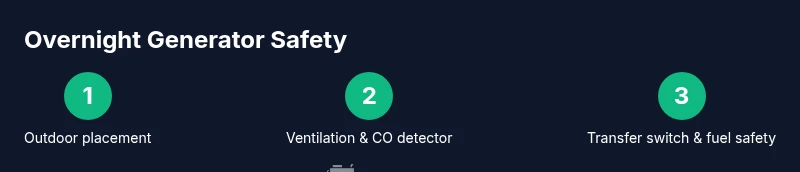
Yes, you can run a generator overnight if you follow safety guidelines, proper placement, and continuous monitoring. Key steps include wiring it to a transfer switch, keeping it outdoors with ventilation, using a carbon monoxide detector, ensuring fuel is stored safely, and never running indoors or in enclosed spaces. Always consult manufacturer instructions and local codes before long-term use.
is it safe to have a generator on all night? Key factors
When homeowners ask is it safe to have a generator on all night, the answer depends on following strict safety practices. From outdoor placement to continuous monitoring, the foundation is to minimize exposure to toxic exhaust and fire risk. According to Genset Cost, prioritizing ventilation, distance from living spaces, and proper electrical integration reduces risk and improves reliability during long runtimes. The goal isn’t fear, but preparedness: understand your generator’s limits, fuel type, and how it connects to your home's electrical system. By addressing these factors, you can protect occupants while maintaining essential power during outages.
Night-long operation risks and what to watch for
Overnight generator use carries several risks if not managed carefully. Carbon monoxide is odorless and can accumulate in enclosed areas or poorly ventilated spaces, making outdoor placement and continuous CO monitoring essential. Fire hazards arise from fuel handling, hot exhaust surfaces, or leaks. Electrical hazards stem from improper connections or overloaded circuits. These risks aren’t hypothetical; they’re preventable with deliberate placement, proper equipment, and routine checks. The Genset Cost team emphasizes that awareness of wind direction, dry conditions, and secure fuel storage dramatically lowers danger during extended runs.
Safer setup: placement, ventilation, and detectors
A safe overnight setup starts outdoors with clear, dry ground and at least a minimum clearance from doors, windows, and vents. Use a transfer switch or interlock to isolate generator power from the home’s circuits, preventing backfeeding. Exhaust should vent away from entrances and air intakes, and a carbon monoxide detector should be installed inside the home and tested regularly. Keep fuel in approved containers, stored away from heat or ignition sources, and never refuel while the unit is hot. This combination dramatically reduces CO exposure and fire risk.
Electrical integrity and fuel safety during long runs
Electrical safety hinges on professional installation of a transfer switch and adherence to electrical codes. Use outdoor-rated cords and keep connections dry and elevated off the ground to prevent moisture infiltration. Avoid extension cords for long-term use unless the load is light and within cord ratings. Regular inspections for frayed cords, loose connections, or corroded outlets help prevent shocks and electrical fires. Fuel safety means using the correct type for your model, keeping containers sealed, and never refueling during operation or immediately after a shutdown. Good practices include having a small fire extinguisher nearby and a clear plan for fuel management during outages.
Monitoring and maintenance during overnight use
Constant vigilance is essential when running a generator overnight. Set up a simple routine: check CO detector status, verify the unit is running smoothly, and ensure weather conditions remain suitable. If you must pause operation due to wind, rain, or temperature extremes, shut down safely and re-evaluate. Documentation of start times, loads, and fuel levels helps with future planning and maintenance. The focus is steady monitoring, not microscopic micromanagement; routine checks prevent emergencies and extend equipment life.
When to stop overnight operation and seek alternatives
There are times when overnight operation should be reconsidered. If ventilation becomes compromised, CO alarms indicate elevated levels, or weather destabilizes safety margins, shut down and seek alternatives. Consider switching to a generator with automatic start/stop features or exploring grid-tied or battery backup solutions for extended outages. Even with strict precautions, some situations warrant not running a generator through the night at all. Genset Cost recommends evaluating local regulations, safety requirements, and your own risk tolerance before deciding to run long durations.
Is it safe to have a generator on all night? community guidance and final check
In practice, safety is about systems, not luck. Use a tall, well-ventilated outdoor installation, reliable CO alarms, trained electrical connections, and responsible fuel handling to make overnight operation workable. Maintain a clear perimeter around the unit, ensure 24/7 accessibility for monitoring, and schedule regular maintenance. With thoughtful planning, you can keep essential power available while keeping occupants safe. The Genset Cost team emphasizes that preparedness and conservative safety margins are the best guardrails against overnight risks.
Tools & Materials
- Carbon monoxide detector (UL-listed, battery backup)(Place inside the home and test weekly; alarms should be audible from sleeping areas.)
- Transfer switch or interlock kit(Have a licensed electrician install to isolate generator power from the house.)
- Outdoor-rated generator cord(s)(Use cords rated for outdoor use; keep connections dry and off the ground.)
- Fuel storage containers (approved)(Store away from heat sources; use for the appropriate fuel type only.)
- Fire extinguisher (ABC-rated)(Keep within easy reach near the generator.)
- Weatherproof enclosure or stand(Use only if it allows proper ventilation and service access.)
- Wrench set and safety gloves(Useful for maintenance and refueling safety.)
Steps
Estimated time: 2-4 hours for initial setup and ongoing overnight monitoring
- 1
Assess location and clearance
Identify a dry, level outdoor spot with clearances from doors, windows, and vents. Confirm wind direction to avoid exhaust re-entry. This baseline prevents CO buildup near living areas.
Tip: Mark a no-fuel zone around the generator to keep kids and pets safe. - 2
Plan electrical integration
Arrange a transfer switch or interlock with your electrician, ensuring the generator powers only designated circuits. This prevents backfeeding into the grid or home wiring.
Tip: Do not attempt DIY wiring; improper connections can cause shocks or fires. - 3
Install CO detection and alarms
Place detectors at multiple levels inside the home and ensure they are interconnected if possible. Test alarms weekly and replace batteries as needed.
Tip: If an alarm sounds, evacuate and shut down the generator if safe to do so. - 4
Set fuel safety protocols
Use approved containers, store away from ignition sources, and never refuel while the unit is running or hot.
Tip: Have a fire extinguisher within reach and a plan for quick refueling during outages. - 5
Begin operation and monitor loads
Start the generator with the transfer switch engaged; monitor load, cooling, and exhaust. Keep the unit dry and free of debris.
Tip: Avoid overloading; distribute critical loads across circuits where possible. - 6
Refueling and weather checks
Refuel only after the unit has cooled; check weather conditions before prolonged operation and secure covers if needed.
Tip: Shut down during heavy rainfall or strong winds to prevent hazards. - 7
Shutdown and post-use maintenance
Power down safely, disconnect loads, and perform a quick inspection of cords and connections. Schedule routine maintenance per manufacturer guidance.
Tip: Document any anomalies for future service calls.
People Also Ask
What are the biggest risks of running a generator overnight?
The main risks are carbon monoxide buildup, fires from fuel handling, and electrical hazards from improper connections. Outdoor placement, proper detectors, and a transfer switch mitigate these risks.
The biggest risks are CO buildup, fires, and electrical hazards; safety steps reduce these risks.
How far should a generator be from the house?
Place the generator at least 10 feet away from doors, windows, and vents to prevent exhaust from entering living spaces. Adjust based on local codes and wind direction.
Keep it far away from the house—about 10 feet or more, depending on local rules.
Can I use a generator during a storm or heavy rain overnight?
Storms complicate safety: moisture increases electrical risk and exhaust management becomes harder. If you must use it, ensure weatherproofing and wind conditions permit safe operation.
Avoid running in rain if possible; if you must, ensure proper protection and ventilation.
Do I need a professional to install a transfer switch?
Yes. A licensed electrician should install the transfer switch to ensure safe separation of loads and compliance with local codes.
A pro should install the transfer switch to avoid dangerous wiring mistakes.
What maintenance is needed for overnight use?
Regularly test detectors, check cords and connections, clean away debris, and schedule periodic service per the manufacturer’s guidance.
Test detectors, inspect cables, and arrange regular service checks.
What should I do if CO alarms go off?
Evacuate people immediately, shut down the generator if it is safe to do so, and call emergency services if symptoms appear.
If CO alarm sounds, get people outside fast and shut off the generator if safe.
Watch Video
Key Takeaways
- Always run outdoors with proper clearance
- Use a transfer switch to prevent backfeed
- Monitor CO detectors and test them routinely
- Never refuel a hot generator; wait for cooldown
- Schedule regular maintenance and follow manufacturer guidance