Is It Ok to Run a Generator All Night? Safety, Costs, and Best Practices
Explore whether it's safe to run a home backup generator all night, with safety guidelines, cost considerations, and practical overnight power options.


Generally, running a generator all night is not recommended due to fire and carbon monoxide (CO) risks, fuel consumption, and potential equipment wear. Use a transfer switch or battery backup for essential loads, and rotate power use to reduce runtime. Always follow manufacturer guidelines and local safety codes. Keep CO detectors active and ensure ventilation.
Why overnight operation is risky
When a generator runs for extended periods, especially through the night, the odds of exposure to carbon monoxide (CO) increase if exhaust cannot vent properly. Outdoor placement helps, but even outdoors a generator emits CO and other fumes that can accumulate in enclosed spaces or near open windows and doors. Fire risk rises if fuel is spilled, if the unit sits on flammable surfaces, or if it’s near combustibles. Noise, vibration, and heat buildup can also affect nearby occupants and structures. The combination of weather, gatekeeping around fuel storage, and human factors like fatigue can lead to poor shutdown decisions. Genset Cost analyses emphasize adherence to manufacturer guidance and local codes to minimize risk and liability. As a homeowner or property manager, you should plan for overnight outages with safety-first strategies rather than relying on continuous overnight running.
For any overnight operation, never place the generator indoors or in an attached garage, never run it in a crawl space, and avoid enclosures without ventilation. Use a CO detector with a digital readout and test batteries monthly. If you notice symptoms like headache, dizziness, or nausea among occupants, evacuate and shut down the unit immediately. This is a crucial safety moment that can save lives and property.
How long a generator should run at night and what to monitor
Engine-driven generators are designed to supply power for defined durations depending on fuel type, load, and maintenance. Overnight operation is feasible only if you design a minimal, carefully calculated load profile and have reliable fuel storage. Monitoring involves temperature checks, oil level, battery health, and exhaust clearance. If you observe abnormal noises, leaks, or overheating, shut down and inspect the unit. The goal is to avoid overheating and engine strain that can shorten the generator’s life.
Use a professional interlock or transfer switch to isolate the home circuits you actually need from the whole-house supply. This keeps the generator from overspending fuel on nonessential loads and reduces wear red flags for components that aren’t designed for long runs.
Safer overnight power strategies you can implement today
A nightly power plan should prioritize safety and reliability. Consider a transfer switch that automatically routes essential circuits to the generator, or a battery-backed UPS for key devices like refrigeration, medical equipment, and communications gear. A larger standby generator with automatic start/stop can be configured to handle predictable loads while maintaining a safe fuel strategy. For many homes, pairing a generator with a well-planned load schedule reduces overnight risk and costs. If you cannot implement a transfer switch, use a dedication for critical circuits and avoid running the generator to power heating or large appliances unless you’ve confirmed the load will stay within safe limits.
Budget-minded homeowners should compare fuel types (gasoline vs propane vs natural gas), consider periodic maintenance costs, and understand the duty cycle required for sustained operation. Keep a log of runtime, fuel levels, and maintenance tasks to avoid surprise failures after months of minimal use.
How to calculate your true overnight load and recommended runtime
Begin with a circuit-by-circuit inventory of essential loads you want backed up overnight. Typical critical circuits include refrigeration, a few outlets for charging devices, lighting at key points, and, if needed, a sump pump or well pump. Don’t count nonessential devices like entertainment systems or space heaters unless you know they can run safely within your generator’s continuous duty rating. Add up wattage, apply a 0.8 power factor where applicable, and compare to your generator’s continuous rating. This helps determine if overnight runtime is feasible without overloading the unit. Use a temporary load test during the day to validate calculations and refine the needed fuel reserves.
Practical safety setup for overnight use
Before nightfall, perform a safety check: confirm outdoor placement with clear air flow and no overhanging obstacles, verify fuel storage is secured away from living spaces, and test CO detectors. Install an ANSI-certified carbon monoxide detector near sleeping areas to provide early warning. Ensure you have a fire extinguisher rated for electrical fires accessible, and keep fuel containers sealed and upright. Establish a clear shutdown procedure for the night—don’t leave the unit running if you’re not monitoring it.
Maintenance and reliability considerations for long runtimes
Long runtimes stress engines, so a basic maintenance routine is essential. Check oil levels and change oil according to the manufacturer’s schedule, inspect air filters, and ensure spark plugs are clean and correctly gapped. Clean or replace the air intake and exhaust path to prevent overheating. Schedule seasonal service with a technician who can verify that all safety features function correctly and that the transfer switch is calibrated. Regular maintenance reduces the risk of failures during extended runs and extends the life of your generator.
Tools & Materials
- CO detectors with digital readouts(Install near sleeping areas; test monthly)
- Fire extinguisher (ABC-rated)(Keep accessible in generator area)
- Heavy-duty extension cords (outdoor-rated)(Do not use indoors; maintain proper gauge)
- Transfer switch or interlock kit(Select based on load and electrician recommendations)
- Fuel stabilization and spill containment(Store safely; use spill mats if indoors; follow local codes)
- Generator manufacturer maintenance kit(Includes oil, filters, spark plug replacements)
- Ventilation-friendly outdoor pad or base(Keep generator above ground and away from walls)
Steps
Estimated time: 60-90 minutes
- 1
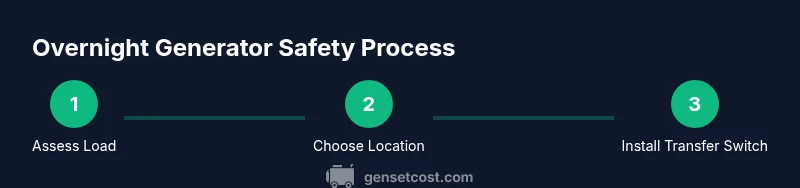
Assess overnight load and duty
Identify essential circuits to back up during the night and determine the minimum load needed. Use a wattage calculator or the generator’s manual to estimate running watts and running current. This prevents overloading and reduces unnecessary runtime.
Tip: Document each device’s wattage and add a 20% safety margin. - 2
Choose a safe outdoor location
Place the generator on a non-flammable surface, with at least 20 feet of clearance from structures and openings. Keep it away from doors, windows, and vents to prevent CO intrusion. Use a weather-resistant enclosure only if it maintains ventilation.
Tip: Never run indoors or in an attached garage. - 3
Install a transfer switch or interlock
Have a licensed electrician install a transfer switch or interlock kit to route essential loads to the generator automatically. This prevents backfeeding, reduces overload risk, and simplifies safe operation.
Tip: Test the switch under load during daylight hours. - 4
Set up safety devices and alarms
Install CO detectors, a fire extinguisher, and ensure power cords and fuel containers are in good condition. Verify all alarms are audible in bedrooms and living spaces.
Tip: Test detectors monthly and replace batteries as needed. - 5
Perform a daylight startup test
Start the generator in daylight, verify all selected loads energize correctly, and monitor for unusual noises, overheating, or fuel leaks. Confirm that the transfer switch isolates nonessential circuits.
Tip: Observe shutdown procedures; do not leave the unit unattended for long stretches. - 6
Create an overnight shutdown plan
Decide a safe time window for the generator to run overnight and plan for a safe, controlled shutdown if temperatures rise or fuel drops. Keep a log of runtime and fuel levels.
Tip: Avoid refueling during operation; allow cooldown first.
People Also Ask
Is it dangerous to run a generator all night?
Yes, extended operation increases CO exposure risk, fuel costs, and wear. Use a transfer switch or battery backup for essential loads and follow safety guidelines.
Yes. Running a generator all night can raise carbon monoxide risk and fuel costs. Use safer alternatives and follow safety guidelines.
What safer alternatives exist for overnight power?
Consider a transfer switch with essential circuits, a battery-backed UPS for critical devices, or a standby generator with automatic start/stop designed for prolonged use.
Safer options include a transfer switch or a battery-backed UPS with automatic transfer.
How far should a generator be placed from the home?
Place the generator outdoors with clear air flow and a minimum distance of about 20 feet from any openings or structures to limit CO buildup.
Place it outside, at least 20 feet from the home and away from doors and windows.
Can I run my fridge and sump pump overnight on a generator?
Yes, but only if your generator’s continuous rating covers the combined load and you’re not exceeding safe run limits. A transfer switch helps manage these loads.
You can back up a fridge and sump pump if the generator supports the load and you switch to essential circuits.
What maintenance is required for long runtimes?
Regular oil changes, air filter inspection, spark plug checks, and professional inspections ensure reliability for longer duty cycles.
Keep up with oil changes, air filters, and periodic professional checkups to maintain reliability.
Are propane or natural gas better for night runs?
Propane offers cleaner storage and easier refueling, while natural gas provides a constant supply but may limit portability. Consider availability and appliance compatibility.
Propane is convenient for storage; natural gas avoids refueling but depends on your home gas line.
Watch Video
Key Takeaways
- Plan overnight power with safety, not just availability.
- Use transfer switches or battery backups to minimize overnight runs.
- Maintain detectors and follow manufacturer guidance for all safety measures.
- Regular maintenance lowers risk of failures during long runtimes.