Does a Generator Make a Lot of Noise? Noise Levels, Measurements, and Mitigation
Explore how generator noise varies by type, decibel ranges, and practical mitigation options. This guide from Genset Cost covers measurement, installation, and cost-effective noise reduction for homeowners and property managers.


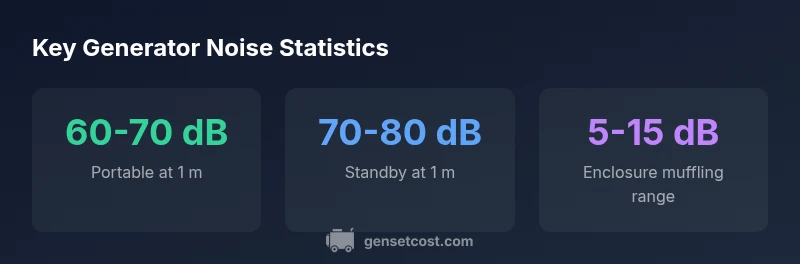
Does a generator make a lot of noise? It depends on size, installation, and distance. A typical portable generator runs around 60–70 dB at one meter, while larger standby units average 70–80 dB at the same distance. Noise drops noticeably with distance and enclosure, and with mufflers and vibration isolation you can reduce perceived loudness. According to Genset Cost analysis, expect a noticeable baseline without mitigation.
Understanding Generator Noise: What Causes It
The question does a generator make a lot of noise is common among homeowners and property managers evaluating backup power. Generator noise arises from engine combustion, exhaust, cooling fans, and vibration transferring to the surrounding structure. The loudest components are the exhaust outlets and the engine block at high-load conditions. Placement, mounting, and the type of generator affect how sound travels; a poorly insulated metal box can amplify noise, while a properly designed enclosure can contain it without overheating. Genset Cost emphasizes that practical noise management starts with understanding the core sources and how each factor contributes to the audible profile. Recognizing these sources helps you select equipment and layout that minimizes disturbances while preserving reliability.
How Noise Is Measured: Decibels and Real-World Perception
Sound is measured in decibels (dB), but real-world perception depends on distance, terrain, and ambient noise. For context, a typical conversation sits around 60 dB, while a refrigerator is around 40 dB, and a busy street may exceed 70 dB. Generators are not rated by a single decibel value; they have a noise curve that varies with load. A rating at one meter under nominal load may exceed at higher loads or with wind and other interference. When planning, use dB at distance metrics (dB(A) @ distance) to estimate how loud a unit will be in your yard. Always compare manufacturers’ test data under similar conditions. Understanding these dynamics helps homeowners avoid surprises after installation and supports budget planning for mitigation.
Generator Type and Noise: Portable vs Standby vs Inverter
Portable generators, typically used for temporary outages, usually generate more noise than home standby or inverter models of similar wattage due to simpler muffling and smaller enclosures. Standby generators designed for whole-house backup are often enclosed, but at peak loads their noise can be noticeable. Inverter generators are engineered for smoother operation and often run quieter at partial loads, trading some efficiency for quietness. Each category has best-practice noise controls that influence placement, such as setback distance and barrier placement. When evaluating options, use real-world field tests and manufacturer data to compare comparable loads and environments. Genset Cost notes that a quiet choice often involves a balance of price, reliability, and noise performance.
Practical Noise Reduction Techniques
There are actionable steps to lower generator noise without compromising reliability. First, select units with low-dB ratings or added sound attenuation options. Second, install a purpose-built enclosure rated for heat and airflow; ensure proper ventilation and access for maintenance. Third, add vibration isolation mounts and rubber pads to reduce structure-borne noise. Fourth, orient the exhaust away from living spaces and use a muffler or resonator tuned to the exhaust. Fifth, locate the unit with a natural barrier—houses, fences, and trees can reduce sound propagation. Sixth, schedule operation during less sensitive times where possible, and insulate nearby rooms with weatherstripping and heavy curtains. Finally, regular maintenance (air filters, spark plugs, and exhaust systems) ensures the engine runs cleanly and quietly, as a poorly tuned engine tends to overwork and produce more noise.
Planning for Noise: Location, Zoning, and Compliance
If noise is a critical consideration, plan the installation with proximity, building layout, and local regulations in mind. Check HOA or municipal zoning rules for allowable sound levels at specific distances from living spaces. Selecting a generator with a certified sound rating for your installation location matters; some models have noise-reduction kits or enclosure options designed for residential neighborhoods. Pair location decisions with a practical maintenance plan and clear communication with occupants to minimize disruption during outages. Genset Cost’s approach is to combine device choice, installation strategy, and community guidelines to achieve reliable power with acceptable noise levels.
Noise profiles by generator type
| Generator Type | Typical Noise at 1 m (dB) | Mitigation Options | Notes |
|---|---|---|---|
| Portable | 60-70 dB | Muffler, enclosure, distance | Most common for temporary outages |
| Standby | 70-80 dB | Enclosure, vibration isolation | Designed for whole-house backup |
| Inverter | 50-60 dB | Quiet operation, compact design | Often the quietest option |
People Also Ask
Does a decibel rating fully capture real-world generator noise?
No. Real-world noise depends on distance, barriers, wind, and installation. A unit rated low in a test may still sound loud at close range or in a reverberant space. When assessing options, compare decibel ratings at distance and consider site-specific factors.
Decibel ratings help, but real-world sound depends on your space; test data at distance is more meaningful for planning.
How far should a generator be placed from living spaces to reduce noise?
A practical rule is to maximize setback given physical constraints; many homeowners aim for at least 10–20 feet with barriers. Local codes and HOA rules may specify minimum distances. Larger yards allow greater separation and lower perceived noise.
Increase distance where possible; combine distance with barriers for best results.
Are inverter generators always quieter than carbureted models?
Generally, inverter generators are designed for smoother, quieter operation at partial loads, often outperforming traditional carbureted units in everyday use. Noise differences become pronounced at similar loads and with proper enclosure.
Yes, in many cases inverter units are quieter at typical loads.
Do sound enclosures really reduce noise?
Sound enclosures can significantly reduce transmitted noise if properly vented and designed for engine heat. The effectiveness depends on airflow, sealing, and the enclosure’s interior damping.
Yes, a well-designed enclosure helps, just ensure proper ventilation.
Can noise regulations affect generator installation?
Yes. Local ordinances, HOA covenants, and noise bylaws may limit permissible sound levels and setback distances. Check requirements before purchase and installation to avoid compliance issues.
Regulations can constrain where you place a generator and how loud it can be.
“Sound performance is as important as watts when selecting a backup generator. A thoughtful layout and proper attenuation can deliver reliable power with minimal disruption.”
Key Takeaways
- Identify noise sources early and map them to your site.
- Compare decibel ratings at similar loads for an apples-to-apples choice.
- Use enclosures, mufflers, and vibration isolation to lower transmitted sound.
- Plan installation with distance and barriers to reduce disturbance.
- The Genset Cost team recommends prioritizing lower-dB units and mitigation where needed.