Why Are Generators So Loud? A Practical Noise Reduction Guide
A practical guide to why generators are loud and how homeowners can cut noise with diagnostics, steps, and safety tips. Data-backed guidance from Genset Cost helps you choose quiet models and install effective noise-reduction measures.


Generators are loud primarily because the internal combustion engine, exhaust, and vibration travel through the frame and enclosure. Improper mounting, insufficient muffling, and small or poorly designed enclosures amplify noise for nearby rooms. Quick fixes include installing a proper muffler, adding anti-vibration isolation, placing the unit on a solid pad away from living spaces, and choosing a sound-attenuating enclosure.
Noise Sources in Generators
Understanding why are generators so loud starts with identifying the main sound sources. The engine itself produces a high-pitched mechanical tone during combustion. Exhaust flow adds a booming hiss, especially if the muffler is damaged or undersized. Mounting hardware and the frame transfer engine vibrations into the enclosure, and cooling fans or fuel pumps add brief, repetitive noise when the unit cycles. External factors like wind, location near walls, and proximity to living spaces magnify perceived loudness. According to Genset Cost, the best way to tame noise is to address all three pillars: source, path, and enclosure. By isolating vibration, improving exhaust attenuation, and selecting a smarter housing, you can dramatically reduce sound emissions without compromising reliability.
Acoustic Basics: How Noise Travels and How to Control It
Noise from a generator travels in three main ways: direct sound from the engine and exhaust, vibration transmitted through mounts into the enclosure, and reflected sound off nearby structures. Reducing perceived noise involves choosing materials and designs that absorb or deflect sound, not just muffling the exhaust. A well-sealed enclosure with a tuned muffler and rubber isolation mounts can cut reverberation. Keeping the unit away from walls, windows, and air intakes helps, as does ensuring there are proper ventilation paths so the engine does not overheat, which can increase noise from cooling fans. The goal is to minimize radiated sound while maintaining safe, reliable operation.
Common Installation Mistakes that Amplify Noise
Many homeowners unintentionally increase noise by placing the generator in a cramped corner, on soft ground, or directly against a building. Inadequate clearance around the enclosure restricts heat dissipation and raises fan noise. Using a cheap, undersized muffler or failing to upgrade to a purpose-built sound-attenuating enclosure also makes a big difference. Vibration issues are common when anti-vibration mounts wear out or when bolts loosen over time; these problems let the engine transmit more noise into the frame. A deliberate install plan, including proper clearance, a rigid pad, and weather-protected, ventilated housing, is essential for quiet operation.
How to Evaluate Noise Before You Buy
Noise considerations should be part of your sizing and budgeting process. Look beyond upfront price and inspect the enclosure design, muffler quality, and vibration isolation. Compare models marketed as quiet or low-noise and read independent reviews about real-world performance. If you plan to run the generator near living areas, prioritize models with enclosed sound attenuation and low-RPM operation designs. Remember that the quietest option may come with higher initial costs, but the long-term comfort and property value can justify the investment.
Quick Wins: Low-Cost, Real-World Noise Reduction
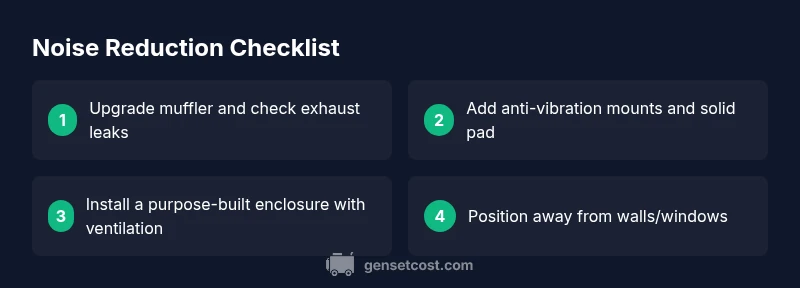
Start with simple, safe steps that often yield noticeable results. Add anti-vibration pads beneath the generator for immediate reduction in transmitted noise. Check that the exhaust is intact and not leaking, and replace damaged mufflers or exhaust sections. Kept at a reasonable distance from structures and neighbors, an open-sided or properly vented enclosure with a weatherproof lid can prevent heat buildup and reduce sound reflections. Regular maintenance, such as tightening mounting bolts and replacing worn bearings, also helps keep noise to a minimum.
When to Consider a Quiet Generator Model vs Noise Reduction Upgrades
If your current setup still disrupts, evaluate a quieter model with a built-in enclosure and advanced muffling versus performing a series of noise-reduction upgrades on the existing unit. A purpose-built quiet generator often provides a meaningful, long-term reduction in sound without the complexity of retrofitting an enclosure. For many homeowners, a hybrid approach—keeping the existing unit for peak loads while adding a dedicated quiet model for daily use—delivers reliability with acceptable noise levels. Always compare total cost, warranty, and service availability.
Maintenance Practices That Minimize Noise Over Time
Ongoing maintenance reduces unexpected noise increases. Regularly inspect and replace worn parts, balance fans, and ensure all mounting hardware stays tight. Clean air intakes and filters prevent overheating and noisy operation. Lubricate moving parts per the manufacturer’s schedule to prevent grinding or squealing. Finally, schedule periodic professional inspections to ensure the engine, exhaust, and enclosure remain aligned with noise-reduction goals.
Steps
Estimated time: 60-90 minutes
- 1
Identify the noise sources
Run the generator and listen carefully to determine whether noise originates primarily from the exhaust, engine block, or vibration transmitted through the frame. Use a phone app to compare near-field and mid-range sound levels if possible. Document findings to guide fixes.
Tip: Use a simple decibel app and note timing (start, idle, load). - 2
Inspect the exhaust and muffler
Carefully inspect the exhaust path for holes, rust, or leaks. Replace damaged sections and ensure the muffler is properly seated. A degraded muffler dramatically increases perceived loudness.
Tip: Look for soot around joints which indicates leaks. - 3
Check anti-vibration mounts
Examine mounts and hardware for wear or looseness. Replace worn rubber or metal mounts and tighten all fasteners to reduce transmitted vibration into the enclosure.
Tip: Only tighten according to manufacturer torque specs. - 4
Assess enclosure design
Ensure the enclosure provides adequate ventilation and has sound-absorbing linings where appropriate. Avoid solid barriers that reflect sound back toward living spaces. Consider upgrading to a purpose-built, compliant enclosure.
Tip: Ensure there is ample airflow to prevent overheating. - 5
Evaluate placement and clearances
Move the unit away from walls, windows, and inhabited spaces if feasible. Maintain recommended clearances for heat dissipation and service access.
Tip: Use a solid, level pad to prevent resonance. - 6
Test run and validate improvements
Run the generator after each fix and compare the noise level. If improvements are marginal, revisit the enclosure and vibration isolation, or consider a more advanced muffling solution.
Tip: Document results to track effectiveness over time.
Diagnosis: Excessive generator noise during operation
Possible Causes
- highInadequate muffler or damaged exhaust system
- highPoor anti-vibration isolation or worn mounts
- mediumEnclosure design that amplifies or reflects sound
- lowEngine size/load mismatch or inefficient operation
Fixes
- easyInspect muffler for leaks or damage and replace with a proper muffler
- easyInstall or upgrade anti-vibration mounts and ensure solid mounting pad
- mediumUpgrade to a purpose-built sound-attenuating enclosure with proper ventilation
- mediumVerify load matching to engine size and tune for efficient operation
People Also Ask
Why are some generators louder than others even with similar engines?
Loudness depends on exhaust design, vibration isolation, enclosure acoustics, and placement. Even similar engines can sound different based on muffler quality and how well the unit is mounted. Check all three factors to compare effectively.
Loudness varies with exhaust, mounts, and enclosure. Compare mufflers and placement to evaluate differences.
What decibel level is acceptable for a backup generator?
There is no universal standard; rely on manufacturer specs and local codes. For comfort, seek models marketed as quiet and verify measured performance in real-world tests.
No universal number; check specs and local rules, and look for true quiet models.
Can I install a generator indoors to reduce noise?
No. Generators produce carbon monoxide. Always place outdoors with adequate clearance and use a transfer switch to manage power safely.
Never indoors; place outdoors with proper ventilation and use a transfer switch.
What maintenance reduces noise?
Regularly inspect and replace worn mufflers, tighten mounts, balance fans, and clean air intakes. Preventive maintenance helps keep noise low and performance high.
Regular maintenance reduces noise and keeps the unit reliable.
Should I buy a quiet model or upgrade an existing setup?
Consider both. Quiet models with built-in enclosures offer strong noise reductions, but upgrades to an existing unit can be cost-effective if you already own it and plan for optimal placement.
Balance the long-term benefits of a quiet model with upgrade options for your current unit.
Watch Video
Key Takeaways
- Identify primary noise sources (engine, exhaust, vibration).
- Upgrade muffling and vibration isolation first for best gains.
- Choose a sound-attenuating enclosure and right placement.
- Maintain and test regularly to sustain quieter operation.