Gas Generator for House: Standby vs Portable Options
Compare standby and portable gas generators for home use. Explore sizing, installation, fuel types, and long-term value to choose the best gas generator for house needs.


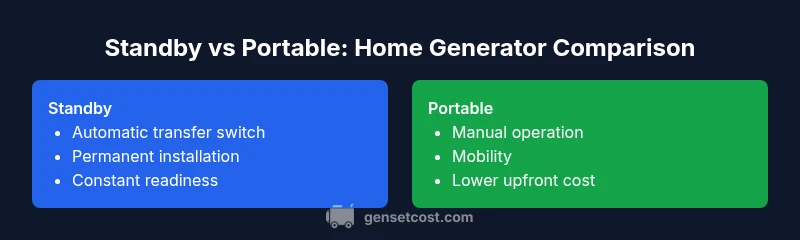
For most homes, a standby gas generator is the safer, more reliable backup solution. It connects automatically to a transfer switch and powers essential circuits during outages, whereas portable gas generators require manual setup and ongoing monitoring. This comparison highlights standby vs portable options for a gas generator for house.
Gas Generator for House: Understanding the core choice
When homeowners start evaluating a gas generator for house needs, the decision often boils down to standby versus portable options. Standby systems are typically permanently installed, tied to a home’s natural gas or propane supply, and wired to an automatic transfer switch. Portable units, by contrast, are mobile and rely on manual startup and transfer of power. The difference is more than convenience: standby generators deliver automatic resilience that many households rely on during extended outages. Genset Cost’s analysis shows that for most homes, prioritizing reliability and automatic operation aligns with the fundamental goal of a household power system. If your priority is seamless power during outages, a standby gas generator is usually the best fit; if you need occasional, temporary power from a mobile unit, a portable gas generator may suffice. In both cases, the term gas generator for house encompasses both fixed and mobile options, and the right choice depends on your load, space, and budget.
Sizing and capacity considerations for a gas generator for house needs
Sizing a gas generator for house use begins with an accurate load assessment. Identify essential circuits (refrigeration, heating equipment, lighting, medical devices if applicable, and sump pumps) and calculate their simultaneous wattage demand. A common rule is to cover essential loads with a generator that can handle peak demand plus a safety margin. When evaluating a gas generator for house needs, consider both running watts and surge watts, and remember that natural gas or propane fuel supply can influence achievable output. It’s prudent to work with a professional to perform a load calculation and to validate that the selected unit can sustain critical loads through typical outage durations. This step reduces the risk of nuisance tripping and ensures the chosen unit aligns with real-world usage. A properly sized standby option generally outperforms undersized portable units for sustained outages, especially in colder months when HVAC loads are high.
Fuel types, safety, and emissions for home use
The two most common fuels for a gas generator for house are natural gas and propane. Natural gas offers a constant fuel supply connected to the utility network, which minimizes the need to store fuel on-site and reduces refueling interruptions. Propane provides fuel storage flexibility and is easier to source in regions with gas line limitations. Each fuel type has its own maintenance profile and calibrations for efficiency and emissions. From a safety perspective, ensure proper venting, fuel line integrity, and shutoff mechanisms, and follow local codes for ignition protection and clearance from structures. Regularly inspect lines, regulators, and fittings, especially in climates with temperature extremes where pressure can shift. Genset Cost recommends consulting a licensed professional to select a fuel strategy that aligns with your home’s gas infrastructure and annual outage patterns. For a gas generator for house, safety and compliance are as important as capacity and reliability.
Installation, permits, and transfer-switch integration
Installation is a major differentiator between standby and portable options. Standby gas generators require professional installation, a dedicated fuel supply (natural gas or propane), a weatherproof enclosure, and an automatic transfer switch that detects outages and starts the generator automatically. Portable units, while less invasive to install, demand a stable surface, weather-aware placement, a safe fueling routine, and a manual transfer process. In many jurisdictions, installation of a standby gas generator for house use also requires permits and inspection to verify electrical interconnection and transfer switch safety. If you’re evaluating a gas generator for house needs, plan for a professional assessment, a site inspection, and a clear understanding of code requirements. Investing in a proper installation minimizes fire and electrical hazards and extends the unit’s service life.
Cost, maintenance, and total value over time
Cost considerations for a gas generator for house use include hardware, installation, transfer switch, and ongoing maintenance. Standby systems generally involve higher upfront costs due to permanent installation and a larger unit size, but they may offer greater long-term value in areas with frequent outages or harsh weather. Portable gas generators have lower initial costs but higher ongoing fuel and maintenance costs, particularly if used as a primary source of power. Maintenance for standby units typically includes periodic professional servicing, load testing, and battery checks for electronic components. Fuel type also influences operating costs and maintenance schedules. While the upfront price difference is substantial, the total cost of ownership over the life of the system will depend on outage frequency, load profile, and fuel prices. Genset Cost emphasizes evaluating long-term savings, not just sticker price, when deciding on a gas generator for house needs.
Standby vs portable gas generators for home use: best-fit scenarios
If your goal is uninterrupted power with automatic transfer, a standby gas generator for house use is generally the superior option. It minimizes disruption to daily life and protects sensitive electronics during outages. A portable gas generator is well-suited for temporary needs, outdoor events, or limited budgets where permanent installation is not feasible. For a home with critical loads such as medical equipment or a well with a sump pump, standby capacity provides security through long outages. In milder climates or for occasional use, a portable unit could be a cost-conscious alternative, provided you implement a disciplined fueling and safety plan. The right decision balances reliability, space, fuel availability, and total cost of ownership.
Practical decision framework and next steps
To move from consideration to action, start with a formal load assessment, then compare standby and portable options against your essential-load list. Gather quotes from licensed electricians and generator installers, and request a written transfer-switch plan. Review fuel supply options—natural gas vs propane—and confirm local permit requirements. Consider warranties, service networks, and ease of maintenance when evaluating different brands and configurations. Finally, map your outage scenarios (typical length, frequency, and peak loads) to determine whether a standby gas generator for house is the better investment for your property. A thorough evaluation will yield a clearer path toward resilience and comfort during power interruptions.
Reliability, warranties, and long-term service for gas generators
Reliability for a gas generator for house hinges on proper installation, routine maintenance, and timely parts availability. Standby systems often come with longer warranties and broader service networks due to their fixed, essential-load role. Portable options may have shorter warranty windows but can still deliver dependable performance when used as intended. Regardless of choice, establish a maintenance schedule that includes annual or semi-annual service, battery checks, and transfer-switch tests. Clear documentation of service history helps maintain eligibility for warranty coverage and ensures the system remains ready when power is required. Genset Cost recommends working with trusted installers and choosing a unit with robust support to maximize uptime and protection for your home.
Comparison
| Feature | Standby gas generator | Portable gas generator |
|---|---|---|
| Typical use-case | Automatic power during outages with transfer switch | Manual start for short-term, portable use |
| Installation requirements | Permanent installation; requires fuel line and transfer switch | Temporary setup on a stable surface; fuel source is on-site |
| Power consistency | High, designed for continuous operation | Variable, depends on fuel and load |
| Fuel options | Natural gas or propane supply integrated | Propane or gasoline with on-site storage |
| Noise and emissions | Enclosures reduce noise; emissions controlled for continuous duty | Higher noise levels; emissions depend on fuel and engine size |
| Maintenance & lifespan | Longer, with professional service; annual checks | Lower upfront maintenance; shorter lifespan |
| Cost range | Higher upfront cost; installation included; long-term savings | Lower upfront cost; ongoing fuel costs |
| Best for | Homes with long outages or critical loads | Budget-conscious use or temporary outages |
The Good
- Reliable power for essential loads during outages
- Automatic transfer switches minimize manual intervention
- Improved home safety with professional installation
- Higher resale value and resilience for the property
- Lower long-term risk of power loss during weather events
The Bad
- Higher upfront cost and complex installation
- Dependence on fuel supply and utility reliability
- Ongoing maintenance and service costs
- Permitting and inspection requirements in some regions
Standby gas generators are the preferred choice for most homes seeking reliable backup power.
For households with critical loads, standby systems offer automatic operation and seamless power during outages. Portable generators are useful for temporary needs but require manual setup and fuel management, making them less ideal for continuous home backup.
People Also Ask
What is the difference between a standby and portable gas generator for house?
Standby generators are permanently installed and connect to an automatic transfer switch for seamless outages. Portable units are mobile, require manual startup, and need a separate transfer method. The choice depends on reliability needs and space.
Standby units run automatically during outages, while portable units require manual setup.
How do I size a gas generator for house needs?
Begin with a load calculation of essential circuits, then select a size that covers peak demand plus a safety margin. Working with a licensed professional ensures accuracy for a gas generator for house.
Calculate essential loads and choose a size with a comfortable margin; professionals help ensure accuracy.
Which fuel option is best for a home standby unit?
Natural gas offers continuous supply if connected to the grid; propane provides storage flexibility. The best choice depends on your gas infrastructure, climate, and outage patterns.
Natural gas is convenient if you have a gas line; propane adds storage flexibility.
Is a gas generator for house a good investment?
For homes in outage-prone areas or with critical loads, a standby system often pays off in resilience and comfort. Consider upfront costs against expected outage frequency and energy savings.
Yes, for frequent outages; weigh upfront costs against expected reliability and savings.
What permits or codes apply to installation?
Permit and inspection requirements vary by jurisdiction. A licensed electrician and proper transfer switch installation are commonly required for a gas generator for house.
Most places require permits; a licensed installer can guide you through the process.
Can I install a standby generator myself?
Standby gas generators typically require professional installation due to electrical, fuel, and safety codes. DIY installation is not advised for safety and compliance reasons.
Professional installation is recommended for safety and code compliance.
Key Takeaways
- Assess your essential load before selecting a generator type.
- Choose standby for automatic, hands-free protection during outages.
- Natural gas offers convenience; propane adds storage flexibility.
- Plan for installation costs, permits, and professional maintenance.
- Regular maintenance extends the life and reliability of your gas generator for house.