Generator or Power Station: A Comprehensive Home Backup Guide
A rigorous, analytical comparison of generator options and power stations for home backup. Learn sizing, costs, installation, reliability, and scenarios to choose the right solution.


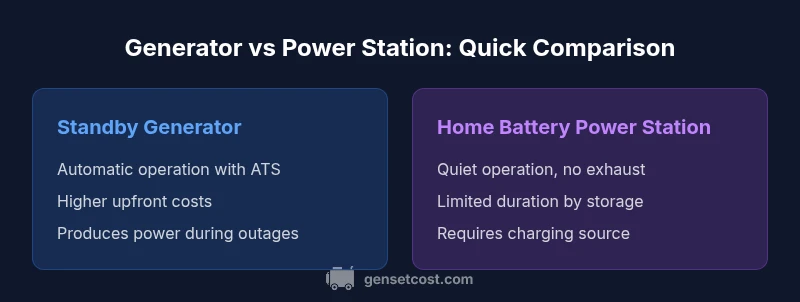
Choosing between a generator or power station hinges on reliability, cost, and usage. A permanently installed home backup generator with automatic transfer switch offers seamless power during outages. A power station (stationary battery system) delivers quiet, emission-free power for essential circuits but depends on battery size and charging availability. For portability and lower upfront cost, a portable generator remains viable with proper safety.
What is a generator or power station?
From a practical standpoint, a generator or power station describes two broad classes of equipment used to back up energy during an outage or high-demand periods. A traditional generator uses fossil fuels (gasoline, propane, or diesel) to drive an engine connected to an alternator. A power station, by contrast, usually refers to a stationary battery storage system that stores energy and delivers it through an inverter. In everyday discussions, homeowners often conflate portable generators with standby generators, and may use the term power station to describe a home battery system. According to Genset Cost, the key distinction is energy source, energy storage, and how the unit starts—automatic for many standby setups, or manual for portable devices. When you evaluate a generator or power station, map your power needs to these categories so you don’t buy more or less than required.
In this guide, we’ll compare scenarios, sizing, installation, and ongoing costs so homeowners and property managers can make an data-informed decision that aligns with risk tolerance and budget.
Sizing and load considerations
Sizing is the cornerstone of any generator or power station decision. Start by distinguishing essential loads (refrigeration, security systems, medical devices) from nonessential circuits (pool pumps, entertainment systems). A common rule is to support essential loads at a minimum, then add nonessential circuits if the system can handle them without overloading. To size accurately, create a one-line bill of materials listing each circuit’s running wattage, peak demand, and startup surges. Then choose a solution with a margin—typically 20–40% above your calculated peak—to accommodate startup surges and future additions. For homeowners, an online sizing calculator or a professional load analysis can reduce guesswork. The Genset Cost team recommends a careful inventory before selecting a generator or power station, as undersizing leads to nuisance shutoffs and oversizing wastes capital.
A practical approach is to segment loads into critical and noncritical groups and test standby capacity against those categories. This helps ensure the system remains reliable during extended outages while avoiding oversized configurations that drain budgets.
Now that you understand sizing, the next sections explore the core differences between standby generators, home battery stations, and portable units and how each aligns with different homeowner needs.
Feature Comparison
| Feature | Standby Generator | Home Battery Power Station | Portable Generator |
|---|---|---|---|
| Typical power output / capacity | Large, commonly in the multi-kilowatt range | Medium to large battery storage capacity (kWh scale) | Small to mid-range output for temporary loads |
| Fuel and energy source | Fossil fuels (gas, propane, or diesel) | Stored electrical energy (recharged from grid, solar, or generator) | Gasoline or propane fuel, depending on model |
| Automatic operation | Often requires an automatic transfer switch (ATS) | Typically manual operation unless paired with intelligent controls | Usually manual start and setup |
| Noise and emissions | Higher noise and ongoing emissions during operation | Quieter operation with zero exhaust emissions on site | Moderate to high noise depending on model; fuel-dependent emissions |
| Installation complexity | High: permanent siting, permits, ventilation | Medium: requires electrical integration and possible solar charging | Low: portable units use simple, temporary setups |
| Cost profile | Higher upfront and ongoing maintenance; long-term value with reliability | Moderate upfront with low operating costs; scalable with storage | Low upfront but limited duration and portability constraints |
The Good
- Automated standby generators provide seamless outages and reduce manual intervention
- Battery power stations offer quiet, emissions-free operation for essential loads
- Portable generators give flexibility and lower upfront costs
- Sleek integration with smart home systems improves monitoring
- Storage-based setups scale with modular expansions
The Bad
- Standby generators involve higher upfront costs and maintenance
- Battery power stations require careful battery management and charging infrastructure
- Portable generators demand ongoing operation and safe outdoor use
- Fuel logistics and storage can add complexity
- Standby systems require professional installation and permits
Permanent standby generators with automatic transfer offer the strongest balance of reliability and convenience for most homes.
For frequent outages or whole-house coverage, a standby generator is typically the best fit. Battery power stations excel for quiet, indoor-friendly operation with essential loads, while portable units provide budget flexibility for temporary needs. Your final choice should match outage frequency, load profiles, and site constraints.
People Also Ask
What is the difference between a generator and a power station?
A generator converts fuel into electricity on demand, typically powering loads through an inverter. A power station stores energy in batteries and releases it when needed, often with an inverter. Generators generally offer higher raw output, while battery systems excel in quiet operation and emissions-free delivery for selected circuits.
Generators convert fuel to electricity, while power stations store energy in batteries. For daily use, batteries are quiet and clean, but you’ll need enough storage for the loads you want to support.
How do I size a generator or power station for my home?
Begin with a load inventory of essential circuits, estimate running watts, and add a safety margin for startup surges. Use sizing calculators or consult a licensed professional to verify results. Sizing ensures a system that won’t trip under peak demand.
Size by listing essential loads and their startup surges, then add margin. A professional check helps confirm your numbers.
Are stand-by generators required to pass permits?
Many jurisdictions require electrical permits and adherence to local codes for permanent standby installations. A licensed installer can help coordinate inspections, permit applications, and compliance with safety standards.
Permits are common for permanent installations. An installer will handle codes and inspections.
Can a power station run an entire home during an outage?
Yes, but it depends on the storage capacity and the inverter output. Most homes need a system sized for essential circuits plus optional loads. A professional sizing analysis will confirm feasibility.
A power station can run essential circuits reliably; whole-home capability depends on capacity and design.
Is a portable generator safe for indoor use?
Portable generators must remain outdoors due to exhaust and fire risks. Never operate a gasoline or propane generator inside living spaces or attached garages. Use proper ventilation and outside weather protection.
Never run portable generators indoors; place them outside with proper clearance and ventilation.
What maintenance is required for a generator or power station?
Standby generators require periodic oil changes, filter replacements, and testing. Battery systems should be checked for charge health and inverter function. Regular professional servicing helps sustain reliability and safety.
Maintenance keeps systems reliable: service intervals for engines and battery health checks for storage units.
Key Takeaways
- Assess outage frequency and critical loads before choosing
- Prefer automatic transfer for seamless power during outages
- Consider installation cost and permit requirements early
- Balance upfront cost with long-term operating expenses
- Choose emission-preferable options where air quality matters