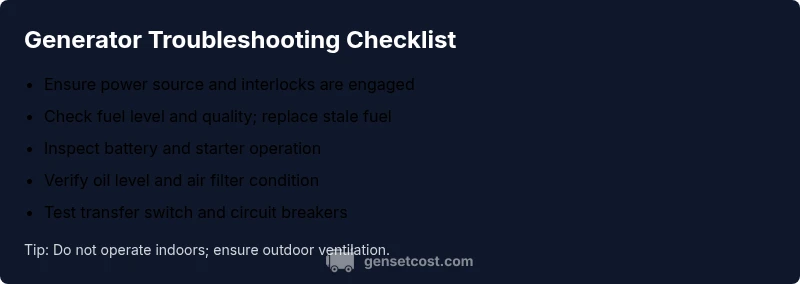
Generator Not Working? Quick Troubleshooting Guide
A practical, urgent troubleshooting guide to diagnose and fix a generator not working—step-by-step checks, safety tips, and when to call a pro.


Most often, a generator not working stems from power, fuel, or safety interlock problems. Start with quick checks: confirm the outlet or transfer switch is supplying power, verify the battery or starting system, and ensure the fuel is fresh and accessible. If you still have no output, follow the diagnostic flow outlined below for deeper issues.
Understanding the phrase generator not working
When a home backup generator fails to respond, the root cause is rarely mysterious. In many cases, the issue falls into a few practical categories: power supply, fuel quality, or safety interlocks that prevent a restart. This guide from Genset Cost translates those categories into concrete checks you can perform safely, without costly diagnostic services. The aim is to restore power to your home quickly, while avoiding risky repair attempts. If you are facing a critical outage, stay calm and follow the steps in order, documenting what you test so you can share findings with a technician if needed. The phrase generator not working can cover everything from a dead battery to a sealed safety lock, so treat each symptom as a clue rather than a stand-alone anomaly.
Why your generator might fail: common failure modes
There are several predictable failure modes for generators in residential settings. Fuel issues are often the culprit: stale gasoline, improper storage, or empty fuel tanks can prevent ignition or smooth running. Electrical interlocks, transfer switches, and circuit breakers are designed to protect you and the equipment; when they trip or fail, the generator won’t start or deliver power even if the engine runs. Battery health and starter function matter too—low voltage will stall or fail to crank. Finally, oil level and air filtration influence performance and protective shutdowns. Understanding these modes helps you triage quickly before escalating to a professional.
Safe, quick checks you can perform before calling for help
Always begin with safety: wear eye protection and gloves, work in a well-ventilated area, and keep a fire extinguisher nearby. Quick checks include verifying the main power source, ensuring the transfer switch is in the correct position, and inspecting the electrical panel for tripped breakers. Check the fuel level and confirm the fuel is fresh; stale gas can prevent ignition or cause poor combustion. Inspect the oil level, look for warning lights on the control panel, and ensure no alarms are active. If the engine turns but the generator doesn’t produce power, confirm the load connections and inspect the airflow around the exhaust. Avoid attempting complex repairs without manuals or professional guidance.
Diagnostic flow overview: a layered approach
A structured diagnostic flow helps isolate the issue without guesswork. Start with symptoms like “does not start,” “starts but stalls,” or “no power output.” For each symptom, consider high-lidelity causes first (power, fuel, safety interlocks) and then secondary causes (transfer switch, wiring). Use a stepwise approach to verify each layer: power supply, fuel system, ignition and starting system, sensors and safety interlocks, then electrical distribution. Proceed only to the next layer if the current one is ruled out. This approach minimizes unnecessary part replacements and reduces downtime.
Step-by-step fixes for the most common causes
This section provides focused actions for the most likely issues keeping your generator from working. Start with the easiest fixes and move to more involved checks. For each fix, validate that the symptom changes before proceeding to the next step. If you encounter unfamiliar equipment or hazardous situations, pause and contact a licensed technician. Always discharge loads and disconnect power before opening panels. Common fixes include: replacing stale fuel, charging or replacing the battery, resetting safety interlocks, and confirming transfer switch operation. If the issue persists after these steps, escalate to professional service.
Safety, maintenance, and prevention to avoid future outages
Safety is non-negotiable with generators. Regular maintenance reduces the chances of a sudden outage and improves reliability. Schedule periodic inspections for fuel quality, oil levels, air filters, and exhaust clearance. Document maintenance activities and test startups under a light load at least monthly, or as recommended by the manufacturer. Use surge protection and a proper transfer switch to prevent back-feeding. Store fuel in approved containers away from heat sources. Finally, keep emergency contact information for a qualified technician handy so you can act quickly when the unexpected happens.
When to call a professional and what to expect
If basic checks don’t restore function, or if you detect gas odors, burning smells, or signs of electrical arcing, contact a licensed generator technician. A pro can perform diagnostic tests that require specialized equipment, verify transfer-switch configurations, and re-tune or replace critical components safely. When you call, provide a concise history of the symptoms, tests you’ve performed, and any warning lights observed. A professional visit typically confirms findings, provides an actionable repair plan, and may offer maintenance services to prevent recurrence.
Steps
Estimated time: 60-90 minutes
- 1
Verify power source and safety lock
Ensure the main breaker is on and the transfer switch is configured for the standby mode if applicable. Confirm the generator has not engaged any safety interlocks that prevent starting. This initial check rules out simple wiring or control issues before digging deeper.
Tip: Always disconnect major loads before testing start-up to avoid overloading circuits. - 2
Check fuel supply and quality
Inspect the fuel level, confirm the fuel valve is open, and look for stale gasoline. If fuel is old, drain and refill with fresh fuel according to manufacturer guidelines. Contaminated fuel can flood the carburetor or stall the engine.
Tip: Do not mix old fuel with new; dispose of it according to local regulations. - 3
Inspect battery and starter
Measure battery voltage with a multimeter; replace if voltage is below the recommended level. Inspect battery connections for corrosion and clean as needed. A weak or dead battery will prevent the engine from cranking.
Tip: Check for tight, clean connections and consider a load test if available. - 4
Check oil level and safety sensors
Verify oil level is within the recommended range and that the oil isn't excessively dirty. Some units will refuse to start if oil pressure is too low or sensors are triggered, so address any warnings promptly.
Tip: Never operate with low oil; running with insufficient oil can cause severe engine damage. - 5
Inspect cooling, air intake, and exhaust
Ensure the cooling fins are clear, air filters are clean, and nothing blocks the exhaust path. Overheating or restricted airflow can trigger shutdowns or prevent starting.
Tip: Clear any debris around the unit and avoid idling under hot conditions. - 6
Test start and load
Attempt a controlled restart, then connect a light load to verify electricity output. If it starts but immediately stalls or shows errors, document the exact messages for the technician.
Tip: If the engine runs but no power is delivered, focus on the electrical distribution rather than the engine.
Diagnosis: Generator won’t start or deliver power
Possible Causes
- highNo fuel or stale fuel in tank
- highDead or weak battery or faulty starter
- mediumTripped circuit breaker or blown fuse
- mediumFaulty transfer switch or improper wiring
- lowOil level too low or overheating protection engaged
Fixes
- easyCheck fuel level and quality; replace with fresh fuel if needed and ensure fuel valve is open
- easyTest and/or replace the battery; ensure starter motor engages properly
- easyReset tripped breakers or replace blown fuses; confirm loads are properly connected
- mediumInspect transfer switch wiring; verify correct position and wiring integrity; call a pro if unsure
- easyCheck oil level and top up if low; allow engine to cool and clear any overheating protection
People Also Ask
What is the first thing to check when my generator won't start?
Start with the basics: verify that there is power at the outlet or transfer switch, check the battery and starter, and confirm fuel is fresh and accessible. If the issue persists, move through the structured diagnostic steps.
Check power, battery, and fuel first. If it still won’t start, follow the diagnostic steps for deeper issues.
Why does a generator stall after starting?
A stall after starting often points to fuel delivery problems, an overloaded load, or overheating. Inspect fuel quality, confirm the load isn’t exceeding capacity, and check cooling and air intake.
Stalls usually mean fuel, overload, or overheating. Verify fuel and the load, then check cooling.
Can a bad transfer switch cause 'generator not working'?
Yes. A faulty transfer switch or incorrect wiring can prevent power transfer to the home even if the generator runs. Have the switch inspected by a qualified electrician or technician.
A bad transfer switch can stop power transfer. Get it checked by a pro.
Is it safe to operate a generator indoors?
No. Running a generator indoors or in a closed space can lead to carbon monoxide poisoning. Always operate outdoors with adequate ventilation and clear exhaust paths.
Never run a generator indoors; ventilate properly outside.
When should I call a professional for a generator not working problem?
If basic checks don’t restore function, if you smell gas, or if electrical issues persist, contact a licensed generator technician for a thorough diagnosis and safe repair.
Call a licensed technician if basic checks don’t fix it or you smell gas.
How often should I service a home generator?
Follow the manufacturer's recommended maintenance schedule. Regular servicing helps prevent unexpected outages and keeps the system reliable.
Follow the official maintenance schedule for reliability.
Watch Video
Key Takeaways
- Check basics first: fuel, battery, and power supply.
- Follow a layered diagnostic flow to pinpoint causes.
- Only perform safe, manufacturer-recommended tests.
- Call a professional for complex electrical issues or gas smells.
- Maintain fuel and oil to prevent future outages.