Troubleshooting a Generator That Won’t Start
Learn fast, safe steps to diagnose and fix a generator that won't start. This Genset Cost guide covers common causes, key checks, and when to call a pro for reliable power.


A generator that will not start is most often caused by fuel or battery issues, or a safety/transfer-switch fault. Start with the basics: check fuel level and quality, inspect battery charge, and verify safety switches. If it still won’t start, follow the diagnostic flow to pinpoint the cause and confirm whether professional help is needed.
Why the Generator Will Not Start: Common Culprits
When a generator will not start, the most frequent culprits are fuel problems, a weak or dead battery, or a safety transfer-switch issue. Genset Cost analyses show that fuel quality and battery health are the top predictors of a successful startup. In practice, a stubborn start condition often begins with stale fuel, a discharged battery, or a safety interlock preventing the unit from engaging. Also verify that the choke, ignition switch, and run/stop controls are in the correct positions. Regular maintenance reduces the odds of recurring no-start conditions and keeps your backup power ready when you need it most.
Safety First: Prepare Before You Troubleshoot
Never bypass safety interlocks or attempt to run a unit indoors for diagnostic purposes. Start by turning off the unit and disconnecting it from loads if safe to do so. Check for obvious issues like loose battery cables, a corroded terminals, or fuel leaks. Ventilation is critical; never run a generator in an enclosed space. If fuel smells strong or you see puddles, address those hazards before proceeding. Safety first keeps both you and the generator out of harm.
Diagnostic Flow: Symptom to Solution (What to Check First)
This flow helps you quickly narrow down the cause when a generator will not start. Start with the simplest checks (fuel quality, battery voltage, safety switches). If those pass, test the starter or pull-start mechanism, confirm the transfer switch status, and inspect oil level and sensor warnings. Document each check so you can share findings with a technician if needed. Following a logical sequence helps you avoid unnecessary parts replacement and speeds up resolution.
Step-by-Step: Most Common Fixes (Fast Wins)
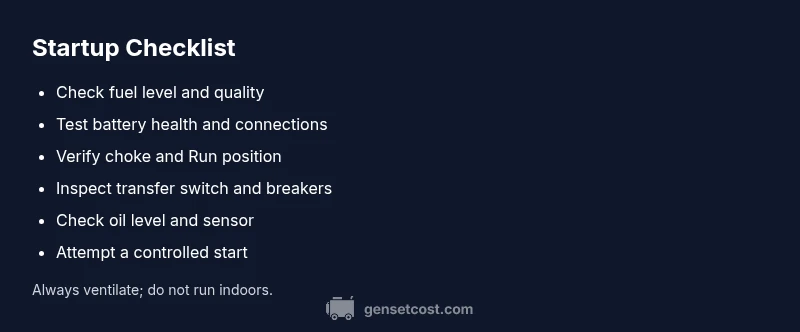
- Check fuel level and fuel quality; if stale or contaminated, drain and refill with fresh gasoline or diesel as appropriate. 2) Inspect battery and connections; clean corrosion and ensure a full charge. 3) Verify choke position and ignition switch; ensure the unit is in Run mode and no safety interlocks are engaged. 4) Inspect the transfer switch and circuit breakers; reset any tripped devices. 5) If the unit still won’t start, check oil level and warning sensors, as some models will refuse to start on low oil. 6) When in doubt, consult the manual or contact a pro. Pro tip: keep a maintenance log to track hours, fuel quality, and service dates.
Prevention: Tips to Avoid Future No-Start Situations
Regular maintenance is your best defense against a generator that won’t start. Use fresh fuel, replace fuel filters as recommended, test the battery monthly, and perform a full startup test every season. Keep maintenance reminders in a shared calendar and consider a fuel stabilizer for longer storage. A well-maintained unit reduces the likelihood of no-start conditions during emergencies.
When to Call a Pro: Safety and Warranty Considerations
If you cannot identify the cause after checking fuel, battery, and safety interlocks—or if you detect fuel leaks, strange smells, or burning wires—seek professional help immediately. A qualified technician can diagnose electrical issues, transfer-switch faults, or sensor alarms without risking injury or voiding warranties. Always refer to the manufacturer’s warranty terms and Genset Cost guidance for when professional service is required.
Steps
Estimated time: 60-90 minutes
- 1
Verify basic power and accessibility
Ensure the generator is connected to a live outlet or load and verify the starting position of the switch. Confirm that the unit is not in maintenance or shutoff mode. If the starter engages but the engine doesn’t turn, continue to the next checks rather than forcing a start.
Tip: Make sure you’re using the correct key or button for your model. - 2
Check fuel supply and quality
Inspect the fuel level and ensure the fuel is appropriate for the season and model. If fuel is old or contaminated, drain and replace with fresh fuel. Replace fuel filters if included in your maintenance schedule.
Tip: Stale fuel can cause hard starts or no-start conditions even if the tank is full. - 3
Test the battery and connections
Measure battery voltage with a multimeter; a reading below the manufacturer’s recommended minimum indicates a weak battery. Clean corrosion from terminals and ensure clamps are tight. Replace the battery if it does not hold a charge.
Tip: Peroxide-based cleaner helps remove corrosion without damaging terminals. - 4
Inspect safety interlocks and transfer switch
Ensure the transfer switch is in the Run position and that any interlocks are not engaged by accident. Reset breakers and relays if the unit still won’t start after the previous checks.
Tip: A tripped breaker is a common, quick fix before deeper diagnosis. - 5
Check oil level and sensors
Verify that oil level is within the recommended range; low oil can automatically shut the engine down. If your model has a sensor warning, follow the manual to replace or reset the sensor.
Tip: Never run a generator with low oil; it can cause engine damage. - 6
Attempt a controlled test start
With fuel, battery, and safety checks complete, attempt a controlled start. If it still will not start, document all observations and consult the manual or a technician for further diagnosis.
Tip: Record readings from each step to help a pro diagnose faster.
Diagnosis: Generator will not start after engaging the key or start button
Possible Causes
- highFuel issue (stale fuel, improper type, or empty tank)
- highBattery issue (dead or weak battery, corroded terminals)
- mediumSafety/transfer-switch fault
- lowLow oil or sensor shutoff
- mediumIgnition or electrical fault
Fixes
- easyCheck fuel level and quality; refill with fresh fuel if needed and confirm correct fuel type for your model.
- easyTest the battery: charge or replace if voltage is low, clean terminals, and confirm connections are tight.
- easyInspect safety interlocks and transfer switch; ensure no interlocks are engaged and reset any tripped breakers
- easyCheck oil level and sensor status; add oil if low and replace sensors if warning persists
- mediumIf electrical symptoms exist, or the unit still will not start, contact a qualified technician
People Also Ask
Why won't my generator start after fueling?
Fuel issues are a frequent cause when starting fails. Check fuel level, quality, and compatibility with your model before moving to other checks.
Fuel problems are a common starting blocker. Check the fuel level and quality first, then proceed with other checks.
How do I test the battery for a generator that won't start?
Test the battery voltage with a multimeter. If it drops below the recommended level or fails to hold a charge after a brief load test, replace or recharge as needed.
Test the battery with a voltmeter; replace or recharge if it doesn’t meet the required rating.
Could a faulty transfer switch cause a no-start?
Yes. A faulty transfer switch can prevent starting or block power transfer. Inspect for stuck relays and resetting breakers; professional service may be needed for diagnosis.
A bad transfer switch can stop the unit from starting. Check relays and breakers, and call a pro if unsure.
Is it safe to start a generator indoors to test it?
No. Starting a generator indoors is dangerous due to carbon monoxide. Always test outdoors with proper ventilation.
No, never start a generator indoors; ensure outdoor ventilation.
When should I call a professional?
If basic checks don’t resolve the issue, or you notice leaks, smoking, or unusual smells, contact a licensed technician. They can diagnose electrical and sensor problems safely.
Call a professional if the basics don’t fix it or you notice leaks or smells.
Does oil level affect starting?
Yes. Low oil can trigger a shutdown. Check the level and top up if needed, as some models will not start with insufficient oil.
Low oil can prevent starting. Check and fill oil to the recommended level.
Watch Video
Key Takeaways
- Start with fuel and battery checks
- Safety interlocks are a common no-start cause
- Follow a logical diagnostic flow
- Document findings for pro support
- Regular maintenance reduces no-start risk