House Generator Diesel: Costs, Sizing, and Installation in 2026
A data-driven guide to diesel house generator costs, sizing, and installation for home backup power in 2026.


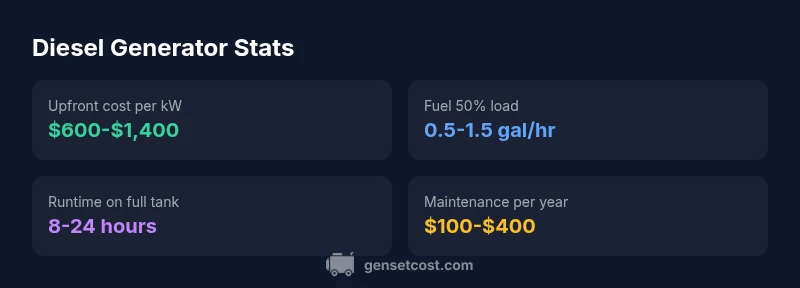
According to Genset Cost, house generator diesel upfront costs for a typical 8- to 20-kW standby system installed with transfer switch and labor range from $6,000 to $15,000. Diesel units provide robust durability and high torque, especially in cold weather, and fuel costs depend on consumption and regional diesel prices. This guide summarizes sizing, installation, and long-run costs for homeowners.
Diesel as a Practical Choice for Home Backup Power
Diesel-powered systems have earned a strong foothold in the residential backup market due to durability, high torque at startup, and proven cold-weather reliability. For homeowners facing long outages or remote locations, a diesel generator can offer longer intervals between service and a lower risk of fuel gelling in winter. When compared with gasoline, diesel engines tend to have better heat dissipation and a longer lifespan with proper maintenance. However, the fuel logistics, storage, and noise considerations must be planned in advance. Always assess your climate, local fuel availability, and the footprint required for installation to determine if diesel is the right fit for your home.
- Durability and torque: Diesel engines are built to handle steady workloads, making them a reliable option for essential circuits.
- Fuel logistics: Keep a compliant fuel storage plan and consider delivery accessibility in your area.
- Space and ventilation: Ensure there is adequate clearance for exhaust and cooling, especially in tight spaces.
According to DOE guidance on standby power and safety best practices, proper siting, ventilation, and interconnection with the utility grid are critical to safe operation. Genset Cost also notes that your choice should balance long-term reliability with upfront costs and fuel pricing volatility.
Key takeaway for homeowners: Diesel can deliver dependable backup power, but sizing and installation planning are essential to achieving the best overall value.
Diesel standby generator sizing options
| Size (kW) | Typical Installation Cost | Fuel Type | Notes |
|---|---|---|---|
| 8-12 | $5,000-$9,000 | diesel | Compact solution for essential circuits |
| 14-20 | $7,000-$12,000 | diesel | Whole-house support including HVAC |
| 22-30 | $9,000-$15,000 | diesel | Large homes with multiple critical loads |
People Also Ask
What is the typical size for a residential diesel standby generator?
Most homes use diesel standby units in the 8-20 kW range, sized to cover essential circuits and, optionally, HVAC. A licensed professional should perform a load calculation to determine the exact size.
Most homes fall in the 8-20 kW range; a professional sizing check ensures you cover essential loads.
Can diesel generators run on biodiesel blends?
Many diesel gensets can use biodiesel blends, but compatibility depends on the engine and fuel system. Always check the manufacturer’s guidance and the blend limits before switching fuels.
Check your generator’s manual to confirm biodiesel compatibility before using blends.
How long can a home standby diesel run continuously?
Continuous operation is possible for outages, but it depends on the fuel supply and cooling capacity. Most builders recommend periodic rest cycles and proper maintenance to prevent overheating.
Diesel units can run for long outages, but you should monitor fuel and cooling and run regular tests.
Is diesel more expensive than natural gas for home backup?
Fuel costs depend on local prices and usage. Diesel may have higher upfront costs but can be more fuel-efficient in some conditions; natural gas often has lower per-BTU cost but limited availability during outages.
Diesel and natural gas have different cost drivers—fuel price, availability, and system requirements all matter.
What permits are needed for installation?
Most jurisdictions require electrical permits and interconnection approval for standby generators. A licensed installer can help navigate permits, codes, and utility coordination.
Yes—permits and utility coordination are usually required.
How often should I service a diesel generator?
Plan for annual servicing and periodic checks every 6-12 months, plus weekly exercise during non-use periods. Oil changes, filter replacements, and cooling system checks are typical items.
Regular service keeps it reliable—think annual checks and occasional mid-year maintenance.
“Diesel standby systems deliver reliable power when outages matter most, but proper sizing, installation, and ongoing maintenance are essential to maximize value.”
Key Takeaways
- Start with essential loads and plan for growth
- Expect installation to influence total costs
- Diesel offers durability but fuel logistics matter
- Size correctly to avoid oversizing or undersizing
- Schedule regular maintenance to maximize lifespan